The Sincora Antwren: A Rare Jewel of Brazil’s Biodiversity
In the verdant landscapes of Brazil’s Chapada Diamantina, a small bird flits through the undergrowth, embodying the unique biodiversity of this region. This bird, the Sincora Antwren (Formicivora grantsaui), is not only a symbol of the ecological richness of Brazil but also a poignant reminder of the fragility of our planet’s ecosystems.
Discovery and Classification
The Sincora Antwren was first described in 2007 by ornithologists who recognized it as a distinct species due to its unique vocalizations and subtle morphological differences from its close relatives. Named in honor of the German ornithologist Helmut Sick, who significantly contributed to the study of Brazilian birdlife, the bird’s specific epithet, ‘grantsaui,’ pays homage to another distinguished ornithologist, Rolf Grantsau.
This bird belongs to the Thamnophilidae family, commonly known as antbirds. These birds are primarily insectivorous, often following army ant swarms to catch prey flushed out by the ants. The Sincora Antwren, however, is a bit of an outlier, as it doesn’t follow ant swarms as closely as some of its relatives.
Physical Characteristics
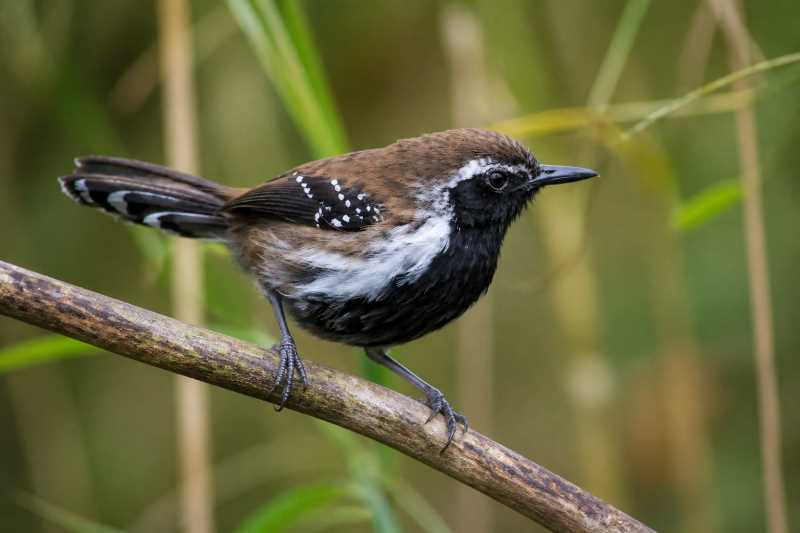
The Sincora Antwren is a small bird, measuring approximately 12 cm in length. It exhibits sexual dimorphism, with males and females displaying distinct plumage. Males typically boast a striking black and white pattern, with the black plumage contrasting sharply against white wing bars and a white throat. Females, on the other hand, are more subtly colored, featuring brownish tones that provide camouflage against the forest floor.
Habitat and Distribution
This antwren is endemic to the Chapada Diamantina region in the state of Bahia, Brazil. The area is characterized by its unique montane savanna and rocky outcrops, offering a distinctive habitat for the species. Within this landscape, the Sincora Antwren thrives in shrubby vegetation and rocky terrains, where it forages for insects and small arthropods.
The limited range of the Sincora Antwren underscores its vulnerability. Restricted to a specific region, any changes to its habitat could have dire consequences for its population. This makes the conservation of its natural environment a priority for ensuring the species’ survival.
Behaviour and Ecology
The Sincora Antwren is primarily insectivorous, feeding on a variety of small insects and arthropods. It forages by hopping through dense underbrush, often in pairs or small family groups. Its behavior is characterized by quick, darting movements and a preference for staying low to the ground.
Vocal communication plays a crucial role in the life of the Sincora Antwren. Males are known for their distinct calls, which they use to establish territory and attract mates. These vocalizations, coupled with their unique habitat preferences, were key factors in identifying the species.
Conservation Status
As of the latest assessments, the Sincora Antwren is classified as "Vulnerable" by the International Union for Conservation of Nature (IUCN). This status highlights the species’ susceptibility to habitat loss and fragmentation, primarily due to agricultural expansion, mining activities, and tourism development in the Chapada Diamantina region.
Conservation efforts are essential to protect the Sincora Antwren and its habitat. Initiatives include habitat restoration, legal protection of key areas, and raising awareness among local communities about the importance of preserving this unique species. Additionally, ongoing research and monitoring are crucial to understanding the population dynamics and ecological requirements of the Sincora Antwren.
The Role of the Sincora Antwren in Biodiversity Conservation
The Sincora Antwren serves as an ambassador for the biodiversity of the Chapada Diamantina region. Its presence indicates a healthy, functioning ecosystem that supports a wide array of plant and animal life. Protecting the antwren and its habitat can have far-reaching benefits, preserving the ecological integrity of the entire region.
Moreover, the bird’s vulnerability underscores the broader challenges facing global biodiversity. As habitats worldwide are threatened by human activity, species like the Sincora Antwren remind us of the urgent need for sustainable practices and effective conservation strategies.
Conclusion
The Sincora Antwren, with its limited range and unique ecological niche, is a testament to the intricate web of life found in Brazil’s Chapada Diamantina. Protecting this delicate species requires a concerted effort from conservationists, local communities, and policymakers. By safeguarding the Sincora Antwren, we not only preserve a remarkable bird but also contribute to the broader mission of conserving our planet’s biodiversity for future generations.
Related posts