Savi’s Warbler: A Melodic Resident of Wetlands
Introduction
Savi’s Warbler (*Locustella luscinioides*) is a small, elusive bird that inhabits the wetlands of Europe and Asia. Belonging to the family Locustellidae, this species is renowned for its melodious and continuous song, which resembles the sound of an old-fashioned sewing machine. Despite its rather plain appearance, the Savi’s Warbler holds a special place in the hearts of bird enthusiasts and ornithologists alike due to its distinctive vocalizations and the important ecological role it plays in wetland ecosystems.
Physical Characteristics
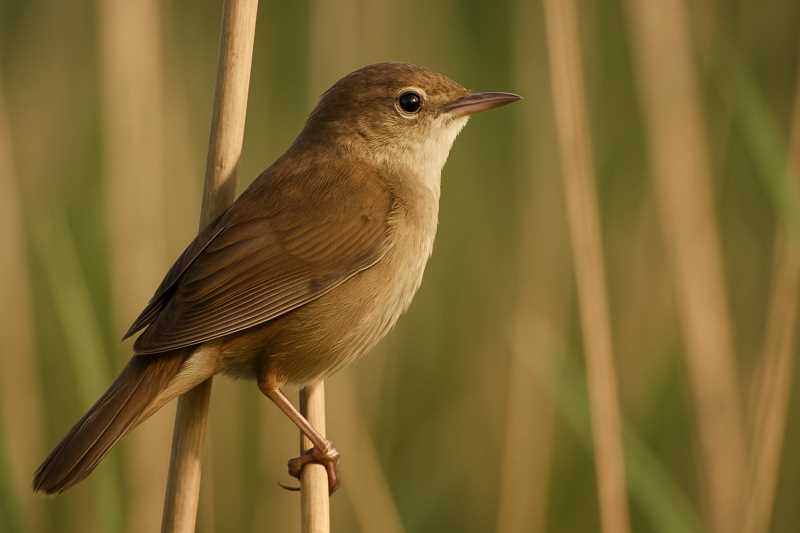
The Savi’s Warbler is a medium-sized warbler, measuring approximately 13-14 centimeters in length with a wingspan of about 17-21 centimeters. Its plumage is predominantly brown, with a slightly lighter underbelly and a faintly streaked breast, providing excellent camouflage among the reeds and grasses of its habitat. The bird’s tail is rounded and slightly elongated, a characteristic feature of the Locustella genus. Its beak is slender and pointed, adapted for foraging insects in dense vegetation.
Habitat and Distribution
Savi’s Warbler prefers dense reed beds and marshlands, favoring areas with plentiful water sources such as lakes, rivers, and floodplains. Its distribution is primarily across Europe, extending into western and central Asia. In Europe, the species is predominantly found in the south and east, with populations in countries such as Spain, France, and Italy, stretching to the Balkans and Turkey. The bird is migratory, spending winters in sub-Saharan Africa before returning to Europe and Asia for the breeding season.
Behavior and Diet
Savi’s Warbler is a secretive bird, often remaining hidden within the dense vegetation of its wetland habitat. This behavior, combined with its camouflaged plumage, makes it challenging to spot. However, its presence is often betrayed by its distinctive song, a continuous and rhythmic trill that can be heard over long distances. The song plays a crucial role in territorial defense and mate attraction during the breeding season.
The diet of Savi’s Warbler consists mainly of insects and other small invertebrates, which it gleans from the vegetation. It is an adept forager, using its slender bill to pick prey from reeds and grasses. Occasionally, it may also consume seeds and plant matter, particularly during migration when insects may be scarce.
Breeding and Nesting
The breeding season for Savi’s Warbler typically begins in late April and continues through July. The male establishes a territory within a dense reed bed and begins to sing to attract a mate. Once paired, the female constructs a nest low to the ground, often hidden among reeds or grasses. The nest is an open cup made from plant material and lined with softer vegetation.
The female typically lays between four and six eggs, which she incubates for about 13-15 days. Both parents participate in feeding the chicks, which fledge approximately 10-12 days after hatching. The fledglings remain dependent on their parents for several weeks before becoming fully independent.
Conservation Status and Threats
Currently, Savi’s Warbler is classified as Least Concern by the International Union for Conservation of Nature (IUCN). However, the species faces several threats, primarily due to habitat loss and degradation. The drainage of wetlands for agriculture, urban development, and pollution are significant concerns affecting the availability and quality of their breeding and foraging habitats.
Conservation efforts are crucial to preserving the wetland ecosystems that support Savi’s Warbler and countless other species. Protecting and restoring wetlands, implementing sustainable land-use practices, and monitoring populations are essential strategies to ensure the continued survival of these birds.
Conclusion
Savi’s Warbler may not boast the vibrant plumage of other avian species, but its melodic song and crucial role in wetland ecosystems make it an important bird to study and protect. As an indicator of healthy wetland habitats, the presence of Savi’s Warbler can inform conservationists about the state of these critical environments. Through concerted conservation efforts, we can ensure that future generations will continue to enjoy the sounds of this charming warbler across its native range.
Related posts