Rock Partridge: A Comprehensive Overview of Alectoris graeca
In the realm of avian biodiversity, the Rock Partridge (Alectoris graeca) stands out as a fascinating species that captivates birdwatchers and ornithologists alike. Known for its distinctive appearance and intriguing behaviors, the Rock Partridge is a member of the Phasianidae family, which includes pheasants, quails, and other partridges. This article delves into various aspects of Alectoris graeca, exploring its habitat, behavior, conservation status, and the ecological significance it holds.
Habitat and Distribution
The Rock Partridge is native to the mountainous regions of southern Europe and parts of the Balkan Peninsula. Its range spans countries such as Italy, Greece, Albania, and parts of the former Yugoslavia. The bird thrives in rocky and rugged terrains, often at elevations ranging from 400 to 3,000 meters. Preferring open landscapes with sparse vegetation, the Rock Partridge is commonly found in alpine and subalpine areas, where it can easily navigate the rocky outcrops and steep slopes.
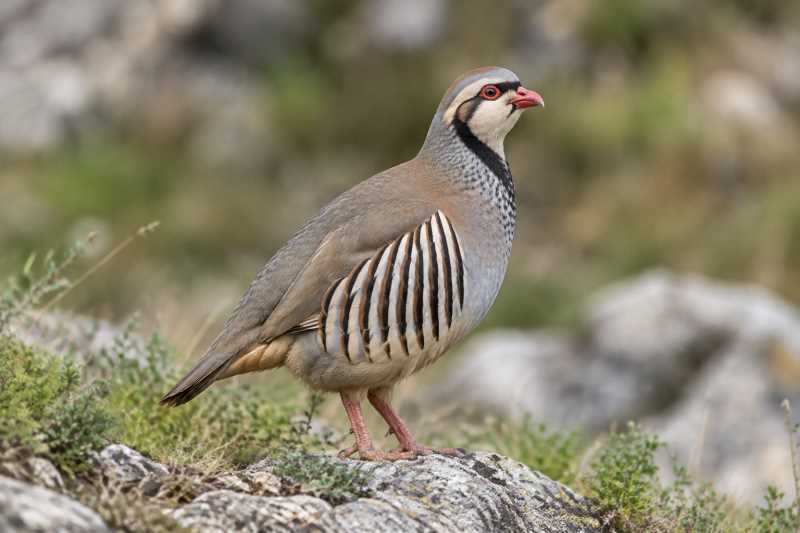
Adapted to a life in challenging environments, the Rock Partridge is well-suited to its mountainous habitat. Its sturdy legs and strong claws enable it to traverse rocky surfaces with ease, while its plumage provides excellent camouflage against predators. The bird’s coloration, a blend of gray, brown, and white, mirrors the rocky landscapes it inhabits, serving as an effective means of concealment.
Behavior and Diet
The Rock Partridge is a ground-dwelling bird, spending most of its time foraging for food on the forest floor. Its diet primarily consists of seeds, berries, and small invertebrates, reflecting its omnivorous nature. During the summer months, the bird’s diet shifts towards a higher intake of insects and other protein-rich foods, which are crucial for breeding and raising chicks.
Rock Partridges are known for their social behavior, often forming small flocks outside the breeding season. These flocks, typically composed of family groups, exhibit complex social dynamics and cooperative behaviors, particularly when it comes to foraging and predator avoidance. Vocal communication plays a significant role in their social interactions, with a variety of calls used to maintain contact and alert each other to potential threats.
Breeding and Reproduction
The breeding season for Rock Partridges typically begins in late spring, with males engaging in elaborate courtship displays to attract females. These displays often involve a combination of vocalizations, wing-fluttering, and ritualized movements. Once a pair forms, the female is responsible for nest construction, which usually takes place on the ground in a shallow depression lined with grass and leaves.
Clutch sizes vary but generally consist of 8 to 12 eggs. The female incubates the eggs for about 24 to 26 days, during which time the male may assist by providing food and protection. Upon hatching, the chicks are precocial, meaning they are relatively mature and mobile, capable of feeding themselves shortly after birth. Both parents play an active role in rearing the young, guiding them to food sources and protecting them from predators.
Conservation Status and Threats
The conservation status of the Rock Partridge is currently assessed as Near Threatened by the International Union for Conservation of Nature (IUCN). The species faces several threats, primarily due to habitat loss, hunting, and climate change. Agricultural expansion and land-use changes in their native regions have led to the fragmentation and degradation of their natural habitats.
Hunting poses another significant threat, with the Rock Partridge being a popular game bird in many areas. While hunting is regulated in some countries, illegal poaching remains a concern, exacerbating the pressures on local populations. Additionally, climate change poses long-term challenges, as shifts in temperature and precipitation patterns can alter the habitats and food resources available to these birds.
Ecological Significance
Beyond its intrinsic value as a species, the Rock Partridge plays a vital role in its ecosystem. As both a predator and prey, it contributes to the balance of the food web in its mountainous habitat. By feeding on seeds and insects, the bird helps regulate plant and insect populations, promoting biodiversity within its range.
Moreover, the Rock Partridge serves as an indicator species, reflecting the health of its environment. Changes in its population and distribution can signal broader ecological shifts, alerting conservationists and researchers to potential environmental issues.
Conclusion
The Rock Partridge (Alectoris graeca) is a remarkable species that embodies the resilience and adaptability of wildlife in challenging environments. While facing numerous threats, concerted conservation efforts can help ensure its survival and preserve the rich biodiversity of the regions it inhabits. By understanding and appreciating the unique qualities of the Rock Partridge, we contribute to the broader goal of conserving our planet’s natural heritage.
Related posts