The Orange-bellied Fruit Dove: A Jewel of the Avian World
The Orange-bellied Fruit Dove (Ptilinopus iozonus), an exquisite member of the Columbidae family, is a testament to the wonders of avian biodiversity. Known for its vibrant plumage and distinct ecological role, this species captivates ornithologists and bird enthusiasts alike. Found primarily in the lowland rainforests of New Guinea and the surrounding islands, the Orange-bellied Fruit Dove plays a crucial role in the ecosystem, serving as both a seed disperser and a symbol of the rich biodiversity found in its habitat.
Physical Characteristics
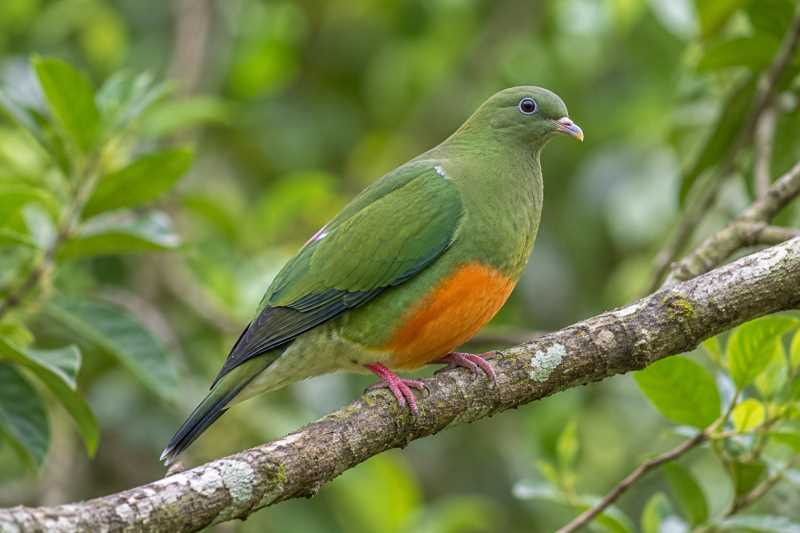
The Orange-bellied Fruit Dove is renowned for its striking appearance. Measuring about 24 centimeters in length, it is a medium-sized bird distinguished by its vivid coloration. The bird’s most remarkable feature is its bright orange belly, which contrasts beautifully with its green upperparts. The combination of a purple crown and nape further enhances its visual appeal, while the green wings and tail provide an elegant complement to its vibrant body.
The species exhibits sexual monomorphism, meaning males and females display similar plumage, making it challenging to distinguish between them based on appearance alone. This similarity in appearance is not uncommon among fruit doves and adds a layer of mystery to their mating and social behaviors.
Habitat and Distribution
The Orange-bellied Fruit Dove is native to the tropical rainforests of New Guinea, including both Papua New Guinea and the Indonesian region of West Papua. It thrives in lowland and hill forests, ranging up to altitudes of 1,500 meters. The species is also found on nearby islands such as the Aru Islands, highlighting its adaptability to various forested environments.
These doves prefer dense forest canopies where fruiting trees are abundant. Their presence in these habitats underscores the importance of forest conservation, as the health of these ecosystems directly impacts the survival of the species.
Diet and Feeding Behavior
As frugivores, Orange-bellied Fruit Doves primarily consume fruits, with a preference for figs and other small fruits found in their forest habitats. Their feeding behavior is crucial for seed dispersal, making them vital contributors to forest regeneration. By ingesting fruits and excreting the seeds away from the parent trees, these doves help maintain the diversity and sustainability of their ecosystems.
Their feeding habits are facilitated by their specialized bills and digestive systems, which allow them to process various fruit types efficiently. Observing these birds during feeding can offer insights into the complex relationships between avian species and their environments.
Reproduction and Lifespan
The breeding season for Orange-bellied Fruit Doves varies depending on their location, but it generally coincides with periods of fruit abundance. During courtship, males perform displays that highlight their vibrant plumage to attract females. These displays often involve a series of calls and physical postures that emphasize their colorful features.
Once a pair forms, they build a flimsy nest of twigs and leaves, typically situated high in the forest canopy. The female usually lays a single egg, which both parents incubate for about 18 to 20 days. After hatching, both parents share the responsibility of feeding and caring for the chick until it fledges.
In the wild, Orange-bellied Fruit Doves can live for several years, although their exact lifespan is not well-documented. Factors influencing their longevity include habitat quality, predation pressures, and availability of food resources.
Conservation Status
Currently, the Orange-bellied Fruit Dove is classified as a species of Least Concern by the International Union for Conservation of Nature (IUCN). However, this does not mean they are free from threats. Habitat destruction, primarily due to logging and agricultural expansion, poses significant risks to their populations. Conservation efforts aimed at preserving their natural habitats are essential to ensure the species’ continued survival.
Efforts to protect the Orange-bellied Fruit Dove also involve educating local communities about the importance of biodiversity and sustainable forest management. Such initiatives can help mitigate the impact of human activities on these delicate ecosystems.
Conclusion
The Orange-bellied Fruit Dove is more than just a visually captivating bird; it is a vital component of its ecosystem. As a seed disperser, it plays a crucial role in maintaining the health and diversity of its forest habitat. Understanding and protecting this species is essential not only for its survival but also for the preservation of the intricate ecological networks it supports. By appreciating the beauty and ecological significance of the Orange-bellied Fruit Dove, we take a step forward in preserving the biodiversity of our planet.
Related posts