The Enigmatic Black-breasted Barbet: A Jewel of African Birdlife
Birdwatchers and ornithologists alike are often captivated by the vibrant diversity of African avian species. Among these, the Black-breasted Barbet (Pogonornis rolleti) stands out as a remarkable species not only because of its striking appearance but also due to its intriguing behaviors and ecological significance. This article delves into the unique characteristics, habitat, and conservation status of this fascinating bird, providing a comprehensive understanding of its place in the avian world.
Physical Characteristics and Identification
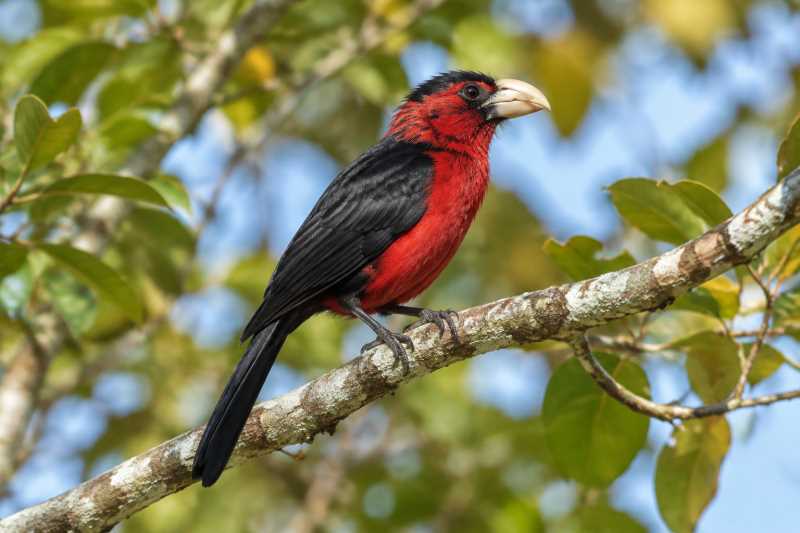
The Black-breasted Barbet is a visually striking bird, known for its robust and colorful appearance. Measuring approximately 22 centimeters in length, it is a medium-sized barbet with distinctive plumage. The bird’s upperparts are predominantly black, while its breast and belly showcase a rich black hue, giving rise to its common name. The contrasting white patches on the wings and the bright red patches on the forehead and throat add to its vivid appearance.
One of the most distinctive features of the Black-breasted Barbet is its heavy, ivory-colored bill, which is well adapted for its feeding habits. The bill is stout and slightly curved, allowing the bird to efficiently forage for fruits and insects. Both males and females share similar plumage, although juveniles may exhibit slightly duller colors.
Habitat and Distribution
The Black-breasted Barbet is primarily found in the savannah and woodland regions of Central Africa. Its range extends across countries such as Cameroon, the Democratic Republic of the Congo, and the Central African Republic. The species favors habitats that provide a mixture of open spaces and dense thickets, which offer both feeding opportunities and nesting sites.
Within these ecosystems, the Black-breasted Barbet plays a crucial role as a seed disperser. By consuming fruits and subsequently excreting the seeds, the bird contributes to the propagation of various plant species, thus maintaining the ecological balance of its habitat.
Behavior and Diet
The Black-breasted Barbet is a diurnal species, most active during the early morning and late afternoon. Its diet predominantly consists of fruits, such as figs and berries, although it is also known to consume insects, particularly during the breeding season when protein demands are higher. The bird’s strong bill is adept at breaking open hard fruit shells, allowing it to access the nutritious seeds within.
In terms of social behavior, the Black-breasted Barbet is often observed in pairs or small family groups. It is known for its melodious calls, which are used for communication among group members and to establish territorial boundaries. The bird’s vocalizations are a series of rich, fluty notes that vary in pitch and are often repeated in a rhythmic pattern.
Breeding and Nesting
The breeding season of the Black-breasted Barbet typically coincides with the onset of the rainy season, which ensures an abundance of food resources. The species is monogamous, with pairs working collaboratively to excavate nesting cavities in tree trunks or large branches. These cavities are essential for the protection of eggs and chicks from predators and environmental factors.
Clutch sizes generally range from two to four eggs, which are incubated for approximately 13 to 15 days. Both parents participate in feeding and caring for the chicks, which fledge about four weeks after hatching. The cooperative breeding behavior exhibited by the Black-breasted Barbet underscores the importance of pair bonds and family units within this species.
Conservation Status and Challenges
Currently, the Black-breasted Barbet is classified as a species of Least Concern by the International Union for Conservation of Nature (IUCN). However, like many avian species, it faces threats from habitat loss and degradation. Deforestation, driven by agricultural expansion and logging, poses significant risks to its natural habitat.
Conservation efforts aimed at preserving the savannah and woodland ecosystems are crucial for the long-term survival of the Black-breasted Barbet. Protecting these habitats not only benefits the barbet itself but also safeguards the diverse array of flora and fauna that coexist within these regions.
Conclusion
The Black-breasted Barbet is a testament to the beauty and complexity of African birdlife. Its vibrant appearance, coupled with its ecological role and intriguing behaviors, make it a species worthy of admiration and study. As conservation efforts continue to evolve, it is imperative to recognize and address the challenges facing this remarkable bird, ensuring that future generations can also witness its splendor.
For bird enthusiasts and conservationists alike, the Black-breasted Barbet represents a symbol of the natural world’s resilience and diversity. By fostering a deeper understanding and appreciation of such species, we can contribute to the preservation of Earth’s invaluable avian heritage.
Related posts