The Northern Flicker: A Vibrant and Versatile Woodpecker
The Northern Flicker, Colaptes auratus, is a captivating and unique member of the woodpecker family, Picidae. Unlike its relatives, who are often seen and heard drumming on trees, the Northern Flicker is more frequently spotted foraging on the ground, making it one of the most terrestrial woodpeckers in North America. With its striking plumage and distinctive behavior, this bird is a favorite among bird watchers and ornithologists alike.
Appearance and Identification
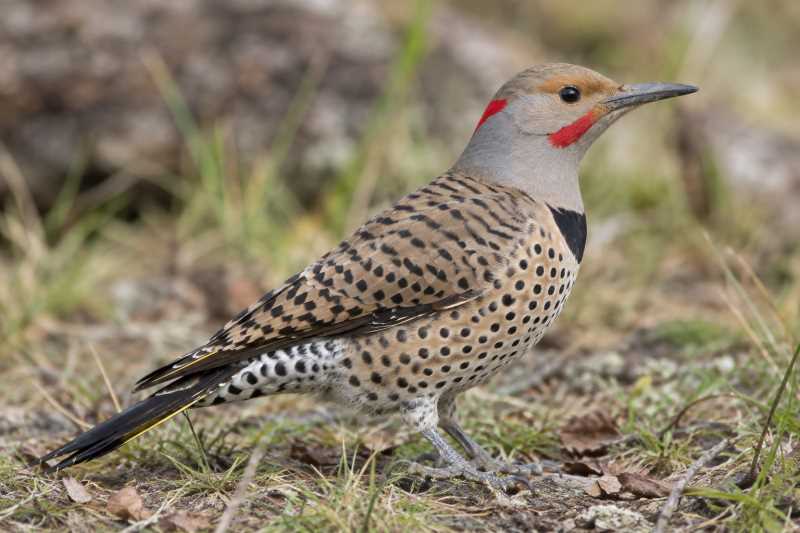
The Northern Flicker is a large woodpecker, measuring about 11 to 14 inches in length, with a wingspan of 16 to 21 inches. It is easily identifiable by its brown barred back, spotted underparts, and a prominent black crescent on its chest. One of the most distinguishing features is its colorful flight feathers. In the eastern regions of North America, the flicker displays a vivid yellow underwing, earning the nickname "Yellow-shafted Flicker." Conversely, the western variant is known as the "Red-shafted Flicker," showcasing red undertones.
Additionally, the Northern Flicker has a white rump patch that is conspicuous during flight, and its tail feathers have black barring and a pointy shape, which aids in its identification. Males can be distinguished by a black or red mustache stripe, depending on the subspecies.
Habitat and Distribution
The Northern Flicker is widespread across North America, inhabiting a variety of environments from dense forests to open fields and urban areas. It is highly adaptable, able to thrive in both rural and suburban settings. This adaptability explains its broad distribution, ranging from Alaska and Canada to the southern United States and even parts of Central America during the winter months.
Flickers prefer open habitats with scattered trees for nesting and foraging, such as woodland edges, parks, and yards. They are also known to inhabit areas with snags or dead trees, which provide essential nesting sites.
Behavior and Diet
Unlike most woodpeckers, the Northern Flicker often forages on the ground, searching for its primary food source: ants. In fact, ants can make up to 45% of its diet. It uses its long, barbed tongue to extract ants and other insects from the soil. During the winter months, when insect activity is low, flickers will consume fruits and seeds to supplement their diet.
The Northern Flicker is also known for its drumming and vocalizations. Its drumming serves as a communication tool during the breeding season, helping to establish territory and attract mates. The call of the Northern Flicker is a loud, repeated "wick-a-wick-a-wick," which can be heard echoing through their habitat.
Breeding and Nesting
Breeding season for the Northern Flicker typically begins in late winter or early spring. The species is monogamous, with pairs often returning to the same nesting sites year after year. They excavate their nests in trees, using their strong bills to carve out cavities. In urban settings, they may also utilize man-made structures such as utility poles or even building siding.
A typical clutch consists of 5 to 8 white eggs, which both parents incubate for about 11 to 14 days. After hatching, the chicks are cared for by both parents until they fledge at about 24 to 27 days old. The family group may stay together for some time after fledging, with parents continuing to feed the young until they are fully independent.
Conservation Status
The Northern Flicker is currently listed as a species of least concern by the International Union for Conservation of Nature (IUCN). However, like many bird species, it faces challenges due to habitat loss and fragmentation. Urban development and deforestation reduce the availability of suitable nesting sites and foraging grounds. Conservation efforts focused on preserving natural habitats and encouraging the maintenance of snags in forests and urban areas are crucial for ensuring the continued success of this species.
The Northern Flicker in Culture
The Northern Flicker holds a special place in various cultures and folklore. In Native American traditions, it is often seen as a symbol of protection and heralding good fortune. Its dynamic behavior and striking appearance have inspired countless stories and have made it a beloved subject in both art and literature.
In conclusion, the Northern Flicker is a remarkable bird that exemplifies the adaptability and resilience of wildlife. Its presence across diverse habitats and its unique behaviors make it an important species for ecological study and a joy to observe in the wild. As we continue to navigate the challenges of habitat conservation and environmental change, the Northern Flicker serves as a reminder of the intricate beauty and complexity of our natural world.
Related posts