The Green Heron: A Master of Adaptation and Ingenuity
The Green Heron (Butorides virescens) is a small wading bird that captivates ornithologists and bird enthusiasts alike with its striking appearance and remarkable hunting techniques. Found across North and Central America, this bird is a testament to nature’s ability to adapt and thrive in diverse environments.
Physical Characteristics and Habitat
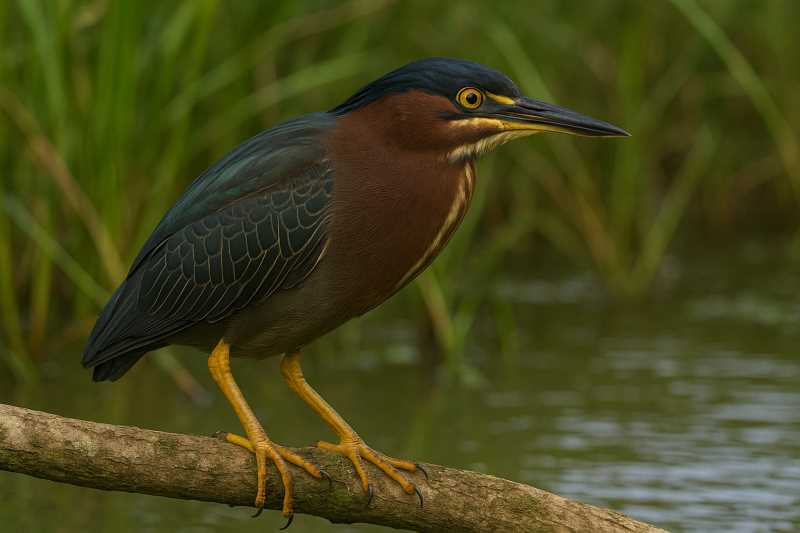
The Green Heron is a small heron, measuring about 16 to 18 inches in length with a wingspan of approximately 25 to 26 inches. Its plumage is a unique blend of deep green and blue, with a cap of rich black feathers adorning its head. The bird’s back and wings are typically a glossy greenish-black, while its neck and chest are chestnut and grey, providing a striking contrast that aids in camouflage among the vegetation.
This bird is commonly found in wetlands, marshes, ponds, and streams, where it can easily access its primary diet of fish, amphibians, and insects. The Green Heron is particularly fond of dense, shrubby areas where it can stay concealed from predators while hunting. Its habitat range extends from southern Canada through the United States and into Central America, adapting to both freshwater and brackish environments.
Unique Hunting Techniques
Green Herons are known for their intelligence and unique hunting methods. Unlike many of their heron relatives, Green Herons use tools to catch their prey. This bird demonstrates remarkable problem-solving skills by dropping objects such as insects, feathers, or small sticks onto the water’s surface to lure fish within striking distance. This behavior, known as bait-fishing, showcases the Green Heron’s innovative approach to hunting, making it one of the few bird species observed using tools in the wild.
The Green Heron is a patient hunter, often standing still for extended periods, waiting for the perfect moment to strike with lightning speed. Its sharp beak is ideal for spearing fish and small creatures, a technique that requires precision and timing.
Breeding and Behavior
Breeding season for the Green Heron typically begins in spring, with nesting sites established in trees or shrubs near water bodies. The nests are constructed from twigs and lined with softer materials, providing a safe environment for the eggs and subsequent hatchlings. Green Herons are known to be monogamous during the breeding season, with both parents sharing responsibilities such as incubating the eggs and feeding the young.
A typical clutch consists of 3 to 5 eggs, and after an incubation period of about 19 to 21 days, the chicks hatch. Both parents are actively involved in feeding the chicks, which fledge approximately 3 weeks after hatching. The young herons are cared for until they are capable of independent survival, which usually occurs by the time they are about 6 weeks old.
Conservation Status and Challenges
Currently, the Green Heron is listed as a species of Least Concern by the International Union for Conservation of Nature (IUCN), indicating that its populations are stable. However, like many wetland species, the Green Heron faces threats from habitat destruction and pollution. Wetland drainage and development, along with water contamination, pose significant challenges to their natural habitats.
Conservation efforts aimed at preserving wetland areas are crucial for the continued survival of the Green Heron. Protecting these ecosystems not only supports the heron population but also benefits a wide range of other species that rely on wetland habitats.
Conclusion
The Green Heron is a fascinating example of adaptability and intelligence within the avian world. Its striking appearance, coupled with its ingenious hunting strategies, makes it a remarkable subject of study and admiration. Ensuring the preservation of its natural habitats will allow future generations to continue to marvel at the Green Heron’s place in the intricate web of biodiversity.
Whether admired for its beauty or its clever hunting skills, the Green Heron serves as a reminder of the complex interconnections within ecosystems and the importance of preserving natural habitats.
Related posts