The Enigmatic Mindanao Scops Owl: A Closer Look
In the rich and vibrant ecosystems of the Philippines, one of the most captivating residents is the Mindanao Scops Owl (Otus mirus). This elusive bird, endemic to the island of Mindanao, is a fascinating subject for ornithologists and bird enthusiasts alike. The Mindanao Scops Owl is a testament to the incredible biodiversity found in the Philippines, a country that boasts a unique array of flora and fauna.
Habitat and Distribution
The Mindanao Scops Owl is primarily found in the lowland and montane forests of Mindanao. These owls prefer densely forested areas, where they can easily camouflage amidst the foliage. The island’s mountainous regions provide an ideal environment for these birds, with their preference for elevations ranging from 500 to 1,700 meters. Unfortunately, as with many other species, habitat loss due to deforestation poses a significant threat to their population.
Physical Characteristics
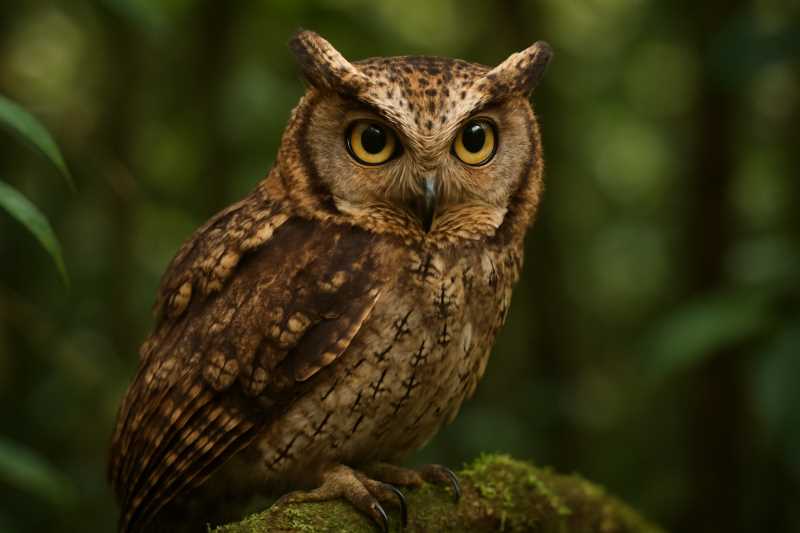
The Mindanao Scops Owl is a small owl, measuring approximately 20 to 25 centimeters in length. Its plumage is a blend of earthy tones, primarily brown and gray, which provides excellent camouflage against tree bark and leaves. The owl’s facial disc is distinct, with a combination of white and brown feathers, and its eyes are large and bright, adapted for nocturnal hunting. The bird’s beak is relatively stout and curved, designed for gripping and consuming prey.
Behavior and Diet
As a nocturnal predator, the Mindanao Scops Owl is active primarily at night. Its diet consists mainly of insects, small mammals, and occasionally small birds. The owl’s hunting strategy involves silent flight and acute hearing, allowing it to detect and capture prey in the dark. The owl’s call is a series of soft, rhythmic hoots, which it uses for communication and establishing territory.
Reproduction and Lifecycle
The breeding season of the Mindanao Scops Owl typically occurs from February to June. During this time, males engage in vocal displays to attract females. Once paired, the female lays a clutch of two to three eggs, which she incubates for about 27 to 30 days. The young owls, or owlets, are cared for by both parents and fledge approximately 30 days after hatching. Like many owl species, the Mindanao Scops Owl exhibits strong parental care, ensuring the survival of its offspring.
Conservation Status
The International Union for Conservation of Nature (IUCN) currently lists the Mindanao Scops Owl as “Near Threatened.” Although exact population numbers are not well-documented, the ongoing deforestation and habitat fragmentation on Mindanao pose significant risks to their long-term survival. Conservation efforts are crucial to preserving the natural habitats on which these owls depend. Protecting the forests of Mindanao will not only benefit the Scops Owl but also countless other species that share this habitat.
Cultural Significance
In the Philippines, owls often hold symbolic meanings in local folklore and traditions. They are sometimes regarded as harbingers of change or omens of significant events. While these beliefs vary among different cultural groups, the presence of the Mindanao Scops Owl contributes to the rich tapestry of cultural heritage in the region.
Importance of Research and Conservation
Research plays a vital role in understanding and conserving the Mindanao Scops Owl. Continued studies on their ecology, behavior, and population dynamics are essential for developing effective conservation strategies. Collaborative efforts between local communities, governments, and conservation organizations can help ensure the preservation of these unique birds and their habitats.
In conclusion, the Mindanao Scops Owl is a remarkable species that highlights the ecological richness of the Philippines. Protecting this owl and its habitat is not only beneficial for biodiversity but also for the cultural and natural heritage of Mindanao. Efforts to conserve this species will require a concerted commitment to sustainable practices and policies that prioritize environmental protection.
By fostering awareness and understanding of the Mindanao Scops Owl, we can contribute to the global effort to preserve our planet’s incredible diversity. As stewards of the earth, it is our responsibility to ensure that future generations can witness the beauty and wonder of such magnificent creatures in their natural habitats.
Related posts