The Enigmatic Plush-crested Jay: A Jewel of the Neotropics
The avian world is adorned with a multitude of fascinating birds, each with its own unique characteristics and ecological significance. Among these, the Plush-crested Jay (Cyanocorax chrysops) stands out not only for its striking appearance but also for its intriguing behaviors and adaptability. This article delves into the captivating world of the Plush-crested Jay, exploring its habitat, physical characteristics, behavior, and the role it plays in its ecosystem.
A Glance at the Plush-crested Jay
The Plush-crested Jay is a member of the family Corvidae, which includes crows, ravens, and magpies. It is one of the most visually striking members of this family, boasting a vibrant mix of colors and a distinctive crest that gives it its name. Native to the Neotropical regions of South America, this bird is found in countries such as Argentina, Bolivia, Brazil, Paraguay, and Uruguay.
Habitat and Distribution
The Plush-crested Jay thrives in a variety of habitats, ranging from subtropical and tropical moist lowland forests to dry savannas and shrublands. It is commonly found in the Atlantic Forest biome, a rich and diverse ecosystem that spans parts of Brazil, Paraguay, and Argentina. This adaptability to different environments highlights the bird’s resilience and ability to thrive in both forested areas and more open landscapes.
Physical Characteristics
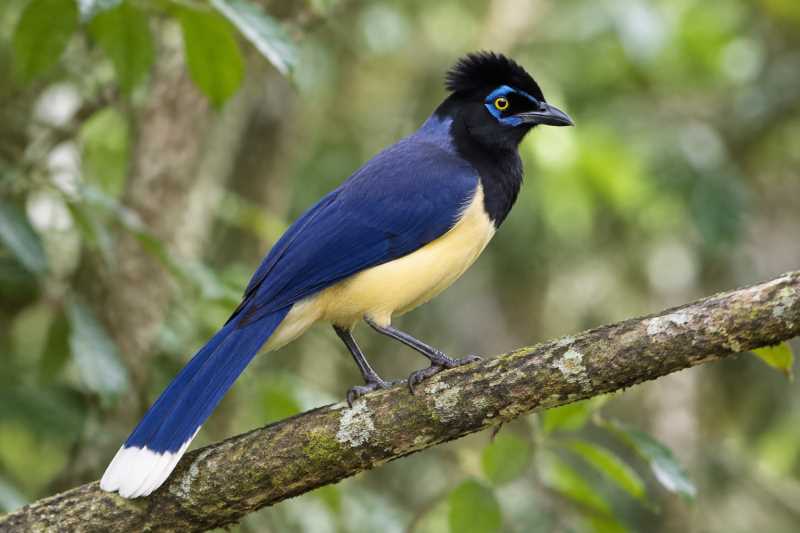
The Plush-crested Jay is a medium-sized bird, with a length ranging from 33 to 40 cm (13 to 16 inches) and a wingspan of approximately 50 cm (20 inches). Its most distinctive feature is its plush, velvety crest, which is a deep blue to black color. This crest, along with its striking blue and white plumage, makes it easily recognizable.
The jay’s face is adorned with a bold black mask that extends from the beak to the nape, contrasting sharply with its bright yellow eyes. Its underparts are predominantly white, while the back and wings exhibit a spectrum of blue shades. The combination of these colors not only aids in its identification but also plays a role in its social interactions.
Behavior and Social Structure
Plush-crested Jays are highly social birds, often seen in noisy groups that display a complex social structure. These groups, usually consisting of family units, engage in cooperative breeding, where non-breeding members assist in raising the young. This behavior is an example of altruism in the animal kingdom, where individuals sacrifice their own reproductive success for the benefit of the group.
Their vocalizations are diverse and complex, ranging from melodious calls to harsh, grating sounds. These calls serve multiple purposes, including communication within the group, territory defense, and predator warnings. The Plush-crested Jay’s intelligence is evident in its problem-solving abilities and adaptability, traits that are characteristic of the Corvidae family.
Feeding Habits
The diet of the Plush-crested Jay is omnivorous, consisting of fruits, seeds, insects, and small vertebrates. This dietary flexibility allows it to exploit a variety of food sources, contributing to its adaptability and success in different habitats. The jay is also known to engage in opportunistic feeding, taking advantage of food left by other animals or scavenging when necessary.
Reproduction and Lifespan
The breeding season of the Plush-crested Jay typically occurs during the wet season, when food resources are abundant. Nests are constructed in trees, usually at a considerable height to protect from predators. These nests are built from twigs and lined with softer materials to provide comfort for the eggs and chicks.
Females lay a clutch of 3 to 5 eggs, which are incubated for about 18 days. Both parents, along with other group members, participate in feeding and caring for the chicks. The cooperative breeding system ensures a higher survival rate for the offspring, as more individuals are involved in providing food and protection.
In the wild, the Plush-crested Jay has an average lifespan of around 10 years, though some individuals may live longer in favorable conditions.
Ecological Role
As a part of the diverse ecosystems it inhabits, the Plush-crested Jay plays a crucial role in seed dispersal and pest control. By consuming fruits and dispersing seeds through their droppings, these birds contribute to forest regeneration and plant diversity. Their diet of insects also helps control pest populations, maintaining a balance in the ecosystem.
Conservation Status
Currently, the Plush-crested Jay is not considered a threatened species and is listed as Least Concern by the International Union for Conservation of Nature (IUCN). However, like many species in the Neotropics, it faces potential threats from habitat loss and fragmentation due to deforestation and agricultural expansion.
Conservation efforts in the Atlantic Forest and other habitats are crucial to ensure the long-term survival of this species. Protecting natural habitats and promoting sustainable land-use practices will not only benefit the Plush-crested Jay but also the myriad of other species that share its environment.
Cultural Significance
In addition to its ecological importance, the Plush-crested Jay holds cultural significance in the regions it inhabits. Its striking appearance and lively behavior have made it a subject of interest and admiration among birdwatchers and nature enthusiasts. In some cultures, it is believed to be a symbol of intelligence and adaptability, qualities that it undoubtedly possesses.
Conclusion
The Plush-crested Jay (Cyanocorax chrysops) is a remarkable bird that embodies the beauty and complexity of the natural world. Its vibrant plumage, social behavior, and ecological roles make it an integral part of the ecosystems it inhabits. As we continue to learn about and appreciate this species, it is imperative that we take steps to protect the habitats that support it and ensure its continued presence in the wild.
By fostering a greater understanding and appreciation of the Plush-crested Jay and its environment, we can contribute to the conservation of biodiversity in the Neotropics and preserve the natural heritage for future generations.
Related posts