The Long-tailed Mockingbird: An Avian Marvel of South America
The Long-tailed Mockingbird (Mimus longicaudatus) is a captivating member of the Mimidae family, known for its melodious vocalizations and striking appearance. As its name suggests, this bird is renowned for its elongated tail, which contributes to its elegance and grace in flight. Native to the regions of western South America, particularly Peru and Ecuador, the Long-tailed Mockingbird is a fascinating subject for ornithologists and bird enthusiasts alike.
Taxonomy and Classification
The Long-tailed Mockingbird belongs to the genus Mimus, which encompasses a variety of mockingbird species. It is closely related to the Northern Mockingbird (Mimus polyglottos), one of the most well-known members of this avian family. Scientifically designated as Mimus longicaudatus, this species was first described by the German ornithologist Christian Ludwig Brehm in 1858. Throughout the years, the Long-tailed Mockingbird has been a subject of interest due to its unique characteristics and adaptability.
Physical Characteristics and Identification
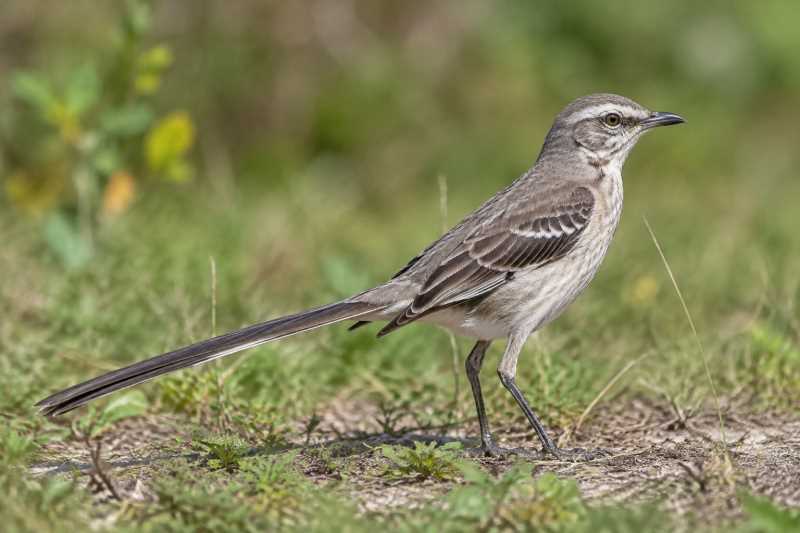
The most distinctive feature of the Long-tailed Mockingbird is, unsurprisingly, its tail. Measuring approximately 26 to 28 centimeters in length, the bird’s tail is not only long but also prominently graduated, with the central feathers being the longest. This feature aids in its identification, alongside its overall body length, which ranges between 25 to 28 centimeters.
The plumage of the Long-tailed Mockingbird is equally remarkable. It exhibits a blend of gray and white colors, with a darker shade on the back and wings, while the underparts are typically paler. A notable black stripe runs through the eye, providing a striking contrast against the bird’s white eyebrows and cheeks. The wings display white patches, which are particularly visible in flight, adding to the bird’s visual appeal.
Habitat and Distribution
The Long-tailed Mockingbird is predominantly found in the coastal regions of Peru and Ecuador. It thrives in a variety of habitats, ranging from arid scrublands and open woodlands to mangroves and urban areas. Its adaptability to different environments is one of the reasons for its widespread presence in these regions. The bird is often seen foraging on the ground or perched prominently on shrubs and low trees, where it can easily spot potential threats or food sources.
Behavior and Diet
This species is known for its highly varied and complex vocalizations. Much like its relatives, the Long-tailed Mockingbird is an accomplished mimic, capable of imitating the calls of other bird species and various environmental sounds. This vocal versatility is not just for show; it plays a crucial role in communication, territory defense, and mate attraction.
In terms of diet, the Long-tailed Mockingbird is omnivorous. It feeds on a diverse range of food items, including insects, fruits, seeds, and small reptiles. Its ability to exploit different food sources contributes to its success in various habitats, from wild landscapes to human-altered environments.
Breeding and Reproduction
Breeding typically occurs during the rainy season, which varies depending on the specific locality within its range. The Long-tailed Mockingbird is monogamous, forming pairs that work together to build nests using twigs, grass, and other plant materials. Nests are commonly constructed in shrubs or low trees, providing protection and concealment from predators.
The female lays a clutch of 2 to 4 eggs, which are incubated for approximately two weeks. Both parents participate in feeding and caring for the chicks, which fledge about 12 to 14 days after hatching. This cooperative breeding strategy enhances the survival rates of the offspring, ensuring the continuation of the species.
Conservation Status
The Long-tailed Mockingbird is currently classified as a species of Least Concern by the International Union for Conservation of Nature (IUCN). Its wide range and adaptability to different habitats have contributed to stable population numbers. However, like many other wildlife species, it faces threats from habitat destruction, climate change, and human encroachment.
Conservation efforts aimed at preserving natural habitats and promoting awareness about the species’ ecological role are essential to ensure its continued survival. While it may not be considered endangered, maintaining healthy populations of the Long-tailed Mockingbird is crucial for the biodiversity of the regions it inhabits.
Conclusion
The Long-tailed Mockingbird is a remarkable bird that embodies the beauty and complexity of avian life in South America. Its melodious songs, distinctive appearance, and adaptability make it a standout species among its peers. As we continue to study and appreciate this avian marvel, it is important to support conservation initiatives that protect its natural habitats and ensure that future generations can enjoy the presence of the Long-tailed Mockingbird in the wild.
Related posts