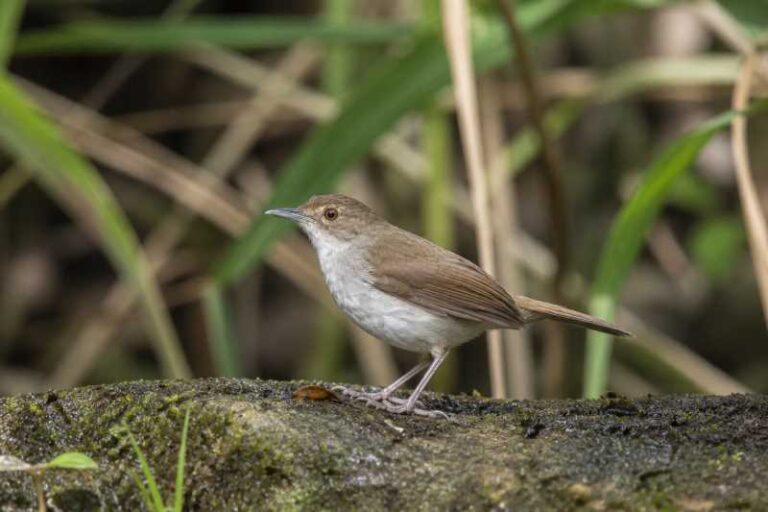
The Acadian Flycatcher (Empidonax virescens) is a small, secretive songbird that thrives in the shaded understories of mature eastern deciduous forests. As one of the more range-restricted members of the notoriously difficult-to-identify Empidonax flycatchers, the Acadian Flycatcher is a fascinating and important indicator species for forest health and integrity.
Physical Description
The Acadian Flycatcher measures about 15 cm (6 inches) in length, with a wingspan of approximately 23 cm (9 inches), and weighs between 12–14 grams. It has an olive-green back, whitish underparts, and a pale eye ring that contrasts subtly with its overall plumage. Wingbars are prominent and help distinguish it in the field, though separating it from other Empidonax species requires close attention to voice and habitat. Its bill is fairly broad-based and pinkish on the lower mandible, a helpful trait for identification.
Voice and Identification
One of the most reliable ways to identify the Acadian Flycatcher is by its distinctive song—a sharp, explosive “peet-sah!” that echoes through the forest. This vocalization is both unique among Empidonax flycatchers and crucial during the breeding season when visual cues are often obscured by dense foliage. Their call, a dry “pit,” is also commonly heard, especially when the bird is foraging or alert.
Habitat and Range
The Acadian Flycatcher is a breeding specialist of mature, moist, and shaded deciduous forests in eastern North America. It prefers forested ravines, creek bottoms, and shaded slopes where there is a dense canopy and minimal undergrowth. These habitats provide the ideal conditions for foraging and nesting.
Its breeding range extends from the southeastern parts of Minnesota and Wisconsin, across the Appalachian Mountains, and into the southeastern United States, including parts of Texas and Florida. The species migrates in late summer to wintering grounds in Central America and northern South America, particularly in Colombia, Venezuela, and Ecuador. During migration, it can be found in a wider variety of forested habitats.
Diet and Foraging Behavior
True to its name, the Acadian Flycatcher is an insectivore that captures its prey on the wing. It typically employs a “sallying” technique, where it perches quietly before launching into a swift flight to snatch insects from midair. Its diet consists primarily of flying insects such as flies, beetles, moths, and wasps. Occasionally, it may also glean insects from foliage or capture spiders and other arthropods.
Breeding and Nesting
Breeding begins in late spring, usually in May or June. The female constructs a delicate, open-cup nest made from grasses, rootlets, moss, and spider silk, often placed on a horizontal fork of a tree limb, 2 to 10 meters above the ground. The placement is often over a stream or in a shaded, secluded section of the forest.
The female lays 2 to 4 eggs and is the primary incubator, while the male guards the territory and feeds the fledglings after hatching. Nest success is often impacted by brood parasitism, particularly by Brown-headed Cowbirds, which lay their eggs in Acadian Flycatcher nests. In some areas, cowbird parasitism has caused declines in nesting success.
Conservation Status
The Acadian Flycatcher is currently classified as a species of Least Concern by the IUCN. However, it is highly sensitive to habitat fragmentation and degradation. Because it relies on large tracts of mature forest, ongoing logging, suburban development, and forest fragmentation pose significant threats. Loss of wintering habitat in Central and South America due to deforestation also contributes to concern for long-term population stability.
In regions where forest conservation is a priority, Acadian Flycatchers often serve as a bioindicator species. Their presence is a positive sign of healthy forest ecosystems with minimal disturbance. Conservation efforts focusing on preserving continuous forest tracts, protecting riparian corridors, and reducing cowbird populations are essential to ensure the future of this species.
Conclusion
The Acadian Flycatcher is a forest-dependent songbird that captures the essence of the eastern North American woodlands. From its sharp, easily recognized “peet-sah” call to its acrobatic insect-catching flights, this species plays a vital role in the health and diversity of its ecosystem. Its dependence on mature forests makes it both a conservation priority and a symbol of the need to preserve our remaining wild places.
Related posts