Little Swift: A Master of the Skies
The Little Swift (Apus affinis) is an extraordinary bird species that captivates ornithologists and nature enthusiasts alike with its remarkable aerial prowess. As one of the most acrobatic fliers in the avian world, the Little Swift is a fascinating subject of study for those interested in bird behavior, ecology, and adaptation.
Taxonomy and Distribution
Belonging to the family Apodidae, the Little Swift is a small bird, typically measuring about 13 to 15 centimeters in length, with a wingspan of approximately 33 centimeters. This species is widely distributed across Africa, the Middle East, South Asia, and parts of Southern Europe. Its adaptability to diverse environments, ranging from urban areas to natural cliffs, highlights its resilience and versatility.
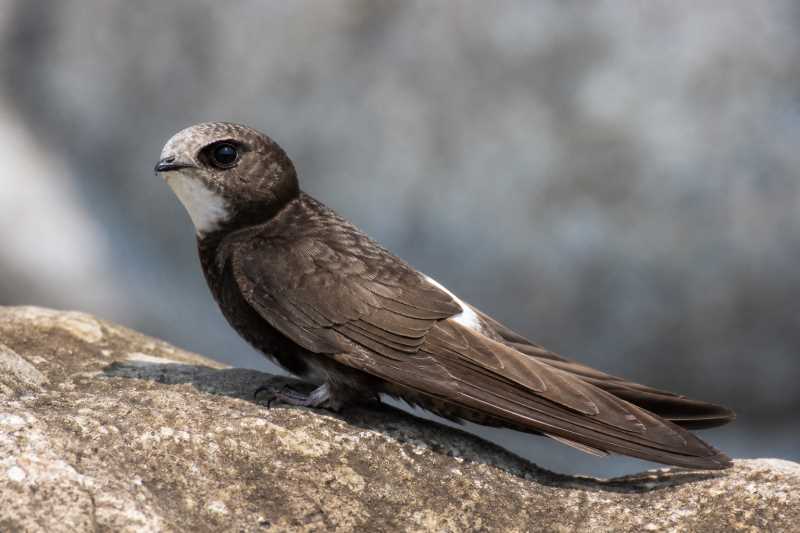
The Little Swift is often confused with its close relative, the Common Swift (Apus apus), but can be distinguished by its smaller size and unique white rump, which is prominently visible in flight. This feature, along with its contrasting dark plumage, makes the Little Swift a distinctive and easily recognizable bird.
Flight and Feeding Behavior
Renowned for its flight capabilities, the Little Swift is an aerial expert, spending the majority of its life on the wing. It is capable of executing rapid, agile maneuvers, making it a formidable predator of flying insects. Its sickle-shaped wings and short, forked tail are perfectly adapted for sustained flight, allowing it to cover vast distances without landing.
The Little Swift’s diet primarily consists of small insects and spiders, which it catches in mid-air. This species is known for its feeding technique known as "hawking," where the bird adeptly captures prey using its wide gape while flying at high speeds. This method is not only efficient but also allows the Little Swift to feed in various habitats, including urban settings where insects are abundant.
Breeding and Nesting Habits
Little Swifts are colonial nesters, often forming large colonies in suitable locations. They prefer to nest on vertical surfaces such as cliffs, buildings, and bridges, utilizing crevices and ledges to construct their nests. These nests are compact structures made from plant material, feathers, and debris, bound together with the bird’s saliva, which acts as a natural adhesive.
Breeding typically occurs during the warmer months, with pairs often producing two to three eggs per clutch. Both parents share the responsibility of incubating the eggs and feeding the chicks. The young swifts fledge after about six weeks, ready to join the adults in their aerial lifestyle.
Adaptations and Survival Strategies
The Little Swift’s adaptations to a life predominantly spent in flight are noteworthy. Its streamlined body, elongated wings, and short, wide beak are all evolutionary traits that enhance its flying efficiency and feeding success. Additionally, the bird’s ability to drink and bathe while in flight is a remarkable adaptation, allowing it to remain airborne for extended periods without landing.
In urban environments, the Little Swift has demonstrated impressive adaptability. It often utilizes man-made structures for nesting, thriving in cities where natural nesting sites are scarce. This adaptability has contributed to its stable population status, despite the challenges posed by urban expansion and habitat alteration.
Conservation Status
Currently, the Little Swift is classified as a species of "Least Concern" by the International Union for Conservation of Nature (IUCN). This classification reflects its wide distribution and stable population trends. However, like many bird species, the Little Swift faces potential threats from habitat destruction, climate change, and pollution.
Conservation efforts aimed at preserving natural habitats and ensuring the availability of nesting sites are crucial for maintaining the Little Swift’s population. Public awareness and urban planning that considers the needs of urban-dwelling birds can further support this species’ thriving existence.
Conclusion
The Little Swift is a testament to nature’s incredible ingenuity and adaptability. Its mastery of flight and ability to thrive in diverse environments make it a compelling subject for study and admiration. As we continue to explore and understand the complexities of avian life, the Little Swift stands out as a remarkable example of evolutionary success and ecological resilience.
Related posts