The Chestnut Bulbul: A Detailed Overview of Hemixos castanonotus
The Chestnut Bulbul, scientifically known as Hemixos castanonotus, is a captivating bird species that holds a significant place in the avian biodiversity of Asia. This article delves into the various aspects of this intriguing bird, from its taxonomy and physical characteristics to its habitat, behavior, and conservation status.
Taxonomy and Classification
The Chestnut Bulbul belongs to the family Pycnonotidae, which encompasses a diverse range of songbirds commonly known as bulbuls. The genus Hemixos, to which the Chestnut Bulbul belongs, is relatively small, with only a few species. The specific epithet "castanonotus" is derived from the Greek words "kastanon," meaning chestnut, and "notos," meaning back, referring to its distinctive chestnut-colored back.
Physical Characteristics
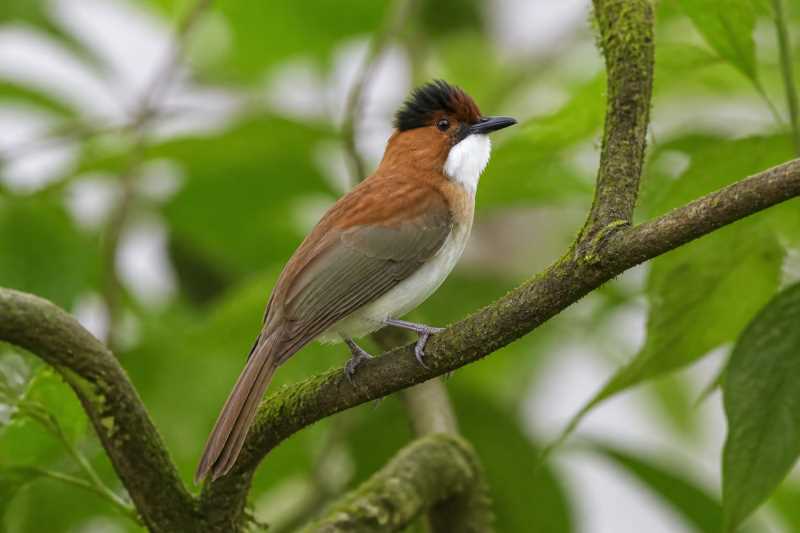
The Chestnut Bulbul is a medium-sized bird, measuring approximately 20 to 22 centimeters in length. One of its most striking features is its vibrant chestnut-colored back, which contrasts beautifully with its grayish-white underparts. The head is adorned with a distinctive black crown and nape, providing a striking contrast to the rest of its plumage. Its eyes are bright and alert, often accentuated by a subtle white eye-ring.
The wings and tail are primarily dark brown, with subtle hints of chestnut that become more pronounced during flight. This combination of colors allows the Chestnut Bulbul to blend seamlessly into its natural habitat, providing it with an added advantage against predators.
Habitat and Distribution
The Chestnut Bulbul is native to a range of countries across Southeast Asia, including China, Vietnam, Laos, and Thailand. It thrives in subtropical or tropical moist lowland forests, where it can often be found foraging in the mid to upper canopy layers. These birds have also been observed in secondary growth forests and sometimes in well-wooded urban areas, demonstrating their adaptability to different environmental conditions.
The distribution of the Chestnut Bulbul is closely tied to the availability of its preferred habitat. Deforestation and habitat degradation pose significant threats to its populations, causing shifts in its distribution and abundance.
Behavior and Diet
The Chestnut Bulbul is primarily frugivorous, with a diet consisting mainly of fruits and berries. It plays a vital role in seed dispersal, contributing to the regeneration and maintenance of its forest habitat. In addition to fruits, it occasionally consumes insects, particularly during the breeding season when the demand for protein-rich food increases.
Social by nature, Chestnut Bulbuls are often seen in small flocks, particularly outside the breeding season. Their vocalizations are melodic and complex, consisting of a series of whistles and trills that serve various purposes, such as attracting mates and establishing territory.
Breeding and Reproduction
The breeding season for the Chestnut Bulbul typically occurs from March to June, although this can vary slightly depending on geographical location. During this period, males become particularly vocal and perform elaborate displays to attract females.
Nests are constructed in trees and shrubs, usually at a height that provides both safety from ground predators and a good vantage point for the adults to survey their surroundings. The female lays a clutch of 2 to 4 eggs, which are incubated primarily by her. After hatching, both parents participate in feeding and caring for the chicks until they are ready to fledge.
Conservation Status
The Chestnut Bulbul is currently listed as a species of "Least Concern" on the IUCN Red List. However, this does not imply that the species is free from threats. The ongoing destruction of forest habitats due to logging, agriculture, and urban expansion poses significant challenges to its survival.
Conservation efforts are crucial to mitigating these threats. Protecting large swathes of forest habitat, enforcing sustainable logging practices, and raising awareness about the ecological importance of species like the Chestnut Bulbul are vital steps in ensuring its continued survival.
Conclusion
The Chestnut Bulbul is a testament to the rich biodiversity found in Southeast Asia’s forests. Its vibrant plumage, melodic calls, and ecological role as a seed disperser highlight the interconnectedness of species within these ecosystems. As human activities continue to impact natural habitats, it is imperative that we prioritize conservation efforts to preserve the Chestnut Bulbul and the myriad of other species that share its home.
By understanding and appreciating the Chestnut Bulbul, we can contribute to the broader effort of conserving the world’s avian diversity, ensuring that future generations can continue to marvel at these remarkable creatures.
Related posts