The Greater Crested Tern: A Comprehensive Overview
The Greater Crested Tern, scientifically known as Thalasseus bergii, is a prominent member of the tern family, Laridae. This seabird is distinguished by its striking appearance and widespread distribution across tropical and subtropical coastal regions. This article delves into the intricate details of the Greater Crested Tern, exploring its habitat, physical characteristics, behavior, and conservation status.
Habitat and Distribution
The Greater Crested Tern boasts a wide distribution range, inhabiting coastal regions of the Indian and Pacific Oceans. It is commonly found along the coasts of Africa, Australia, Southeast Asia, and the Middle East. These birds prefer sandy beaches, rocky shores, and islands for nesting. Their habitat selection is strongly influenced by the availability of food, primarily fish, which they catch by plunge diving.
Physical Characteristics
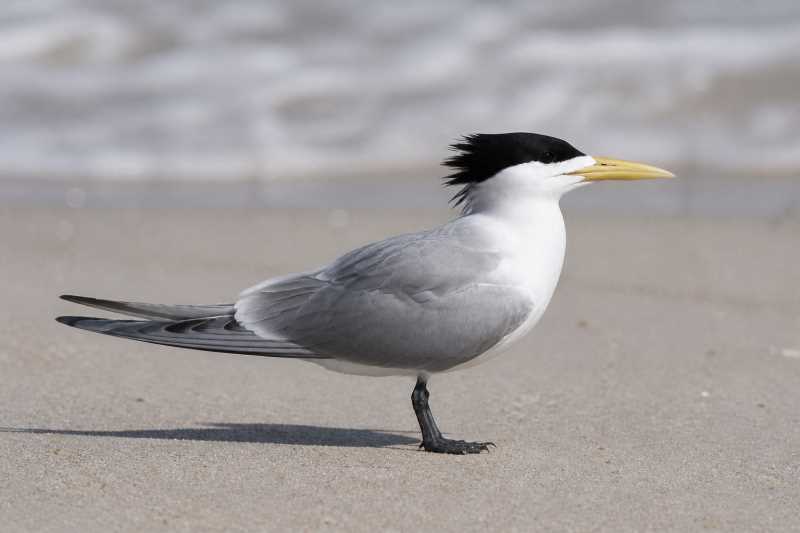
The Greater Crested Tern is notable for its elegant and streamlined body, measuring approximately 46-49 cm in length with a wingspan of 125-130 cm. It is adorned with a distinctive black crest on its head, which contrasts sharply with its pale grey and white plumage. The bill is long, slender, and yellow, making it a useful tool for catching fish. Their legs are short and dark, which are typical of seabirds that spend a considerable amount of time on water and land.
Sexual dimorphism in Greater Crested Terns is minimal, with males and females displaying similar plumage and size. Juveniles can be identified by their streaky brown plumage, which gradually transitions to the adult’s sleek grey and white as they mature.
Behavior and Diet
Greater Crested Terns are highly social birds, often seen in large colonies that can range from a few hundred to several thousand individuals. These colonies facilitate social interactions and provide safety in numbers from predators. They are known for their loud and raucous calls, especially during the breeding season.
The diet of the Greater Crested Tern predominantly consists of small fish, supplemented by crustaceans and other marine organisms. They exhibit a remarkable hunting technique known as plunge diving, where they soar above the water before diving sharply to catch prey beneath the surface. This method is both efficient and impressive, showcasing the bird’s agility and precision.
Breeding and Reproduction
Breeding in Greater Crested Terns typically occurs in large colonies on islands or secluded beaches. The timing of the breeding season varies depending on the region, with birds in different areas synchronizing their breeding with the local abundance of food resources.
Nesting sites are often densely packed, with each pair defending a small territory around their nest. The nest itself is a simple scrape in the sand or gravel, sometimes lined with bits of vegetation. Females typically lay one to two eggs, which are incubated by both parents for about 25-30 days.
After hatching, the chicks are semi-precocial, meaning they are relatively mature and mobile but still dependent on their parents for food and protection. The chick-rearing period is a cooperative effort between the male and female, who both partake in feeding and guarding the young.
Conservation Status
The Greater Crested Tern is currently classified as a species of Least Concern by the International Union for Conservation of Nature (IUCN). This status is due to its wide distribution and large population size. However, like many seabirds, it faces threats from habitat destruction, human disturbance, and climate change.
Coastal development and increased human activity in nesting areas can lead to habitat loss and decreased breeding success. Additionally, climate change poses a significant threat by altering sea levels and fish populations, which directly impacts the availability of food resources.
Conservation efforts are focused on protecting critical nesting sites and minimizing human disturbances during the breeding season. These measures are essential to ensure the continued survival of this iconic seabird.
Conclusion
The Greater Crested Tern is a remarkable bird that plays a vital role in the ecosystems it inhabits. Its striking appearance, social behavior, and impressive hunting skills make it a fascinating subject for bird enthusiasts and researchers alike. While currently not at immediate risk, ongoing conservation efforts are crucial to safeguard its future in a rapidly changing world.
By understanding and appreciating the Greater Crested Tern, we can contribute to the preservation of these magnificent birds and the rich biodiversity of our planet’s coastal regions.
Related posts