Introduction
The Hispaniolan Lizard Cuckoo (Coccyzus longirostris) is a captivating bird species native to the island of Hispaniola, which comprises the countries of the Dominican Republic and Haiti. This bird is known for its distinct appearance, unique behaviors, and vital role in the ecosystem. In this article, we will explore various aspects of the Hispaniolan Lizard Cuckoo, including its physical characteristics, habitat, behavior, diet, and its conservation status.
Physical Characteristics
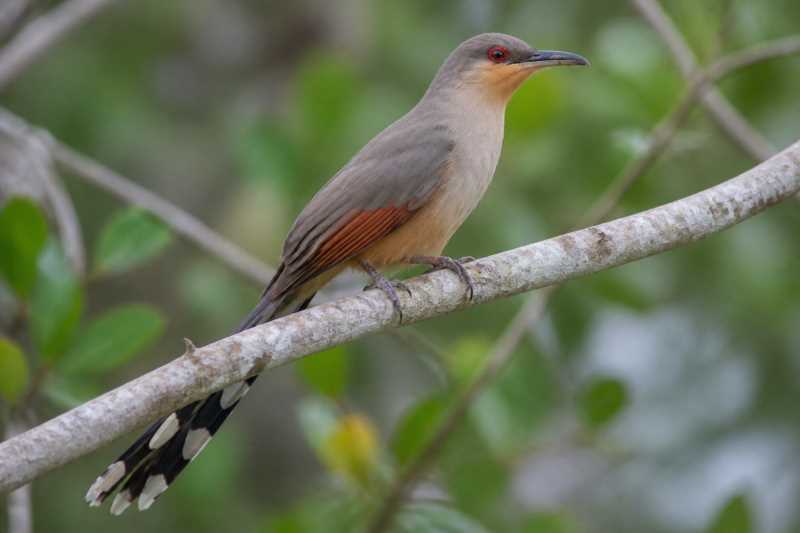
The Hispaniolan Lizard Cuckoo is a medium-sized bird, typically measuring between 40 to 48 centimeters in length, with a wingspan that ranges from 50 to 60 centimeters. Its most striking feature is its long, decurved bill, which is well-adapted for catching its primary prey: lizards. The bird’s plumage is predominantly grayish-brown, with a lighter underside and a distinctive rufous or rusty coloration on its wings and tail. The tail feathers are long and graduated, with white tips, adding to its elegant appearance.
The bird’s eyes are surrounded by a bare patch of red skin, which gives it a unique and somewhat fierce look. This red eye-ring is particularly noticeable during the breeding season, making it a useful identification feature for birdwatchers and researchers.
Habitat and Distribution
The Hispaniolan Lizard Cuckoo is endemic to the island of Hispaniola and is found in a variety of habitats across the island, including lowland dry forests, montane forests, and subtropical or tropical moist forests. It is also known to inhabit areas with scrub and secondary growth, showcasing its adaptability to different environments.
Despite its adaptability, the Hispaniolan Lizard Cuckoo prefers areas with dense vegetation, which provide ample cover and hunting opportunities. This preference for dense undergrowth makes it more challenging to observe in the wild, as it often remains hidden from view.
Behavior and Ecology
The Hispaniolan Lizard Cuckoo is a solitary bird, typically seen alone or in pairs. It is a highly territorial species, with individuals maintaining and defending their territories with a series of vocalizations and displays. The bird’s call is a series of rapid, harsh notes, which can be heard echoing through the forest, especially during the breeding season.
One of the most fascinating aspects of the Hispaniolan Lizard Cuckoo’s behavior is its feeding strategy. As its name suggests, lizards make up a significant portion of its diet, along with insects and other small vertebrates. The bird uses its long bill to probe into crevices and foliage to capture prey, and it is known to be an agile hunter, capable of quick movements and short flights to catch its food.
During the breeding season, which usually occurs in the spring and summer months, the Hispaniolan Lizard Cuckoo constructs a simple nest made of twigs and leaves, typically located in a tree or shrub. Both the male and female participate in incubating the eggs and feeding the chicks, illustrating a cooperative breeding strategy.
Diet
The diet of the Hispaniolan Lizard Cuckoo is diverse, reflecting its opportunistic feeding habits. While lizards form the bulk of its diet, the bird also consumes a variety of insects, including beetles, caterpillars, and grasshoppers, as well as spiders and small mammals when available. This varied diet not only sustains the bird but also helps control the populations of these prey species, contributing to the ecological balance within its habitat.
Conservation Status
The Hispaniolan Lizard Cuckoo is currently classified as a species of "Least Concern" by the International Union for Conservation of Nature (IUCN). However, like many other species endemic to Hispaniola, it faces threats from habitat destruction and degradation. Deforestation for agriculture, logging, and urban development pose significant threats to its habitat, reducing the available space for the bird to live and hunt.
Conservation efforts on Hispaniola are crucial for the long-term survival of the Hispaniolan Lizard Cuckoo and other endemic species. Protecting and restoring habitats, implementing sustainable land-use practices, and raising awareness about the importance of biodiversity are essential steps to ensure that this remarkable bird continues to thrive.
Conclusion
The Hispaniolan Lizard Cuckoo is a unique and fascinating bird that plays a significant role in the ecosystem of Hispaniola. With its distinctive appearance, intriguing behaviors, and important ecological role, it is a species worthy of admiration and protection. Continued research and conservation efforts are vital to safeguard its future and preserve the rich biodiversity of its island home.
References
- Latta, S. C., Rimmer, C. C., Keith, A., Wiley, J. W., Raffaele, H. A., McFarland, K. P., & Fernandez, E. (2006). Birds of the Dominican Republic and Haiti. Princeton University Press.
- BirdLife International. (2021). Coccyzus longirostris. The IUCN Red List of Threatened Species 2021.
- Wiley, J. W. (1980). The Puerto Rican Lizard-Cuckoo: Some aspects of its ecology and reproductive biology. The Condor, 82(3), 345-354.
Related posts