The Enigmatic Golden-crowned Babbler: A Comprehensive Overview
The avian world is replete with fascinating species that capture the imagination of ornithologists and bird enthusiasts alike. Among these is the Golden-crowned Babbler (Sterrhoptilus dennistouni), a bird that stands out due to its distinct features and intriguing behaviors. Native to the verdant forests of the Philippines, this species plays a vital role in the ecosystem and offers a unique window into the rich biodiversity of Southeast Asian avifauna.
Taxonomy and Classification
The Golden-crowned Babbler belongs to the family Zosteropidae, which comprises various small passerine birds. Known for their sociability, members of this family are often seen in flocks. The genus Sterrhoptilus, to which the Golden-crowned Babbler belongs, is characterized by birds with slender bodies and distinctive plumage patterns. The species name “dennistouni” honors a notable ornithologist whose contributions to the field have been invaluable.
Physical Description
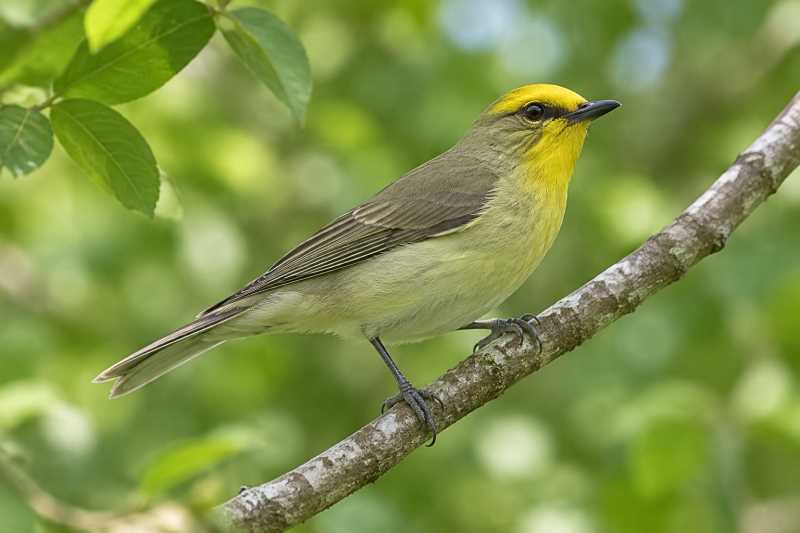
One of the most striking features of the Golden-crowned Babbler is its vibrant golden-yellow crown, which contrasts sharply with its olive-brown body. This distinctive crown is not just a visual delight but also serves as a key identifier for the species. The bird’s underparts are paler, with a subtle hint of gray, while its wings and tail exhibit a darker hue, providing a harmonious balance of colors.
Measuring approximately 14 centimeters in length, the Golden-crowned Babbler is relatively small but boasts an agile and lively demeanor. Its eyes, a deep shade of brown, reflect a keen curiosity, and its slender beak is well-adapted for foraging small insects and fruits.
Habitat and Distribution
The Golden-crowned Babbler is endemic to the Philippines, where it inhabits lowland and montane forests. These birds are typically found at elevations ranging from sea level to about 1,200 meters. Their preference for dense, lush forests underscores their dependency on well-preserved habitats for survival.
These babblers are often spotted in mixed-species flocks, a behavior that enhances their foraging efficiency and provides protection from predators. The forests of Luzon, Mindanao, and several smaller islands serve as the primary strongholds for this species.
Behavior and Ecology
Golden-crowned Babblers are known for their active and social nature. They are almost always on the move, flitting from branch to branch in search of food. Their diet mainly consists of insects, spiders, and small fruits. This omnivorous diet plays a crucial role in controlling insect populations and aiding in seed dispersal, thereby contributing to the health of their forest habitats.
Their vocalizations are a series of high-pitched calls and whistles, which serve as a means of communication within the flock. These calls, while melodious, are subtle and blend seamlessly with the ambient sounds of the forest.
Reproduction and Lifespan
The breeding season for the Golden-crowned Babbler typically coincides with the rainy season, when food is abundant. During this time, they build cup-shaped nests intricately woven with twigs and leaves, often situated in the fork of a tree branch.
Clutch sizes usually range from two to four eggs, with both parents sharing the responsibility of incubation and feeding the chicks. This cooperative breeding strategy ensures higher survival rates for the offspring, an adaptation that is crucial for species survival in the wild.
Conservation Status and Threats
Currently, the Golden-crowned Babbler is not classified as threatened on the IUCN Red List. However, its dependence on forest habitats makes it vulnerable to deforestation and habitat degradation. The Philippines has experienced significant deforestation over the years, primarily due to logging, agricultural expansion, and urban development.
Conservation efforts aimed at protecting and restoring forest habitats are essential for the long-term survival of this species. Initiatives that promote sustainable land use and support the establishment of protected areas are vital in ensuring that the Golden-crowned Babbler continues to thrive.
Conclusion
The Golden-crowned Babbler (Sterrhoptilus dennistouni) is a testament to the rich biodiversity of the Philippines and the intricate balance of forest ecosystems. Its vibrant appearance and lively behavior make it a favorite among birdwatchers, while its ecological role underscores the importance of conserving its natural habitat. As with many species, the future of the Golden-crowned Babbler hinges on our commitment to preserving the natural world, ensuring that this avian gem continues to enchant generations to come.
By fostering awareness and taking actionable steps towards conservation, we can help safeguard the habitats that are crucial for the survival of countless species, including the captivating Golden-crowned Babbler.
Related posts