The Five-Striped Sparrow: Unveiling the Secrets of a Subtle Songster
In the intricate tapestry of avian biodiversity, the Five-striped Sparrow (Amphispiza quinquestriata) emerges as a captivating subject for ornithologists and bird enthusiasts alike. This elusive bird, with its distinctive markings and subtle charm, is a testament to the wonders of nature found primarily in the arid landscapes of the southwestern United States and northwestern Mexico.
Taxonomy and Physical Description
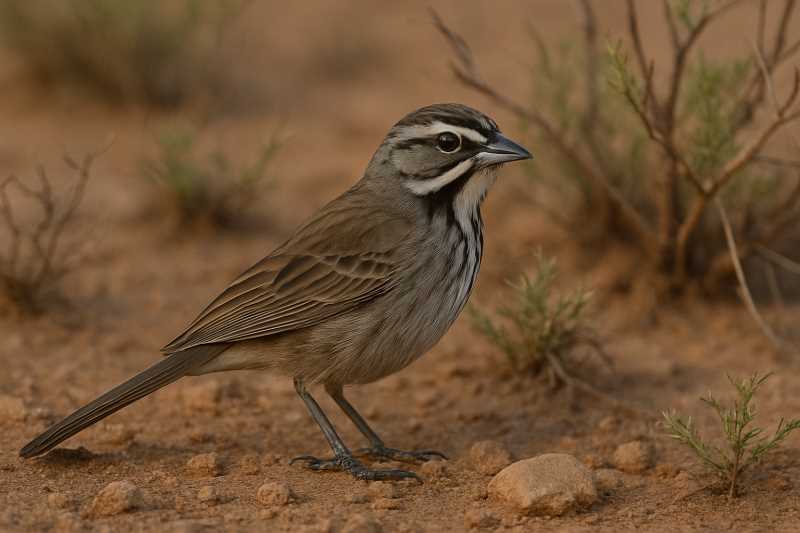
Belonging to the family Passerellidae, the Five-striped Sparrow is a medium-sized sparrow, measuring about 15 centimeters in length. Its plumage is a harmonious blend of earthy tones, with a grayish-brown back and a paler underbelly. The hallmark of this species, as its name suggests, is the presence of five bold, dark stripes adorning its face, creating a striking contrast against its white throat. These facial stripes are not just ornamental; they play a crucial role in species identification, especially in the bird’s arid and often visually monotonous habitats.
Habitat and Distribution
The Five-striped Sparrow is a resident of the rugged, arid landscapes of the Sonoran Desert, particularly favoring rocky foothills and canyons with sparse vegetation. Its range extends from southern Arizona into the northern reaches of Mexico, including the states of Sonora and Sinaloa. This preference for remote and challenging terrains often makes the Five-striped Sparrow a difficult bird to observe, adding an aura of mystery to its existence.
In its preferred habitat, the sparrow is often found in areas with dense stands of thorny shrubs and grasses, which provide both food and protection from predators. These ecosystems not only support its survival but also offer a unique setting for its breeding activities.
Behavior and Diet
The Five-striped Sparrow is known for its secretive nature, often skulking in dense underbrush to avoid detection. Its diet is typical of many sparrows, consisting primarily of seeds and insects. During the breeding season, which aligns with the summer monsoons, the bird’s diet shifts more towards insects, providing the necessary protein for rearing young.
This sparrow’s song is a series of short, melodious trills and whistles, often delivered from low perches. Its vocalizations play a significant role in territory establishment and mate attraction, although its shy nature means the song is more often heard than the bird is seen.
Breeding and Nesting
Breeding for the Five-striped Sparrow is closely tied to the summer rains, which transform the desert into a vibrant ecosystem teeming with life. Nesting typically occurs in low shrubs, where the female constructs a cup-shaped nest using grasses and twigs. The clutch usually consists of 2 to 4 eggs, which the female incubates for about two weeks. Both parents are involved in feeding and caring for the young, which fledge approximately 10 days after hatching.
The sparrow’s reliance on the monsoon season for breeding highlights the delicate balance it maintains with its environment. Changes in precipitation patterns due to climate change could pose significant challenges to its reproductive success.
Conservation Status
Currently, the Five-striped Sparrow is not considered to be at immediate risk, classified as a species of Least Concern by the International Union for Conservation of Nature (IUCN). However, habitat degradation and climate change remain potential threats. Conservation efforts focused on preserving its natural habitat and understanding its ecological needs are essential to ensuring its continued survival.
Conclusion
The Five-striped Sparrow is an emblematic species of the desert’s resilience and beauty. Its subtle charm and elusive nature captivate those fortunate enough to encounter it. As we continue to explore and understand the complexities of its life, this sparrow reminds us of the intricate relationships that define our natural world and the importance of preserving these delicate ecosystems for future generations.
Whether a seasoned birder or a casual observer, the Five-striped Sparrow offers a window into the serene yet vibrant world of the desert, encouraging us to appreciate and protect the diverse tapestry of life that surrounds us.
Related posts