The White-fronted Honeyeater: A Jewel of the Arid Australian Landscape
Australia’s vast and diverse landscapes are home to an incredible array of bird species, each adapted to thrive in their unique environments. Among these is the White-fronted Honeyeater (Purnella albifrons), a captivating bird known for its striking appearance and remarkable adaptability. This article delves into the fascinating world of the White-fronted Honeyeater, exploring its habitat, behavior, and ecological significance.
Habitat and Distribution
The White-fronted Honeyeater is predominantly found across the arid and semi-arid regions of Australia. Its range spans from Western Australia through the interior to the southern parts of the Northern Territory, extending into South Australia and western New South Wales. This bird favors open woodlands, shrublands, and heathlands, particularly areas dominated by flowering plants like eucalyptus and banksias, which provide essential nectar resources.
Adaptation to the arid conditions of its habitat is a hallmark of the White-fronted Honeyeater. Its distribution is closely linked to the availability of food, particularly during flowering events. This migratory pattern allows the species to exploit seasonal food supplies, demonstrating its resilience and versatility in an often harsh environment.
Physical Characteristics
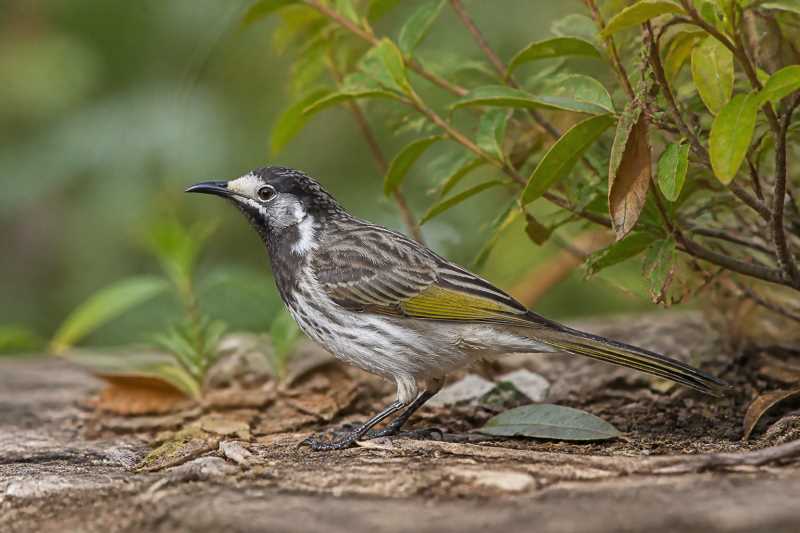
The White-fronted Honeyeater is a medium-sized bird, measuring approximately 15–17 centimeters in length. It is easily recognizable by its distinctive white face and forehead, setting it apart from other honeyeaters. The rest of its plumage is primarily grey, with subtle yellow streaks on the wings and tail. Its striking appearance is complemented by a long, curved bill, perfectly adapted for extracting nectar from flowers.
Sexual dimorphism is not pronounced in this species, meaning males and females are similar in appearance. The bird’s vocalizations are a series of melodic and rapid calls, which are often heard before the bird is seen, providing an auditory clue to its presence in the dense foliage.
Feeding Behavior and Diet
Nectar forms the cornerstone of the White-fronted Honeyeater’s diet, a trait common among honeyeaters. Its long, brush-tipped tongue is perfectly adapted to collect nectar from a variety of flowering plants. However, this bird is not solely reliant on nectar; it also consumes insects and spiders, which provide essential proteins, particularly during the breeding season.
The White-fronted Honeyeater is an agile feeder, often seen darting between flowers or hovering momentarily to extract nectar. Its feeding behavior plays a crucial role in pollination, as pollen is transferred between flowers via the bird’s head and bill, facilitating plant reproduction. This mutualistic relationship highlights the ecological importance of the White-fronted Honeyeater within its environment.
Breeding and Reproduction
Breeding in White-fronted Honeyeaters is influenced by the availability of food resources, which are tied to flowering patterns. The breeding season typically occurs from July to January, coinciding with peak flowering times. During this period, pairs form monogamous bonds and select nesting sites, often choosing dense shrubs or low trees to construct their nests.
The nest is a delicate, cup-shaped structure made from grasses, bark, and spider webs, providing both camouflage and stability. The female lays a clutch of two to three eggs, which she incubates for around 14 days. Both parents share in feeding the chicks, which fledge approximately two weeks after hatching. This cooperative breeding strategy enhances the survival rate of the offspring in the challenging conditions of their habitat.
Conservation Status and Threats
Currently, the White-fronted Honeyeater is classified as Least Concern by the IUCN Red List. However, like many species, it faces threats from habitat loss and degradation due to land clearing, agriculture, and climate change. These factors can alter the availability of food resources and nesting sites, impacting the bird’s population dynamics.
Conservation efforts aimed at preserving natural habitats and promoting biodiversity are crucial for the continued survival of the White-fronted Honeyeater. By protecting areas rich in native flora, these efforts ensure the availability of nectar sources vital for the honeyeater and other species that share its ecosystem.
Conclusion
The White-fronted Honeyeater is a remarkable example of nature’s adaptability and resilience. Its striking appearance, intricate feeding behavior, and role in pollination underscore its ecological importance in the arid regions of Australia. Understanding and appreciating the delicate balance that sustains species like the White-fronted Honeyeater is essential for fostering conservation efforts that ensure their continued presence in the wild.
As we marvel at the beauty and complexity of the White-fronted Honeyeater, we are reminded of the intricate web of life that binds all living creatures to their environments. By nurturing and protecting these connections, we take vital steps toward preserving the rich biodiversity of our planet for future generations to enjoy.
Related posts