The Clapper Rail: A Coastal Marvel of the Americas
The Clapper Rail (Rallus crepitans) is a fascinating and elusive bird that inhabits the salt marshes and coastal regions of North America. Known for its secretive nature and distinctive vocalizations, the Clapper Rail is a species that has intrigued ornithologists and bird enthusiasts alike. This article delves into the intriguing world of the Clapper Rail, exploring its habitat, behavior, conservation status, and the challenges it faces in a rapidly changing environment.
Habitat and Distribution
The Clapper Rail is primarily found along the Atlantic and Gulf coasts of the United States, extending from New England to Texas. It is also present in parts of Mexico and the Caribbean. These birds prefer coastal salt marshes, mangroves, and estuaries, where they navigate through dense vegetation and shallow waters.
Salt marshes provide an ideal habitat for Clapper Rails due to the abundance of food sources and protective cover. These environments are rich in invertebrates, small fish, and crustaceans, which form the bulk of the rail’s diet. The dense vegetation offers protection from predators and harsh weather, making it an ideal nesting ground.
Physical Characteristics
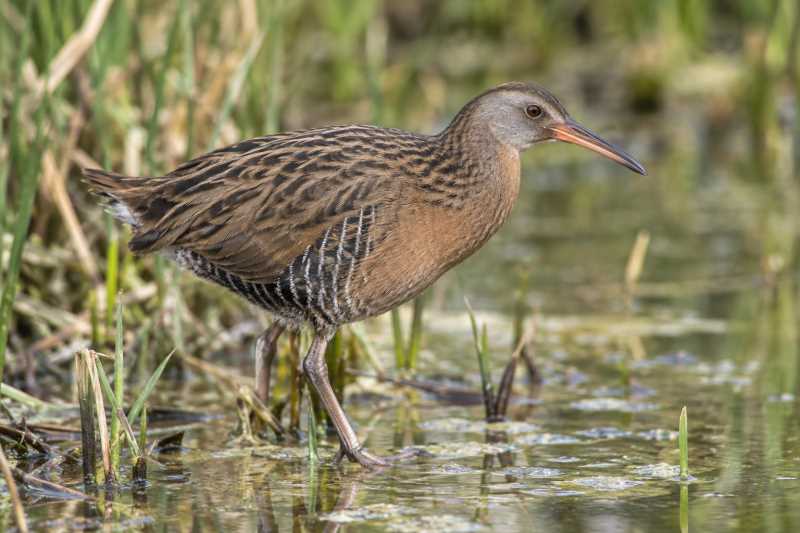
Clapper Rails are medium-sized birds, measuring about 12 to 16 inches in length with a wingspan of approximately 19 to 25 inches. Their plumage is predominantly grayish-brown, with lighter underparts and a distinctive white throat. The bird’s long legs and toes are adapted for walking on soft, uneven surfaces typical of marsh environments.
One of the most striking features of the Clapper Rail is its long, slightly curved bill, which it uses skillfully to probe mud and water for food. This feature, along with its distinctive call, makes the Clapper Rail unmistakable to those familiar with its habitat.
Behavior and Ecology
Clapper Rails are known for their secretive behavior. They tend to be more active during dawn and dusk, making them challenging to observe. Despite their elusive nature, these birds are known for their loud, clattering calls, which can be heard echoing across the marshes. These calls are especially prominent during the breeding season and are used to establish territory and attract mates.
Breeding occurs from March to August, during which time Clapper Rails build their nests on elevated platforms among the marsh vegetation to avoid flooding. The female typically lays between 6 to 12 eggs, which are incubated for about 20 to 23 days. Once hatched, the chicks are precocial, meaning they are relatively mature and mobile from the moment of birth, allowing them to follow their parents and forage for food.
Conservation Status and Threats
The Clapper Rail is listed as a species of least concern by the International Union for Conservation of Nature (IUCN). However, certain subspecies and local populations are at risk due to habitat destruction, pollution, and climate change.
One of the most significant threats to Clapper Rails is the loss of salt marsh habitat due to coastal development and rising sea levels. As human activities continue to encroach upon these vital ecosystems, the availability of suitable habitats for Clapper Rails diminishes, resulting in population declines in some areas.
Pollution from agricultural runoff and oil spills also poses a threat to these birds. Contaminants in the water can affect the health of the marsh ecosystem, reducing the availability of food and nesting sites for Clapper Rails.
Conservation Efforts
Conservation efforts aimed at protecting Clapper Rails focus on preserving and restoring salt marsh habitats. Organizations and government agencies are working to implement sustainable land-use practices that balance development with ecological preservation.
Additionally, efforts to monitor and mitigate the impacts of climate change are crucial for the long-term survival of the Clapper Rail. Restoration projects that enhance marsh resilience and adaptive management strategies are being developed to address the challenges posed by rising sea levels and increased storm frequency.
The Future of the Clapper Rail
The future of the Clapper Rail depends largely on the preservation of its natural habitat and the implementation of effective conservation strategies. Public awareness and education about the importance of salt marsh ecosystems can play a significant role in garnering support for conservation initiatives.
Through continued research and collaboration among conservationists, scientists, and policymakers, it is possible to ensure that the Clapper Rail and its unique habitat are preserved for future generations. By addressing the threats posed by habitat loss, pollution, and climate change, we can help secure a thriving future for this remarkable coastal bird.
In conclusion, the Clapper Rail is a testament to the intricate balance of coastal ecosystems. Its survival is intricately linked to the health of the salt marshes it calls home. As stewards of the environment, it is our responsibility to protect and preserve these vital habitats, ensuring that the Clapper Rail can continue to thrive in the wild.
Related posts