Cassia Crossbill: A Unique Avian Marvel of Evolution
The Cassia Crossbill (Loxia sinesciuris) is a fascinating bird species that provides a remarkable example of evolutionary divergence within the realm of ornithology. This distinctive bird, which is endemic to the South Hills and the Albion Mountains of Idaho, is a textbook example of how species can evolve unique traits in response to localized environmental pressures. This article delves into the various aspects of the Cassia Crossbill, including its taxonomy, physical characteristics, habitat, behavior, diet, and conservation status.
Taxonomy and Discovery
The Cassia Crossbill was officially recognized as a distinct species in 2017, following extensive research by ornithologists who noted significant differences in morphology and vocalizations compared to other crossbill species. Although crossbills have been known to ornithologists for centuries, the Cassia Crossbill was initially considered a variant of the Red Crossbill (Loxia curvirostra). However, through rigorous studies, including genetic analyses and field observations, it was determined that the Cassia Crossbill deserved its own species status.
The species name “sinesciuris” is derived from Latin, meaning “without squirrels,” highlighting one of the key ecological factors influencing the bird’s evolution— the absence of the tree squirrel (Tamiasciurus hudsonicus) in its habitat, which has allowed the Cassia Crossbill to exploit the lodgepole pine (Pinus contorta) cones more effectively.
Physical Characteristics
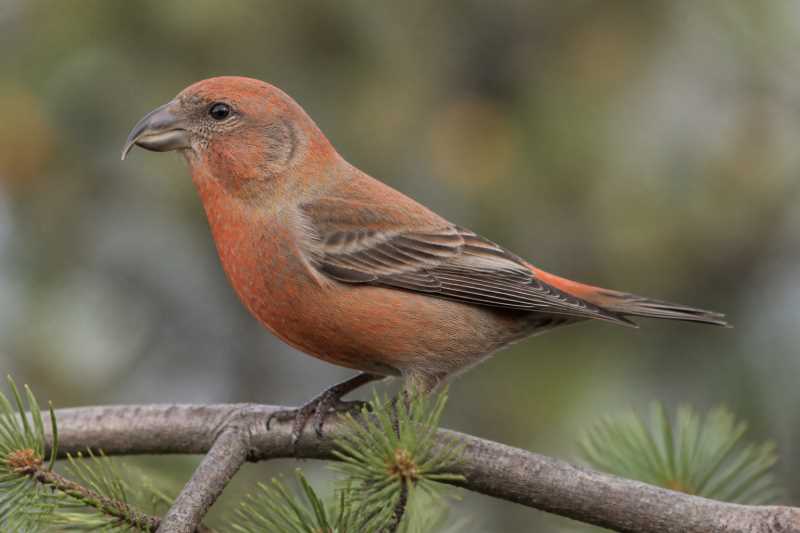
Cassia Crossbills are relatively small birds, with adults measuring approximately 15 to 17 centimeters in length and weighing around 40 to 50 grams. They exhibit the characteristic crossed mandibles, which are perfectly adapted for extracting seeds from conifer cones, particularly lodgepole pines. Males typically have a striking red or orange plumage, while females and juveniles display more subdued yellowish-green tones. This sexual dimorphism is common among crossbills, aiding in mate selection and camouflage.
The Cassia Crossbill’s plumage is generally more muted than that of other crossbill species, which may be an adaptation to its specific environment, providing better concealment from predators. Its bill is slightly larger and more robust compared to other crossbills, an adaptation that aligns with its specialized diet.
Habitat and Distribution
The Cassia Crossbill is unique in its extremely limited range, being found only in the lodgepole pine forests of the South Hills and Albion Mountains in southern Idaho. This restricted habitat is characterized by montane coniferous forests with an abundance of lodgepole pines, which are crucial to the bird’s survival. The area’s isolation and the absence of competing seed predators, such as squirrels, have allowed the Cassia Crossbill to thrive.
The bird’s dependence on a specific type of pine cone for food makes it highly vulnerable to habitat changes. Any alterations in the lodgepole pine forests, whether due to climate change, logging, or disease, can have a profound impact on the Cassia Crossbill population. Consequently, conservation efforts are critical to preserving its habitat.
Behavior and Social Structure
Cassia Crossbills are social birds, often seen in small flocks, particularly during the non-breeding season. Their social structure is flexible, with flocks forming and dissolving based on food availability and environmental conditions. These birds are known for their distinctive call notes and songs, which play a vital role in flock cohesion and mate attraction.
Breeding typically occurs from late spring to early summer, with pairs forming strong bonds. Nests are constructed high up in lodgepole pines, providing safety from ground predators. The female typically lays 3 to 4 eggs, which she incubates while the male provides food. Once hatched, both parents participate in feeding and caring for the fledglings.
Diet and Foraging
The Cassia Crossbill’s diet is highly specialized, consisting almost exclusively of lodgepole pine seeds. The bird’s unique bill adaptation allows it to efficiently extract seeds from the tightly closed pine cones. This dietary specialization is both a strength and a vulnerability, as it provides an abundant food source in its habitat but also ties the bird’s survival closely to the health of the lodgepole pine population.
In years when cone production is low, Cassia Crossbills may face food shortages, prompting them to travel further in search of sustenance. However, their strong fidelity to their breeding grounds often limits extensive dispersal, which is a characteristic that sets them apart from other more nomadic crossbill species.
Conservation and Threats
The Cassia Crossbill faces several conservation challenges, primarily due to its limited range and specialized habitat requirements. The primary threat is habitat alteration, whether through natural causes like fire or human activities such as logging. Climate change also poses a significant threat, as shifts in temperature and precipitation patterns can affect the growth and reproduction of lodgepole pines.
Conservation efforts are focused on preserving the integrity of the bird’s habitat and monitoring population trends. The U.S. Forest Service, along with various conservation organizations, is working to implement strategies that protect the lodgepole pine forests and mitigate potential threats. Public awareness and education about the unique status of the Cassia Crossbill are also critical components of conservation efforts.
Conclusion
The Cassia Crossbill is a remarkable example of evolution in response to localized environmental pressures. Its unique adaptations and specialized habitat requirements underscore the complexity and fragility of ecosystems. Understanding and protecting such species is crucial, not only for the preservation of biodiversity but also for the insights they provide into evolutionary processes.
The survival of the Cassia Crossbill will depend on continued conservation efforts and the protection of its habitat. By appreciating and safeguarding this unique bird, we contribute to the broader goal of preserving the natural world in all its diversity and wonder.
—
Related posts