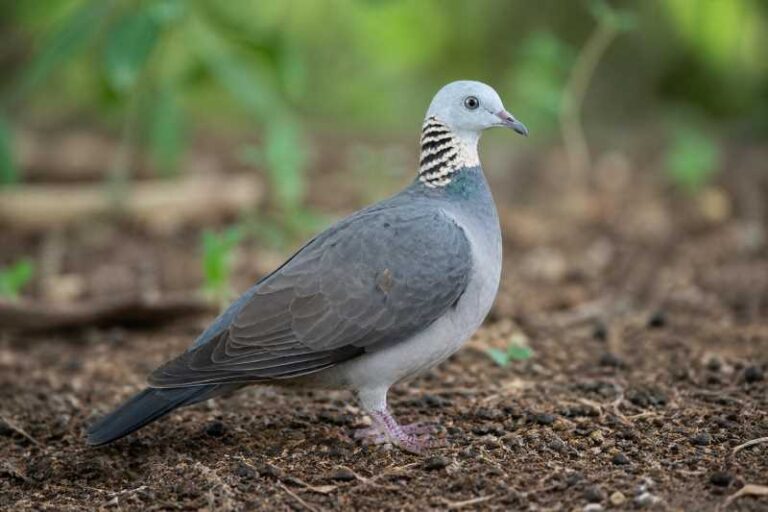
Abert’s Towhee (Melozone aberti) is a striking and often overlooked bird of the arid riparian corridors of the southwestern United States. Named after American naturalist James William Abert, this large, ground-dwelling sparrow may not flaunt the bright colors of some of its relatives, but it makes up for that with its unique behavior, subtle beauty, and vital role in fragile desert ecosystems.
Physical Description
Abert’s Towhee is a robust, medium-large sparrow, measuring about 8–9 inches (20–23 cm) in length. Its overall coloration is a subdued brownish-gray with a warm, buffy undertone. The head and face often appear darker, and the bird’s undertail coverts show a contrasting rich rufous tone—a feature helpful in field identification.

Its heavy bill, dark eyes, and long tail give it a distinctive silhouette when foraging on the ground. While it might appear nondescript at first glance, the bird’s subtle color palette blends perfectly into its desert surroundings, providing excellent camouflage.
Distribution and Habitat
Abert’s Towhee is endemic to the southwestern United States, primarily found in Arizona, southeastern California, southern Nevada, southwestern Utah, and parts of New Mexico. It inhabits lowland desert areas, with a strong preference for riparian habitats along rivers and streams, particularly where dense thickets of mesquite, willow, and tamarisk provide cover.
Interestingly, this species has adapted well to urban and suburban environments where suitable vegetation exists. In cities like Phoenix and Tucson, Abert’s Towhees are regular garden visitors, especially where native landscaping or brushy hedgerows are maintained.
Behavior and Ecology
Abert’s Towhees are ground specialists. They rarely venture far above ground level, preferring to scratch and forage through leaf litter for seeds, insects, and other invertebrates. They use a two-footed, backward-scratching motion to expose food—a behavior characteristic of towhees.
These birds are generally sedentary, maintaining year-round territories. Mated pairs often remain together throughout the year, communicating with a range of sharp call notes and soft, whistled songs. Their song is a series of clear, bell-like notes, often described as sweet and plaintive.
Though shy and secretive by nature, Abert’s Towhees may become quite tame around humans, especially in areas where they’ve grown accustomed to regular activity. Still, their preference for dense underbrush can make them challenging to spot despite their size.
Breeding and Nesting
The breeding season begins as early as March in some areas and can extend through July. Abert’s Towhees are monogamous, with pairs forming long-term bonds. The female builds a well-concealed cup-shaped nest low in shrubs or small trees, using grasses, bark, and rootlets.
She lays 2–4 eggs, which she incubates for about two weeks. Both parents feed the nestlings, which fledge after approximately 10 days. While they may raise more than one brood per season, reproductive success often depends on habitat quality and availability of cover.
Conservation Status
While not currently considered threatened, Abert’s Towhee has a limited geographic range, making it vulnerable to habitat loss. The degradation and development of riparian zones, combined with the spread of invasive plant species like saltcedar (Tamarix spp.), pose ongoing challenges.
Urbanization has paradoxically provided some refuge, as these birds have shown adaptability to suburban areas with appropriate vegetation. However, long-term conservation will depend on preserving native desert riparian habitats and restoring degraded ecosystems.
Birdwatching Tips
Birdwatchers hoping to see Abert’s Towhee should explore riparian corridors and desert washes at dawn or dusk, when the birds are most active. Look for them on the ground, often scratching in the leaf litter beneath dense cover. They may also come into view briefly when moving between cover or while singing during the breeding season.
Using a slow, quiet approach and scanning beneath mesquite or willows can increase the chance of a sighting. In urban areas, watch for them in native plant gardens or desert-adapted landscaping.
Conclusion
Abert’s Towhee is a remarkable example of a species finely adapted to the unique challenges of desert life. Though its colors may be muted, its quiet presence and ecological importance make it a bird worth celebrating. For birdwatchers and naturalists, encountering an Abert’s Towhee offers a glimpse into the delicate balance of life in the American Southwest’s desert riparian zones.
Related posts