The Enigmatic Glossy-mantled Manucode: A Jewel of the Avian World
The natural world is replete with wonders that continue to captivate scientists and enthusiasts alike. Among these marvels is the Glossy-mantled Manucode (Manucodia ater), a bird of paradise that stands out with its unique combination of beauty, mystery, and ecological significance. While it may not be as flamboyant as some of its more illustrious relatives, the Glossy-mantled Manucode offers a wealth of intriguing characteristics that merit closer examination.
A Brief Overview of the Species
Native to the lowland forests of New Guinea and nearby islands, the Glossy-mantled Manucode is part of the Paradisaeidae family, which encompasses the birds of paradise. This family is renowned for its members’ extraordinary plumage and complex mating displays. The Manucodia genus, however, diverges from the typical flamboyance, presenting a subtler, yet equally fascinating, aesthetic.
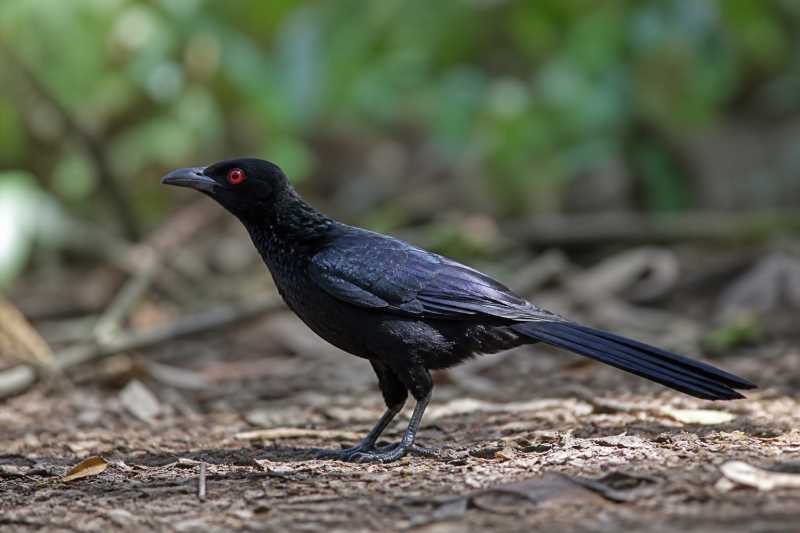
With a body length ranging from 42 to 46 centimeters, the Glossy-mantled Manucode is adorned with iridescent black plumage that shimmers with blue and green hues under sunlight. Its slender build, coupled with a long, slightly curved tail and a distinctive, bare wattle at the base of its beak, lends it an elegant silhouette.
Habitats and Distribution
The Glossy-mantled Manucode thrives in the dense lowland rainforests and swamp forests of New Guinea, as well as the Aru Islands. These birds are typically found at elevations ranging from sea level up to 1,100 meters. Their preference for humid, tropical environments underscores the critical importance of forest conservation efforts, as habitat destruction poses a significant threat to their populations.
The species is non-migratory, and their home ranges are generally small, reflecting their preference for stable, resource-rich environments. This territoriality, combined with their reliance on specific habitat types, makes them particularly susceptible to environmental changes.
Behavioral and Social Characteristics
Unlike many other birds of paradise, the Glossy-mantled Manucode does not engage in elaborate courtship displays. Instead, their mating rituals are characterized by vocalizations and mutual preening, highlighting the importance of pair bonding. Both males and females participate in these interactions, which strengthens their partnerships and enhances reproductive success.
Their diet primarily consists of fruits and insects, aligning with the frugivorous and insectivorous tendencies common to birds of paradise. Foraging is a communal activity, with pairs or small family groups often seen feeding together, which also facilitates social bonding.
Vocalizations and Communication
The Glossy-mantled Manucode is particularly noted for its distinctive vocal abilities. Their calls are complex and melodious, often described as flute-like warbles with a range of pitch variations. These vocalizations serve multiple purposes, including attracting mates, delineating territories, and communicating with offspring.
Research suggests that these vocal skills are facilitated by a specialized syrinx, the avian equivalent of the human larynx, which is structurally adapted to produce a wide array of sounds. This adaptation underscores the evolutionary pressures that have shaped the communication strategies of these birds.
Conservation Status and Threats
Currently, the Glossy-mantled Manucode is listed as a species of Least Concern by the International Union for Conservation of Nature (IUCN). However, this status should not obscure the challenges they face. Deforestation, driven by logging and agricultural expansion, remains the primary threat to their habitat. Climate change also poses a looming threat, with shifts in temperature and precipitation patterns potentially altering their ecological niches.
Conservation efforts must prioritize the protection of lowland rainforests and the establishment of ecological corridors to ensure the long-term survival of this species. Raising awareness about the ecological roles of birds like the Glossy-mantled Manucode can also foster public support for conservation initiatives.
Ecological Significance
The Glossy-mantled Manucode plays a crucial role in its ecosystem, particularly in seed dispersal and pest control. By consuming fruits and excreting the seeds at different locations, these birds contribute to the regeneration and genetic diversity of forest flora. Their insectivorous habits also help manage insect populations, maintaining ecological balance.
Moreover, as part of the broader birds of paradise family, they are vital indicators of ecosystem health. The presence and behavior of these birds can reflect changes in environmental conditions, making them valuable subjects for ecological research and monitoring.
Human Interactions and Cultural Importance
The birds of paradise hold a special place in the cultural heritage of the indigenous peoples of New Guinea. They feature prominently in myths, art, and traditional ceremonies, symbolizing beauty, freedom, and the divine. The Glossy-mantled Manucode, while less ostentatious, shares in this cultural reverence, highlighting the deep connection between these birds and the people who share their habitat.
Efforts to engage local communities in conservation projects can be bolstered by emphasizing this cultural significance. By integrating traditional knowledge with modern conservation practices, sustainable management strategies can be developed to benefit both the biodiversity and the local populations.
Conclusion
The Glossy-mantled Manucode is a testament to the diversity and complexity of the natural world. Its subtle beauty, intricate social behaviors, and ecological roles underscore the need for comprehensive conservation strategies that protect its habitat and ensure its survival for future generations.
As we continue to explore the wonders of the avian world, the Glossy-mantled Manucode stands as a reminder of the intricate connections that bind all species within the tapestry of life. Protecting these connections is not just a scientific endeavor—it is a moral imperative, ensuring that the splendor of nature endures for the generations to come.
Related posts