The Black Skimmer: Nature’s Unique Aerial Acrobat
The Black Skimmer (Rynchops niger) is a fascinating bird species that captures the attention of ornithologists and bird enthusiasts alike. With its distinctive appearance and unique feeding habits, the Black Skimmer is a remarkable example of avian adaptation and specialization. This article delves into the intriguing world of the Black Skimmer, exploring its physical characteristics, behavior, habitat, and conservation status.
Distinctive Physical Characteristics
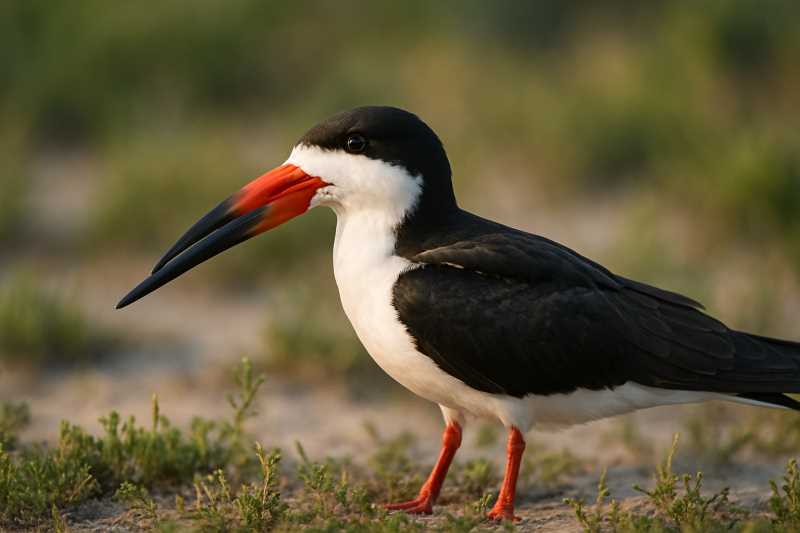
The Black Skimmer is easily recognizable by its striking black and white plumage and its unusual bill. Measuring about 16 to 20 inches in length with a wingspan of up to 50 inches, the Black Skimmer is a medium-sized bird. The species exhibits sexual dimorphism, with males generally being larger than females.
One of the most distinctive features of the Black Skimmer is its elongated bill, which is uniquely adapted for its feeding style. The lower mandible is longer than the upper mandible, a feature that allows the bird to skim the water’s surface in search of food. This adaptation is not only functional but also gives the Black Skimmer a striking profile that sets it apart from other bird species.
Unique Feeding Behavior
The Black Skimmer’s feeding behavior is one of its most fascinating characteristics. As its name suggests, the bird is known for skimming the water’s surface with its elongated lower mandible. This behavior, known as tactile foraging, involves the bird flying low over the water with its lower bill submerged, feeling for fish and other prey.
When the Black Skimmer detects prey, its bill snaps shut with remarkable speed and precision. This specialized feeding technique allows the Black Skimmer to thrive in environments where other birds might struggle to find food. The bird typically feeds on small fish, crustaceans, and other aquatic organisms, making it an important part of its ecosystem’s food web.
Habitat and Distribution
Black Skimmers are primarily found along the coastlines of the Americas, from North America down to South America. They prefer sandy beaches, estuaries, and other coastal habitats, where they can easily access the water for feeding. During the breeding season, they are often found in colonies on sandy islands or beaches, where they can nest safely away from predators.
In North America, Black Skimmers are found along the Atlantic and Gulf coasts, from Massachusetts to Florida and along the Gulf of Mexico. They are also present along the Pacific coast in California and Mexico. In South America, their range extends from Colombia and Venezuela down to Brazil and Argentina.
Breeding and Social Behavior
Black Skimmers are colonial nesters, often forming large breeding colonies on sandy beaches or islands. These colonies offer protection from predators and allow the birds to benefit from social interactions. The breeding season typically begins in late spring, with courtship displays and nest building occurring in May and June.
The nests are simple scrapes in the sand, where the female lays two to five eggs. Both parents share the responsibility of incubating the eggs and caring for the chicks. The young are precocial, meaning they are relatively mature and mobile shortly after hatching. However, they still rely on their parents for food and protection until they are capable of foraging on their own.
Conservation Status and Threats
The Black Skimmer is currently listed as a species of “Least Concern” by the International Union for Conservation of Nature (IUCN). However, like many coastal bird species, Black Skimmers face a range of threats that could impact their populations in the future.
Habitat loss and degradation are significant concerns for Black Skimmers, as human activities continue to encroach on their coastal habitats. Development, pollution, and recreational activities can all negatively impact the bird’s breeding and feeding grounds. Additionally, climate change poses a long-term threat, with rising sea levels and increased storm frequency potentially reducing available habitat.
Conservation efforts for Black Skimmers focus on protecting coastal habitats and managing human activities that could disturb nesting colonies. In the United States, several national and state parks provide protected areas for Black Skimmers and other coastal bird species. Public education and awareness campaigns also play a crucial role in ensuring the long-term survival of this unique bird.
Conclusion
The Black Skimmer is a remarkable bird, distinguished by its unique appearance and specialized feeding behavior. As an important part of coastal ecosystems, it plays a vital role in maintaining the balance of these environments. While currently not at immediate risk, ongoing conservation efforts are essential to protect the Black Skimmer and ensure its continued presence along the coastlines of the Americas. By understanding and appreciating this fascinating species, we can better appreciate the diversity and complexity of our natural world.
Related posts