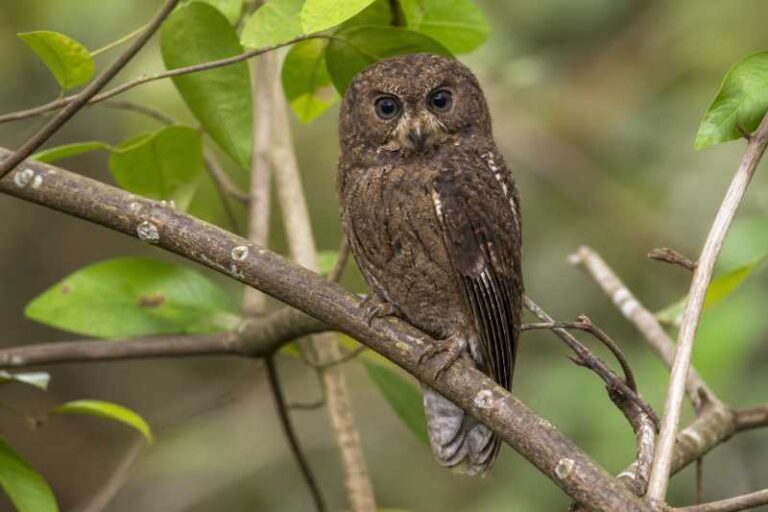
The Omani Owl: A Mysterious Avian Marvel of the Arabian Nights
In the mystical deserts of the Arabian Peninsula, a rare nocturnal creature silently glides through the cool night air, its presence as elusive as the stories of Scheherazade. This is the Omani Owl (Strix butleri), a species so enigmatic that it was only rediscovered in recent years after being lost to science for over a century. This article delves into the fascinating world of the Omani Owl, exploring its habitat, characteristics, and the conservation efforts that are vital for its survival.
Discovery and Rediscovery
Initially described in 1878 by British ornithologist George Ernest Shelley, the Omani Owl was shrouded in mystery for over a century. Misidentified and confused with other species, it wasn’t until 2013 that it was rediscovered in the remote and rugged mountains of Oman by a team of dedicated ornithologists led by Magnus Robb. This rediscovery was a significant milestone in ornithology, shedding light on the species’ unique characteristics and distinctiveness from its close relative, the Hume’s Owl (Strix butleri).
Habitat and Distribution
The Omani Owl is primarily found in the rocky and arid landscapes of northern Oman, particularly in the Al Hajar Mountains. These remote areas offer the owl a perfect habitat, with crevices and ledges providing ideal nesting sites. The sparse vegetation and rugged terrain make it a challenging environment, yet the Omani Owl thrives here, demonstrating remarkable adaptability. Its range extends into parts of the United Arab Emirates, but its exact distribution remains poorly understood, necessitating further research.
Physical Characteristics and Behavior
The Omani Owl is medium-sized, with a length of approximately 29-33 cm and a wingspan of 80-90 cm. Its plumage is primarily a sandy brown, providing excellent camouflage against the rocky desert backdrop. Distinctive features include its rounded head, lack of ear tufts, and striking yellow eyes that reflect the moonlight as it hunts. Its call, a hauntingly beautiful series of hoots, echoes through the night, serving both as a territorial marker and a means of communication with potential mates.
Primarily nocturnal, the Omani Owl’s diet consists mainly of small mammals, insects, and occasionally birds. Its hunting strategy involves perching silently and swooping down with precision on unsuspecting prey. This hunting prowess is facilitated by its keen eyesight and acute hearing, adapted perfectly to the low-light conditions of its environment.
Conservation Status and Challenges
The Omani Owl is currently listed as Vulnerable on the International Union for Conservation of Nature (IUCN) Red List. Its population is believed to be declining, primarily due to habitat destruction and human disturbance. The expansion of urban areas, mining activities, and infrastructure development pose significant threats, fragmenting its natural habitat and reducing available prey.
Conservation efforts are crucial to ensure the survival of this elusive species. Initiatives include habitat protection, ecological research, and raising awareness about the owl’s plight. Local and international conservation organizations are working together to implement strategies that minimize human impact and promote sustainable practices in areas where the Omani Owl resides.
The Role of Research and Community Engagement
Continued research is essential to understand the Omani Owl’s ecology, behavior, and population dynamics. Such studies are vital for developing effective conservation strategies and for monitoring the impact of environmental changes on the species. Collaborative efforts between scientists, local communities, and conservationists are key to ensuring a sustainable future for the Omani Owl.
Community engagement is particularly important, as local knowledge and cooperation can significantly enhance conservation outcomes. Educational programs that highlight the cultural and ecological importance of the Omani Owl can foster a sense of pride and stewardship among local populations, encouraging actions that benefit both the owl and the community.
Conclusion
The Omani Owl is a symbol of the rich biodiversity that inhabits the Arabian Peninsula, a testament to nature’s resilience in the face of harsh conditions. Its story is one of rediscovery and hope, underscoring the importance of conservation in preserving our planet’s natural heritage. As efforts continue to protect this enigmatic species, the Omani Owl remains a captivating reminder of the wonders that still await discovery in the natural world.
Through concerted conservation efforts, research, and community involvement, we can ensure that the haunting call of the Omani Owl continues to echo through the Arabian nights, a testament to the enduring beauty and mystery of our natural world.
Related posts