The Black Rosy Finch: A Study of Resilience in the High Altitudes
Introduction
The Black Rosy Finch (Leucosticte atrata) is a remarkable avian species that thrives in some of North America’s most extreme environments. Known for its striking appearance and adaptability, this bird offers a glimpse into the resilience of wildlife amidst challenging climates. Found primarily in the high-altitude regions of the Rocky Mountains and parts of the Great Basin, the Black Rosy Finch has piqued the interest of ornithologists and bird enthusiasts alike.
Physical Characteristics
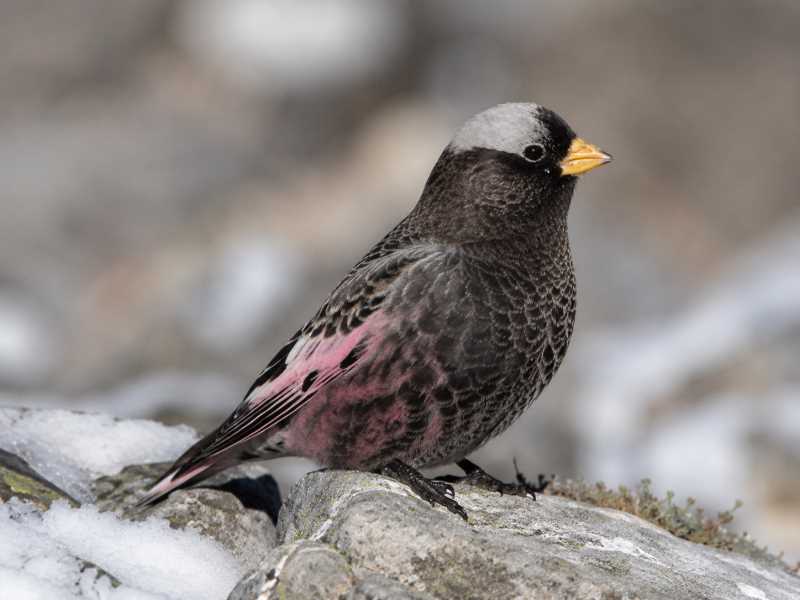
The Black Rosy Finch is distinguished by its unique plumage. Adult males exhibit a combination of sooty black and pinkish feathers, giving them a distinctive appearance against the snowy backdrops they often inhabit. Females and juveniles tend to have more muted tones, with browner hues and less pronounced pink accents. This dimorphism not only aids in identification but also allows the species to blend seamlessly into their rugged terrain.
With an average length of 5.5 to 6.3 inches and a wingspan reaching up to 10 inches, the Black Rosy Finch is a relatively small bird. Despite its diminutive size, its robust build is well-suited to enduring the harsh climates of its native habitat.
Habitat and Distribution
The Black Rosy Finch is predominantly found in the high-altitude zones of the western United States. Its range includes the alpine and subalpine zones of the Rocky Mountains, extending from Montana and Wyoming down to New Mexico, and occasionally into the Sierra Nevada of California. These birds are altitudinal migrants, moving to lower elevations during the winter months where food is more accessible.
Their preferred habitats are characterized by rocky, barren landscapes, often above the tree line. Here, the finches forage for seeds and insects, taking advantage of the sparse vegetation that survives in these inhospitable conditions. During the breeding season, they nest in crevices and cliffs, ensuring protection from predators and harsh weather.
Behavior and Diet
The Black Rosy Finch is a social bird, often forming large flocks outside the breeding season. These flocks can include hundreds of birds, and they are known to intermingle with other rosy finch species, such as the Brown-capped and Gray-crowned Rosy Finches.
Their diet primarily consists of seeds, which they adeptly forage from the ground. In the summer, insects become an important food source, providing the necessary protein for raising their young. The finches are also known to visit feeders in mountainous regions, where they supplement their diet with birdseed offered by human admirers.
Breeding and Reproduction
Breeding occurs during the late spring and early summer months. The female typically selects a nesting site in a rock crevice or other sheltered location. The nest is constructed using fine grasses, moss, and feathers, creating a warm and insulated environment for the eggs.
A typical clutch consists of three to six eggs, which the female incubates for about two weeks. Once hatched, both parents participate in feeding the chicks, which fledge approximately three weeks after hatching. The high-altitude breeding sites mean that the young must quickly adapt to the challenging conditions they will face throughout their lives.
Conservation Status and Challenges
Currently, the Black Rosy Finch is not listed as endangered; however, it faces several challenges that could impact its population in the future. Climate change poses a significant threat, as warming temperatures can alter its high-altitude habitat, potentially reducing the availability of nesting sites and food sources.
Additionally, human activities such as mining and recreational development can lead to habitat degradation. Conservation efforts are crucial to monitor these impacts and ensure that the Black Rosy Finch continues to thrive in its native environment.
Conclusion
The Black Rosy Finch is a testament to the resilience and adaptability of wildlife. Its ability to survive and flourish in some of North America’s harshest climates serves as a reminder of the delicate balance within ecosystems and the ongoing need for conservation efforts. As we continue to study and admire this remarkable bird, we gain insights not only into its life but also into the broader implications of environmental changes on alpine ecosystems.
References
– Cornell Lab of Ornithology. (n.d.). Black Rosy-Finch. Retrieved from https://www.allaboutbirds.org/guide/Black_Rosy-Finch/overview
– BirdLife International. (2020). Species factsheet: Leucosticte atrata. Retrieved from http://datazone.birdlife.org/species/factsheet/black-rosy-finch-leucosticte-atrata
– National Audubon Society. (n.d.). Guide to North American Birds: Black Rosy-Finch. Retrieved from https://www.audubon.org/field-guide/bird/black-rosy-finch
Related posts