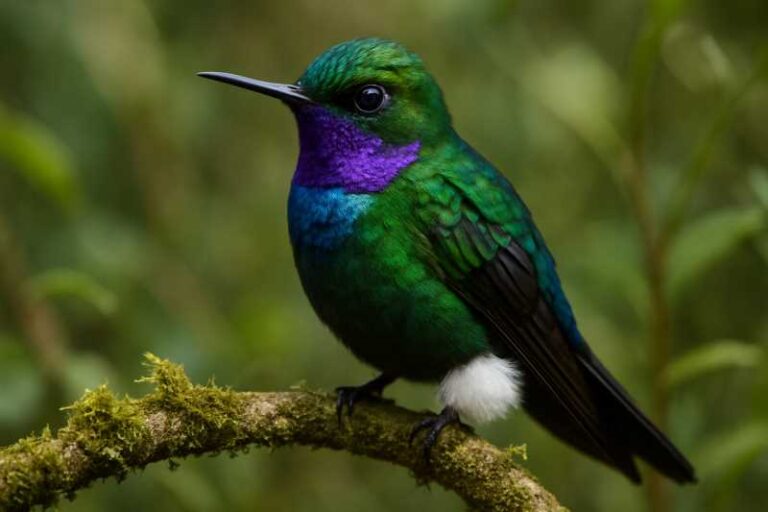
A Closer Look at the White-winged Parakeet: The Enigmatic Avian of South America
The White-winged Parakeet, scientifically known as Brotogeris versicolurus, is a captivating avian species that has long intrigued ornithologists and bird enthusiasts alike. Native to the lush, expansive forests of South America, this parakeet is renowned for its striking plumage and social behavior. In recent years, it has also garnered attention due to its adaptability and the growing presence in urban areas outside its native range.
Habitat and Distribution
Originally hailing from the tropical and subtropical regions of South America, particularly the Amazon Basin, the White-winged Parakeet thrives in a variety of habitats. While they predominantly inhabit lowland rainforests, they have also been found in secondary forests, savannas, and even cityscapes. Their adaptability has allowed them to expand their range significantly. Over the last few decades, feral populations have been established in parts of North America, notably in Florida and California, as well as in a few European and Asian cities.
Physical Characteristics
The White-winged Parakeet is relatively small, measuring about 20 to 23 centimeters in length. Its most distinctive feature, as the name suggests, is the white patch on its wings, which becomes prominently visible during flight. The bird’s plumage is predominantly green, with a subtle yellowish tinge on its underparts, and a short, pointed tail that aids in agile flight. Its beak is robust and adapted for cracking seeds, while its eyes are ringed with a bare white patch, adding to its expressive appearance.
Behavior and Diet
These parakeets are highly social creatures, often found in flocks that can number up to several hundred individuals. Their social nature is evident in their complex vocalizations, which serve various purposes, from establishing territory to maintaining flock cohesion. Their calls are a mixture of high-pitched whistles and chattering sounds, which can be heard over considerable distances.
In terms of diet, the White-winged Parakeet is primarily herbivorous, feeding on a diverse range of seeds, fruits, and flowers. They are known to frequent agricultural areas, where they may feed on crops, sometimes causing conflicts with farmers. However, their diet also plays a crucial role in seed dispersal, contributing to the ecological balance of their habitats.
Conservation Status and Challenges
Currently, the White-winged Parakeet is classified as a species of "Least Concern" by the International Union for Conservation of Nature (IUCN). Despite their stable population, they face several challenges. Habitat destruction due to deforestation poses a significant threat, as it reduces the availability of nesting sites and food resources. Additionally, in regions where they have been introduced, they may compete with native species, leading to ecological imbalances.
Fascination and Future Outlook
The White-winged Parakeet continues to fascinate both scientists and bird watchers with its vibrant behavior and adaptability. Efforts are being made to study their impact on non-native ecosystems to ensure that their presence does not threaten indigenous species. Conservationists advocate for sustainable practices that protect their natural habitats while minimizing human-wildlife conflicts.
As urbanization continues to encroach on natural habitats, the resilience and adaptability of the White-winged Parakeet provide valuable insights into how wildlife can coexist with human development. Their presence in urban environments highlights the need for cities to incorporate green spaces that support biodiversity.
In conclusion, the White-winged Parakeet serves as a reminder of the delicate balance required to maintain biodiversity in our rapidly changing world. Its story is one of survival, adaptability, and the ongoing efforts to understand and protect the intricate tapestry of life on our planet.
Related posts