
The Black-crowned White-eye: An In-depth Exploration of Zosterops atrifrons
The Black-crowned White-eye (Zosterops atrifrons) is an intriguing bird species that commands attention due to its striking appearance and unique ecological role. Native to the Indonesian archipelago, this species is a testament to the rich biodiversity found in the region. The Black-crowned White-eye, often referred to simply as the Black-crowned Zosterops, is a member of the Zosteropidae family, which encompasses a variety of small, passerine birds commonly known as white-eyes.
Taxonomy and Classification
The Black-crowned White-eye was first described scientifically in 1866 by the German ornithologist Ferdinand Heine. It is classified under the order Passeriformes, known for perching birds, and the family Zosteropidae, which includes approximately 100 species of white-eyes distributed across Africa, Asia, and the Pacific Islands. The genus Zosterops is notable for its adaptability and diversity, with species inhabiting a wide range of environments from tropical forests to urban areas.
Physical Characteristics
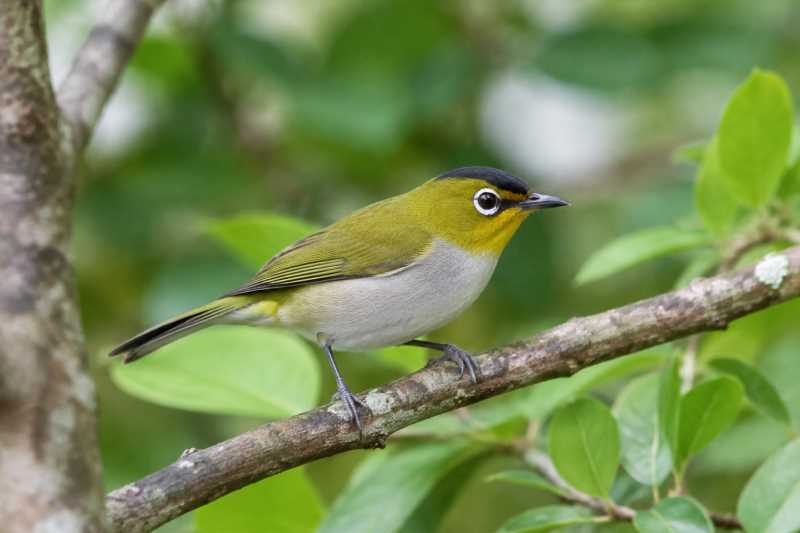
One of the most distinctive features of the Black-crowned White-eye is its striking plumage. The bird is characterized by a bright olive-green body, a contrasting black crown, and a distinctive white eye-ring, which gives the species its common name. The eye-ring is a hallmark of the Zosterops genus, enhancing the bird’s visual appeal and aiding in identification. Adult Black-crowned White-eyes typically measure about 11 cm in length, making them relatively small, even among passerines. Their short, rounded wings and strong legs are well-suited to their arboreal lifestyle.
Habitat and Distribution
The Black-crowned White-eye is endemic to the islands of Indonesia, particularly Sulawesi and its surrounding islets. This species favors subtropical or tropical moist lowland forests, where it plays a vital role in the ecosystem. The dense foliage of these forests provides ideal conditions for foraging and nesting. However, habitat destruction poses a significant threat to their populations. Deforestation for agriculture and urban development has led to a reduction in suitable habitats, prompting concerns about their conservation status.
Behavior and Ecology
Zosterops atrifrons is a highly social bird, often found in small flocks that can include other species of white-eyes. This social structure aids them in foraging and avoiding predators. Their diet primarily consists of insects, nectar, and fruit, making them important pollinators and seed dispersers within their ecosystem. The Black-crowned White-eye exhibits a unique feeding behavior known as ‘gleaning,’ where it meticulously searches leaves and branches for insects and other small prey.
Breeding typically occurs during the wet season when food resources are abundant. During this time, pairs are observed constructing small, cup-shaped nests from grasses and plant fibers, carefully hidden within dense foliage. The clutch size usually consists of two to three eggs, which are incubated by both parents. After hatching, the chicks are tended to by both parents, ensuring a high survival rate.
Conservation Status
The International Union for Conservation of Nature (IUCN) currently lists the Black-crowned White-eye as Least Concern due to its relatively wide distribution and stable population trends. However, this does not mean the species is free from threats. Habitat loss remains a pressing issue, and continued monitoring is necessary to ensure that populations remain stable. Conservation efforts aimed at preserving their natural habitats are crucial for the long-term survival of this species.
Cultural Significance
In Indonesia, the Black-crowned White-eye is often appreciated for its vibrant appearance and melodious song. Birds such as these hold cultural significance and are sometimes kept as pets, although this practice is less common today due to increasing awareness about wildlife conservation.
Conclusion
The Black-crowned White-eye is a remarkable species that exemplifies the rich avian diversity of Indonesia. Its unique characteristics, ecological role, and the challenges it faces highlight the importance of conservation efforts. Protecting such species is vital not only for maintaining biodiversity but also for preserving the ecological balance of their habitats. As the global environment continues to change, understanding and conserving species like the Black-crowned White-eye becomes ever more critical.
References
- BirdLife International. (2021). Zosterops atrifrons. The IUCN Red List of Threatened Species 2021.
- del Hoyo, J., Elliott, A., & Christie, D. (Eds.). (2008). Handbook of the Birds of the World, Vol. 13.
- Heine, F. (1866). Original description of Zosterops atrifrons.
Meta Title: Black-crowned White-eye: A Jewel of Indonesia’s Forests
Meta Description: Discover the Black-crowned White-eye, a vibrant bird native to Indonesia, known for its striking plumage and vital ecological role.
Related posts


