The Bismarck Black Myzomela: A Jewel of the Pacific Avifauna
The Bismarck Black Myzomela (Myzomela pammelaena) is an enchanting member of the honeyeater family, Meliphagidae, known for its striking appearance and ecological significance. Endemic to the lush and vibrant landscapes of Papua New Guinea, particularly the Bismarck Archipelago, this bird plays a crucial role in the region’s biodiversity. The Bismarck Black Myzomela is not just a spectacle of nature but also an indicator of the ecological health of its habitat.
Taxonomy and Evolutionary Background
The Myzomela genus is part of the larger honeyeater family, renowned for their role in pollination and seed dispersal. The Bismarck Black Myzomela, scientifically named Myzomela pammelaena, is closely related to other Myzomela species found in Australia and nearby islands. The evolutionary history of these birds is intricately linked to the geological and climatic changes in the Pacific region, which have fostered a unique diversification of species. Genetic studies suggest that the Myzomela genus radiated from an ancestral form that adapted to various niches across the islands, leading to the speciation we observe today.
Physical Description
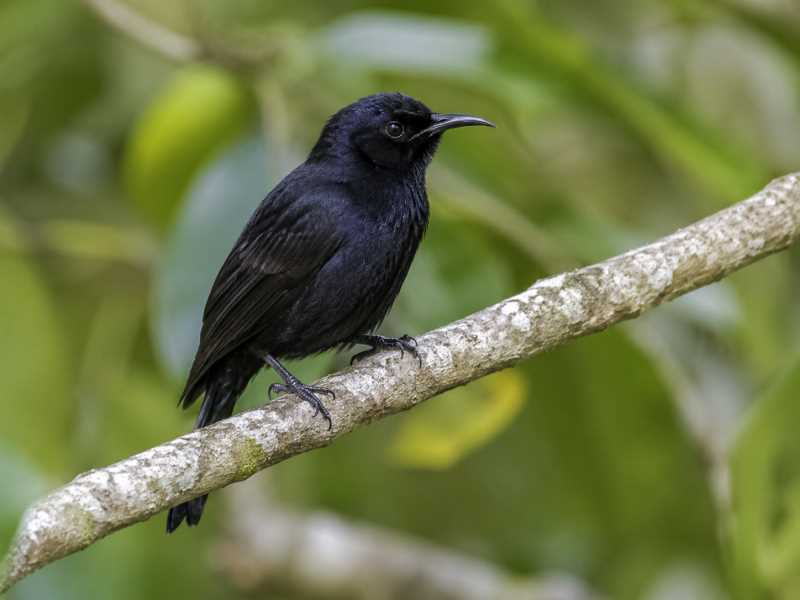
The Bismarck Black Myzomela is a small bird, typically measuring around 12 centimeters in length. Its plumage is predominantly a glossy black, which can appear iridescent under sunlight. This striking coloration helps it stand out among the foliage of its forested environment. The males and females of this species are similar in appearance, a trait that distinguishes them from many other bird species that exhibit sexual dimorphism. The bird’s slender, curved bill is ideally adapted for extracting nectar from flowers, its primary source of food.
Ecological Role and Behavior
As a nectarivore, the Bismarck Black Myzomela is an essential pollinator for many native plant species. Its feeding habits facilitate cross-pollination, promoting genetic diversity and the health of plant populations. In addition to nectar, this bird also consumes small insects, which provide necessary proteins and nutrients. The Myzomela’s feeding behavior is characterized by agile movements and hovering capabilities, allowing it to access flowers in difficult-to-reach places.
The Bismarck Black Myzomela is typically solitary or found in pairs. It is known for its territorial behavior, defending feeding areas from other honeyeaters and potential competitors. During the breeding season, these birds become particularly vocal, with distinctive calls that serve to attract mates and deter intruders.
Habitat and Distribution
The Bismarck Black Myzomela inhabits the tropical and subtropical moist lowland and montane forests of the Bismarck Archipelago. These forests are characterized by dense foliage and a rich diversity of flora, providing ample resources for the Myzomela’s survival. The bird is most commonly found at elevations ranging from sea level to about 1400 meters.
The distribution of the Bismarck Black Myzomela is primarily confined to the islands of New Britain and New Ireland, with occasional sightings reported on smaller neighboring islands. This restricted range makes the bird particularly vulnerable to habitat loss and environmental changes.
Conservation Status and Challenges
The Bismarck Black Myzomela is currently listed as Least Concern by the International Union for Conservation of Nature (IUCN). However, this status does not imply that the species is free from threats. Deforestation, driven by logging and agricultural expansion, poses a significant risk to its habitat. Climate change also presents potential challenges, as altered precipitation patterns and rising temperatures could impact the availability of food resources.
Conservation efforts are essential to ensure the long-term survival of the Bismarck Black Myzomela. Protecting its natural habitat, implementing sustainable land-use practices, and raising awareness about the species’ ecological importance are crucial steps in safeguarding its future.
The Importance of Research and Monitoring
Ongoing research and monitoring are vital for understanding the population dynamics and ecological needs of the Bismarck Black Myzomela. Detailed studies on its breeding biology, feeding ecology, and habitat preferences can provide valuable insights for conservation planning. Collaborations between local communities, governments, and international conservation organizations can enhance efforts to protect this unique bird.
Conclusion
The Bismarck Black Myzomela is a testament to the rich biodiversity of the Bismarck Archipelago and the intricate ecological networks that sustain life in these islands. By appreciating and preserving this avian jewel, we contribute not only to the conservation of a single species but also to the health and resilience of an entire ecosystem. As we continue to face global environmental challenges, the Bismarck Black Myzomela serves as a reminder of the interconnectedness of all species and the importance of protecting our natural world.
Related posts