The Enigmatic Araripe Manakin: A Jewel of Brazil’s Avifauna
The Araripe Manakin, scientifically known as **Chiroxiphia bokermanni**, is a captivating bird species endemic to a tiny area in northeastern Brazil. Discovered as recently as 1996, this elusive avian has quickly garnered significant attention from ornithologists and conservationists worldwide due to its striking appearance and critically endangered status.
Habitat and Distribution
The Araripe Manakin is exclusively found in the Chapada do Araripe, a unique escarpment region in the state of Ceará, Brazil. This region is characterized by its humid, subtropical climate, which is essential for the lush vegetation that forms the bird’s natural habitat. Typically residing in the dense understory of arboreal forests, these birds prefer areas close to water sources, such as streams and waterfalls, which offer a humid microclimate favorable for their survival.
The restricted range of the Araripe Manakin, limited to just a few square kilometers, makes it one of the most geographically constrained bird species in the world. This limited distribution makes the species extremely vulnerable to habitat destruction and environmental changes.
Physical Characteristics
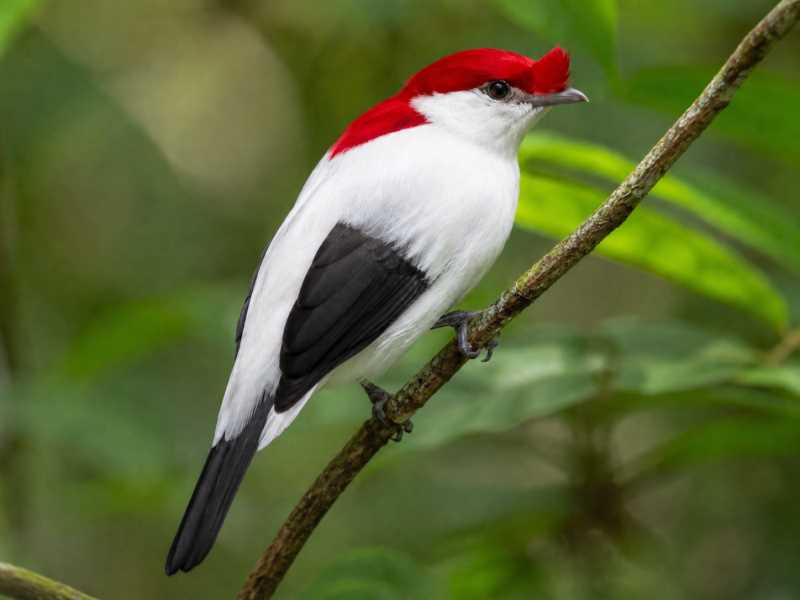
The Araripe Manakin is renowned for its striking plumage and distinctive appearance. Males are particularly eye-catching, boasting a vibrant red crown that contrasts sharply with their predominantly black and white body. The back and wings are a sleek black, while the belly is white. In contrast, females exhibit a more subdued olive-green coloration, which provides excellent camouflage amidst the foliage.
These birds are relatively small, typically measuring around 15 cm in length. Their compact size and agile flight allow them to navigate the dense forest undergrowth with ease.
Behavior and Diet
Araripe Manakins are known for their intricate courtship displays, a characteristic trait of the manakin family. Males engage in elaborate dances to attract females, often performing on specific display sites known as leks. These displays involve a series of acrobatic maneuvers, including hops, flips, and wing snaps, all designed to showcase their plumage and agility.
Their diet primarily consists of fruits and small insects, which they forage from the forest understory. The manakin’s role as a seed disperser is crucial for maintaining the ecological balance of their habitat, as they help propagate various plant species.
Conservation Status
The International Union for Conservation of Nature (IUCN) lists the Araripe Manakin as Critically Endangered. The primary threat to their survival is habitat destruction, primarily due to agricultural expansion, urban development, and deforestation. The Chapada do Araripe region is under constant pressure from these activities, which significantly diminish the available habitat for this species.
Conservation efforts are underway to protect the Araripe Manakin, led by local and international organizations. Initiatives include habitat restoration, legal protection of critical areas, and environmental education programs aimed at raising awareness about the bird’s plight.
The Role of Environmental Education
One of the most effective strategies in the conservation of the Araripe Manakin is environmental education. By engaging local communities and raising awareness about the importance of preserving the species and its habitat, conservationists hope to foster a sense of stewardship among residents.
Programs that involve local schools, community leaders, and government agencies are crucial in this effort. By highlighting the ecological and cultural significance of the Araripe Manakin, these initiatives aim to inspire action and support for conservation measures.
The Future of the Araripe Manakin
Despite the challenges, there is hope for the future of the Araripe Manakin. Continued research and monitoring are essential to understanding the species’ behavior, habitat needs, and population dynamics. By employing innovative conservation techniques and fostering international collaboration, there is potential to safeguard this remarkable bird for future generations.
In conclusion, the Araripe Manakin is not only a symbol of Brazil’s rich biodiversity but also a reminder of the fragility of our planet’s ecosystems. The efforts to conserve this species highlight the importance of preserving our natural heritage and the role each of us can play in ensuring the survival of endangered species worldwide.
References
– BirdLife International. (2021). *Chiroxiphia bokermanni*. The IUCN Red List of Threatened Species 2021.
– Kirwan, G. M., & Green, G. (2011). *Cotingas and Manakins*. Princeton University Press.
– Silva, J. M. C., & Oren, D. C. (1997). *Islands in the Sky: The Chapada do Araripe, Ceará, Brazil, a Forgotten Center of Biodiversity*. Bird Conservation International.
—
Related posts