Introduction
The Banded Martin, scientifically known as Neophedina cincta, is a fascinating bird that captures the interest of ornithologists and bird enthusiasts alike. Part of the Hirundinidae family, this species is commonly found across sub-Saharan Africa. Known for its distinctive markings and unique behaviors, the Banded Martin is an integral part of the ecological tapestry of its habitat.
Identification and Physical Characteristics
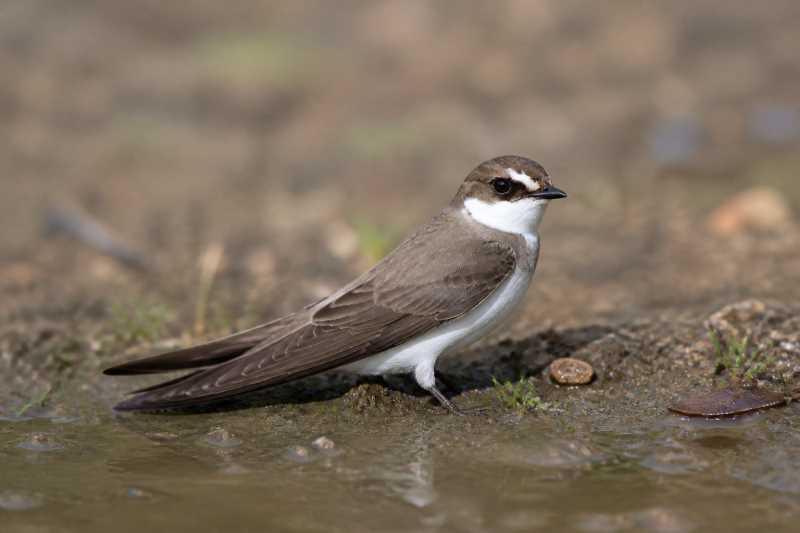
At first glance, the Banded Martin is notable for its sleek, streamlined body, characteristic of swallows and martins. It typically measures around 15 to 17 cm in length and has a wingspan of approximately 35 to 38 cm. The plumage of the Banded Martin is primarily brown and white, with a distinctive dark band across its chest that gives it its name. This band, along with its white underparts and brown upperparts, create a striking contrast that aids in identification.
The head of the Banded Martin is adorned with a subtle, yet distinctive, brown cap, while its tail is slightly forked, facilitating agile flight. The bird’s bill is short and broad, optimized for catching insects mid-flight, a staple of its diet. Its legs and feet are small and weak, a common trait among aerial foragers who spend much of their time on the wing.
Habitat and Distribution
Banded Martins are widely distributed across sub-Saharan Africa, from Senegal in the west to Ethiopia and Somalia in the east, and as far south as South Africa. They favor open landscapes such as savannas, grasslands, and agricultural areas, often near water bodies, which provide abundant insect life. These birds are also commonly found in human-modified environments, such as farmlands, where they can easily find food.
Their preference for open areas is due to their feeding habits. Banded Martins are aerial insectivores, catching prey in flight with remarkable precision. They rely on open spaces to sight and pursue flying insects, which form the bulk of their diet.
Behavior and Diet
The Banded Martin is a highly social bird, often found in small flocks outside of the breeding season. They are known for their agile and acrobatic flight patterns, which they use to catch insects on the wing. Their diet primarily consists of a variety of flying insects, such as beetles, flies, and ants. Their ability to consume large quantities of insects makes them valuable allies in controlling pest populations in agricultural settings.
During the breeding season, Banded Martins become more territorial. They establish nesting colonies, often in sandy banks or cliffs, where they excavate burrows to lay their eggs. The breeding season varies across their range but generally aligns with the rainy season when insect prey is most abundant.
Reproduction and Lifespan
Banded Martins are monogamous during the breeding season, with pairs working together to excavate nesting burrows. These burrows can be quite extensive, often measuring over a meter in length. The female typically lays between two to four eggs per clutch, with both parents participating in incubation and feeding duties.
The incubation period lasts about two weeks, after which the chicks hatch. Both parents are involved in feeding the chicks, which fledge after approximately three weeks. The life expectancy of a Banded Martin in the wild is not well-documented, but like many small birds, they face numerous threats from predators and environmental challenges.
Conservation Status
Currently, the Banded Martin is classified as a species of Least Concern by the International Union for Conservation of Nature (IUCN). Its wide distribution and large population help buffer against immediate threats. However, habitat loss due to agricultural expansion and urban development can pose risks to local populations.
Conservation efforts for the Banded Martin focus on preserving their natural habitats and ensuring sustainable agricultural practices that do not diminish their insect prey base. Continued monitoring of their population trends is essential to ensure they remain a thriving part of Africa’s avian biodiversity.
Conclusion
The Banded Martin is a remarkable species that adds to the rich avian diversity of sub-Saharan Africa. Its unique physical characteristics, social behavior, and ecological role as an insectivore make it a valuable subject of study for ornithologists and conservationists. By understanding and protecting this species, we contribute to the broader efforts of preserving the natural ecosystems they inhabit.
References
For further reading, consider consulting ornithological guides and journals that focus on African bird species, as well as resources from bird conservation organizations.
Related posts