Introduction
The Australian Owlet-nightjar (Aegotheles cristatus) is a small, nocturnal bird of the owlet-nightjar family, Aegothelidae. It is widespread across Australia and also occurs in southern New Guinea. Despite its name, it is neither an owl nor a true nightjar. The species is secretive and well camouflaged, so it is more often heard than seen.
Physical Description
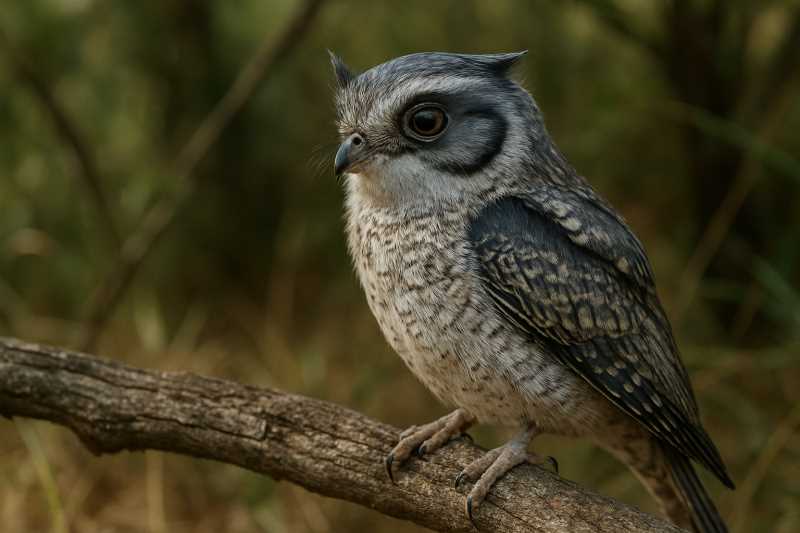
The Australian Owlet-nightjar measures approximately 19–25 centimetres in length, making it Australia’s smallest nocturnal bird. It has a compact body, short rounded wings, a relatively long tail and a broad, flattened bill fringed with stiff rictal bristles.
Plumage varies considerably across its range. Grey-brown birds are common in many areas, while paler or rufous-brown forms occur particularly in drier regions. The upperparts are usually mottled and provide effective camouflage against bark, branches and leaf litter. Adults have prominent dark stripes across the crown, large dark eyes and paler underparts with fine barring. The sexes are generally similar in appearance, and reliable field separation is difficult. Chicks are covered in soft, wispy white down.
Range and Habitat
The species occurs widely across mainland Australia and Tasmania, using a broad range of timbered habitats. These include dry open forests, eucalypt woodlands, mallee, heathland, tree-lined watercourses and some tropical woodland environments. It is also recorded in southern New Guinea.
Australian Owlet-nightjars usually depend on trees or other structures that provide small cavities for daytime roosting and nesting. Tree hollows are especially important, although birds may also use rock crevices, nest boxes, roof cavities, pipes, chimneys and other sheltered artificial structures. Mature trees with suitable hollows can therefore be valuable even where the surrounding habitat has been modified.
The species is generally resident, although local movements may occur in response to weather, food availability and habitat conditions. Regional differences in plumage include darker, greyer birds in some humid areas and paler or more rufous birds in arid regions.
Where to See This Species
Flinders Chase National Park, Kangaroo Island, South Australia
Australian Owlet-nightjars have been documented in Flinders Chase National Park, including records from motion-sensor cameras following the 2019–20 bushfires. The park’s woodland, mallee and recovering forest provide suitable habitat, although the species is difficult to see and is more likely to be detected by its call or by carefully observing cavities at dusk and dawn. Visitors should avoid disturbing roosting birds or entering closed areas during habitat recovery.
Nearby accommodation: Kangaroo Island provides hotels, guest houses, cabins, campsites and self-catering accommodation, with Parndana and Kingscote serving as practical bases for exploring the island.
Blue Mountains National Park, New South Wales
Systematic fauna surveys in the Blue Mountains have recorded Australian Owlet-nightjars as common and widespread across suitable woodland and forest habitats. The species may be detected at night by its distinctive call, particularly around open forest, woodland edges and areas containing mature hollow-bearing trees. Katoomba, Blackheath and other Blue Mountains townships provide convenient access to the park and its public walking and camping areas.
Nearby accommodation: Katoomba, Blackheath, Leura and nearby settlements offer hotels, guest houses, cabins, campsites and self-catering accommodation.
Behaviour and Diet
Australian Owlet-nightjars are mainly nocturnal and are most active during the evening and before dawn. Their usual call is a short, sharp or grating chirr that may descend in pitch and be repeated several times. Calls can help observers locate birds that remain hidden in vegetation or cavities.
During the day, birds usually roost in hollows, crevices or other sheltered cavities. They may sit at the entrance of a roost, particularly in cool weather, and can sometimes enter a short period of torpor to conserve energy. Their large, non-reflective eyes and cryptic plumage make them difficult to detect during daylight.
The diet consists mainly of insects and other small invertebrates, including spiders and occasionally millipedes. Birds use perch-and-sally and perch-and-pounce hunting techniques, taking prey from the air, foliage, tree trunks, the ground and other surfaces. The rictal bristles around the bill may help guide or detect prey during close-range feeding.
Breeding generally occurs during the warmer months, with records commonly falling between July and December, although timing varies geographically. Pairs usually nest in small tree hollows or comparable cavities. Clutches contain about two to five eggs, and both parents participate in incubation and care of the young.
Identification Tips
- Look for a very small, compact nocturnal bird with large dark eyes, a broad bill and a relatively long tail.
- Adults usually show mottled grey-brown or rufous-brown plumage, pale underparts and dark stripes across the crown.
- The bird’s eyes do not usually produce the bright red or yellow reflection associated with many owls when illuminated.
- Listen for a short, harsh or shrill descending chirr, often repeated at dusk or during the night.
- Check the entrances of tree hollows, pipes, roof cavities and rock crevices, but do not flush or spotlight roosting birds at close range.
- Do not confuse it with the Southern Boobook or other small owls. The Australian Owlet-nightjar has a shorter, broader bill, a different head pattern and a distinctive chirring call. It also lacks the upright owl posture commonly seen in owls.
Conservation Status
The Australian Owlet-nightjar is currently assessed as Least Concern by the IUCN Red List. Its extensive distribution and use of a wide range of habitats support this assessment, although detailed population estimates are not available.
The principal local threats are the removal of mature trees, loss of hollow-bearing limbs, land clearing, severe habitat fragmentation and changes caused by inappropriate fire regimes. Bushfires can destroy existing roosting and nesting hollows, although fire and natural tree decay may also create cavities over longer periods. Conservation measures include protecting mature trees, retaining fallen timber and natural cavities where safe, maintaining connected woodland and forest habitat, and monitoring populations after major fires.
Frequently Asked Questions
Is the Australian Owlet-nightjar an owl?
No. Despite its name and owl-like appearance, it is not an owl. It belongs to the separate owlet-nightjar family, Aegothelidae.
Where does the Australian Owlet-nightjar live?
It occurs across much of Australia, including Tasmania, and also reaches southern New Guinea. It uses open forest, woodland, mallee, heathland, tree-lined watercourses and other habitats containing suitable roosting or nesting cavities.
What does the Australian Owlet-nightjar eat?
It mainly eats insects and other small invertebrates, including spiders and occasionally millipedes. It captures prey from the ground, foliage and air.
When is the best time to hear an Australian Owlet-nightjar?
Dusk and the hours before dawn are usually the most productive times. The species may call throughout the night and can sometimes be detected during the day, but visual sightings are uncommon.
Does the Australian Owlet-nightjar migrate?
It is generally considered a resident species. Local movements may occur when weather conditions, food availability or habitat conditions change, but it is not known for long-distance seasonal migration.
Where does it nest?
It usually nests in small tree hollows, although rock crevices, nest boxes and suitable artificial cavities may also be used. Both parents contribute to incubation and care of the young.
References
- BirdLife International
- BirdLife Australia
- National Parks and Wildlife Service South Australia
Related posts