The Atoll Fruit Dove: Nature’s Vibrant Gem of the Pacific
The Atoll Fruit Dove (Ptilinopus coralensis), a striking species of bird native to the remote regions of the Pacific Ocean, stands as a testament to nature’s ability to craft beauty in isolation. This bird, with its vibrant hues and serene demeanor, is a crucial component of the delicate ecosystems it inhabits. Found primarily on the Tuamotu Archipelago and the Line Islands, the Atoll Fruit Dove is not just a marvel of avian beauty but also an essential player in its ecological niche.
Physical Characteristics and Identification
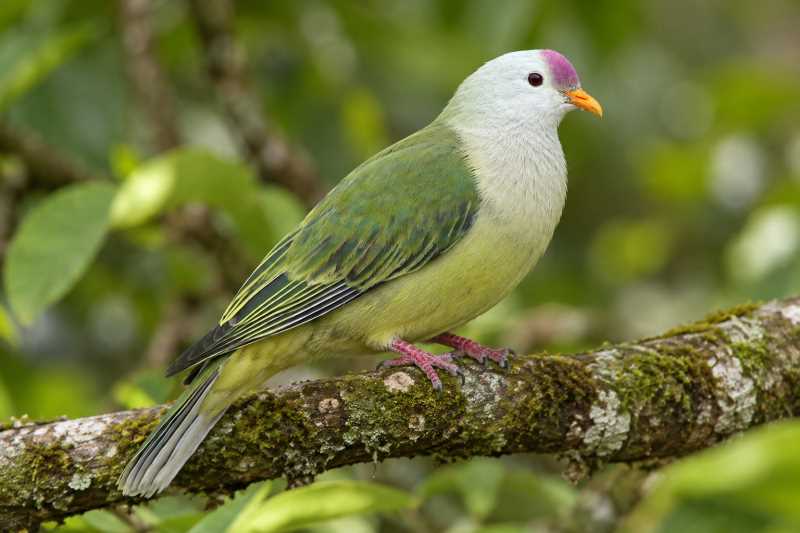
The Atoll Fruit Dove is a small, plump bird, measuring about 18-20 cm in length, and weighing approximately 70-80 grams. Its plumage is a visual feast: a striking combination of vivid greens, soft yellows, and a dash of pink that blends seamlessly into its lush surroundings. The head and upperparts are predominantly green, providing excellent camouflage among the leaves. The chest is a gentle pinkish-grey, leading to a vibrant yellow belly. The eyes are a deep ruby red, adding a touch of drama to its appearance.
The dove’s short legs and stout body make it a less agile flyer compared to its relatives, but it compensates with its ability to maneuver adeptly through dense foliage. Its call, a gentle cooing sound, is often heard at dawn and dusk, providing a serene soundtrack to the tropical environment.
Habitat and Distribution
The Atoll Fruit Dove is endemic to the islands of the central Pacific. It thrives in the tropical and subtropical moist lowland forests of these regions, particularly favoring areas dense with fruit-bearing trees. The Tuamotu Archipelago, with its numerous atolls and rich biodiversity, offers an ideal habitat for these birds. Their range is relatively limited, a factor that adds to their vulnerability.
These birds are highly adapted to their environment, relying heavily on the fruits of native plants for sustenance. The availability of these fruits directly influences their population distribution and density across the islands. They play a pivotal role in seed dispersal, helping to maintain the health and regeneration of their habitat.
Diet and Feeding Habits
As their name suggests, Atoll Fruit Doves are primarily frugivorous. Their diet consists mainly of a variety of fruits, berries, and occasionally flowers. They are known to favor the fruits of native trees such as the Pandanus and the Polynesian Chestnut. Their feeding behavior is quite unique; they consume entire fruits, aiding in the dispersal of seeds throughout their habitat. This ecological role is crucial, as it contributes to the propagation of the local flora and the overall health of the ecosystem.
Their feeding schedule is largely dictated by the availability of food. They are most active during the early morning and late afternoon when the temperatures are cooler, and the risk of predation is diminished.
Reproduction and Lifespan
Atoll Fruit Doves are monogamous, forming long-term bonds with their mates. The breeding season is generally aligned with the availability of food resources, ensuring that there is ample nourishment for the growing chicks. Nesting usually occurs in the dense foliage of trees, providing safety and concealment from predators.
The female typically lays a single egg, which both parents diligently incubate for about 20 days. Post-hatching, both parents share the responsibility of feeding the chick. The juvenile birds are quick to fledge, usually leaving the nest within 15 to 20 days after hatching. The lifespan of an Atoll Fruit Dove in the wild is not well documented, but they are believed to live for several years under ideal conditions.
Conservation Status and Threats
Currently, the Atoll Fruit Dove is classified as Near Threatened by the International Union for Conservation of Nature (IUCN). Their restricted range makes them particularly susceptible to habitat destruction, climate change, and introduced predators. Human activities, such as deforestation and the introduction of non-native species, pose significant threats to their survival.
Conservation efforts are crucial to preserve this remarkable species. Protecting their natural habitat, controlling invasive species, and promoting biodiversity within the islands are essential steps. Conservationists also emphasize the importance of community involvement in protecting these birds and their environment.
Conclusion
The Atoll Fruit Dove, with its kaleidoscope of colors and gentle presence, is a vital part of the Pacific’s natural heritage. It serves not only as an indicator of the health of its ecosystem but also as a symbol of the rich biodiversity found in these isolated atolls. Protecting the Atoll Fruit Dove goes beyond conserving a single species; it involves safeguarding an entire ecosystem that supports countless other forms of life. Through concerted conservation efforts, we can ensure that this jewel of the Pacific continues to thrive for generations to come.
Related posts