The Black Guillemot: A Beacon of the North Atlantic
The Black Guillemot (Cepphus grylle), a member of the auk family, is a striking seabird known for its distinctive plumage, vivid red legs, and engaging behavior. Found predominantly along the rocky coasts of the North Atlantic, this bird is a resilient species that thrives in some of the planet’s most challenging environments. This article explores the unique characteristics, habitat, and behavior of the Black Guillemot, revealing why it is a significant species within its ecological niche.
Distinctive Characteristics
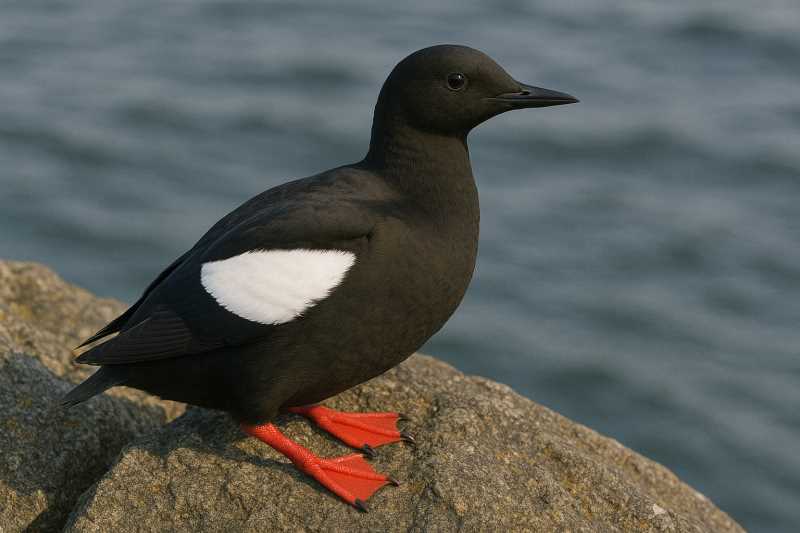
The Black Guillemot is a medium-sized bird, measuring approximately 30 to 32 centimeters in length with a wingspan of about 49 to 58 centimeters. During the breeding season, its plumage is predominantly black with a characteristic white wing patch, making it easily distinguishable from other seabirds. In winter, its plumage changes to a speckled white and gray, helping it blend with the icy environments it inhabits.
One of the most striking features of the Black Guillemot is its bright red legs and feet, which are not only visually striking but also serve practical purposes. These vivid appendages are used in courtship displays and may also be useful in signaling to other guillemots. The bird’s bill is thin and pointed, adapted for catching its primary diet of small fish and marine invertebrates.
Habitat and Distribution
Black Guillemots are primarily found along rocky coastlines, where they nest in crevices and cavities. Their range extends across the North Atlantic, from the eastern coasts of North America, including parts of Canada and the northeastern United States, to Greenland, Iceland, and the British Isles. Their presence is also noted in parts of Scandinavia and Russia.
These birds are highly adapted to cold environments, often breeding on isolated rocky islets, cliffs, and coastal shores. They are known to venture further north than many other seabirds, taking advantage of the relatively ice-free waters during the breeding season.
Behavior and Diet
The Black Guillemot is a proficient diver, capable of plunging up to 50 meters deep in pursuit of prey. Its diet consists primarily of fish such as sculpins, blennies, and cod, as well as crustaceans and mollusks. Unlike some other seabirds, the Black Guillemot is a solitary feeder, often seen foraging close to shore.
Nesting typically occurs in small colonies or sometimes solitarily, with pairs returning to the same nesting sites year after year. The breeding season begins in early spring, and both parents share the responsibility of incubating the eggs and feeding the chicks. The chicks fledge after approximately 30 days, but remain dependent on their parents for a further few weeks.
Conservation Status
Currently, the Black Guillemot is not considered threatened and is classified as a species of Least Concern by the International Union for Conservation of Nature (IUCN). However, like many seabirds, it faces challenges such as oil spills, climate change, and human disturbances. The warming of the Arctic waters and the associated changes in prey availability could potentially impact their populations in the long term.
Conservation efforts for Black Guillemots often focus on habitat protection and monitoring the impacts of environmental changes. Maintaining the health of the North Atlantic marine ecosystems is vital for the continued survival and prosperity of this species.
Conclusion
The Black Guillemot is a fascinating example of adaptation and resilience, thriving in the harsh and variable conditions of the North Atlantic. Its striking appearance and behaviors offer insights into the complex dynamics of seabird ecology. As we continue to study and protect this remarkable bird, it serves as a symbol of the wild beauty and ecological richness of the northern seas.
For bird enthusiasts and conservationists alike, the Black Guillemot represents both a challenge and an opportunity to understand and protect the delicate balance of marine environments.
Related posts