The Asian Desert Warbler: A Comprehensive Overview
The Asian Desert Warbler (Curruca nana), a small passerine bird, is a fascinating species found across Central Asia and the Middle East. Known for its adaptability and resilience, this bird thrives in some of the harshest environments on Earth. This article delves into the Asian Desert Warbler’s habitat, physical characteristics, behavior, diet, and conservation status, providing bird enthusiasts and researchers with a detailed understanding of this remarkable avian species.
Habitat and Distribution
The Asian Desert Warbler primarily inhabits arid and semi-arid regions, including deserts and scrublands. Its range extends from the Middle East, covering countries like Saudi Arabia and Iran, through Central Asia, reaching as far as western China and southern Mongolia. The bird’s preference for such inhospitable terrains is a testament to its extraordinary adaptability.
These birds are typically found in areas with sparse vegetation, such as shrubs and low bushes, which provide necessary cover and nesting sites. Their ability to thrive in these conditions is facilitated by their nomadic tendencies, often moving to different areas in search of food and suitable breeding grounds.
Physical Characteristics
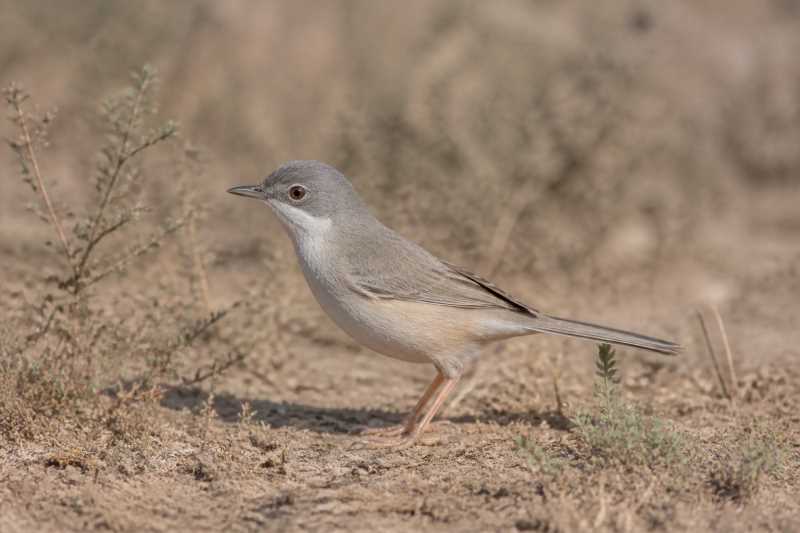
The Asian Desert Warbler is a small bird, measuring about 12.5 to 14 cm in length, with a wingspan ranging between 16 to 20 cm. Its plumage is primarily a sandy brown, which provides excellent camouflage against the desert backdrop. The underparts are paler, often displaying a creamy or buff hue, while the tail exhibits a distinctive dark coloration with white edges.
One of the defining features of the Asian Desert Warbler is its relatively long, slender bill, adapted for foraging insects and other small prey. The bird’s eyes are dark, set against a pale face, giving it a curious and watchful expression. The legs and feet are a pale pink or flesh color, aiding in its ability to traverse hot sand and rocky surfaces.
Behavior and Social Structure
Asian Desert Warblers are generally solitary or found in pairs, especially during the breeding season. They exhibit a variety of behaviors that make them well-suited to desert life. These birds are known for their agile flight and quick, hopping movements on the ground as they search for food.
During the breeding season, which usually occurs from March to June, males perform an elaborate song and display flight to attract females. The song is a series of melodious whistling notes, often delivered from a prominent perch or while in flight. Once paired, these birds are monogamous, with both parents involved in nest-building, incubation, and feeding of the young.
The nest is typically constructed in low shrubs or bushes, often made from twigs, grass, and feathers. The female lays a clutch of 3 to 5 eggs, which are incubated for about 11 to 13 days. The chicks fledge approximately 12 to 14 days after hatching, although they remain dependent on their parents for several weeks.
Diet and Foraging
The Asian Desert Warbler’s diet primarily consists of insects and other invertebrates, which it skillfully extracts from the ground and foliage. During the breeding season, its diet is supplemented with small seeds and berries. The bird’s foraging technique is both methodical and opportunistic, taking advantage of the scarce resources available in its arid habitat.
These warblers are known to feed during the cooler parts of the day, such as early mornings and late afternoons, to avoid the extreme heat of the desert. They are adept at conserving water, obtaining most of their hydration from their prey and minimizing water loss through their specialized physiology.
Conservation Status and Threats
Currently, the Asian Desert Warbler is classified as “Least Concern” on the IUCN Red List. This status reflects its wide distribution and stable population numbers across its range. However, like many species, it faces potential threats from habitat destruction due to human activities such as agriculture and urban development.
Climate change poses another significant threat, as alterations in temperature and precipitation patterns could impact the availability of food and suitable breeding sites. Conservation efforts should focus on preserving natural habitats and monitoring population trends to ensure this resilient species continues to thrive.
Conclusion
The Asian Desert Warbler is a testament to nature’s ability to adapt and flourish in extreme environments. Its survival strategies, from its nomadic lifestyle to its efficient foraging habits, illustrate the remarkable adaptability of life in arid landscapes. Understanding and appreciating this species not only enhances our knowledge of avian ecology but also underscores the importance of conserving the delicate ecosystems they inhabit.
For bird watchers and researchers alike, the Asian Desert Warbler offers a unique glimpse into the intricate dynamics of desert life, making it a species worthy of admiration and ongoing study.
Related posts