The Andean Cock-of-the-rock: A Gem of the South American Cloud Forests
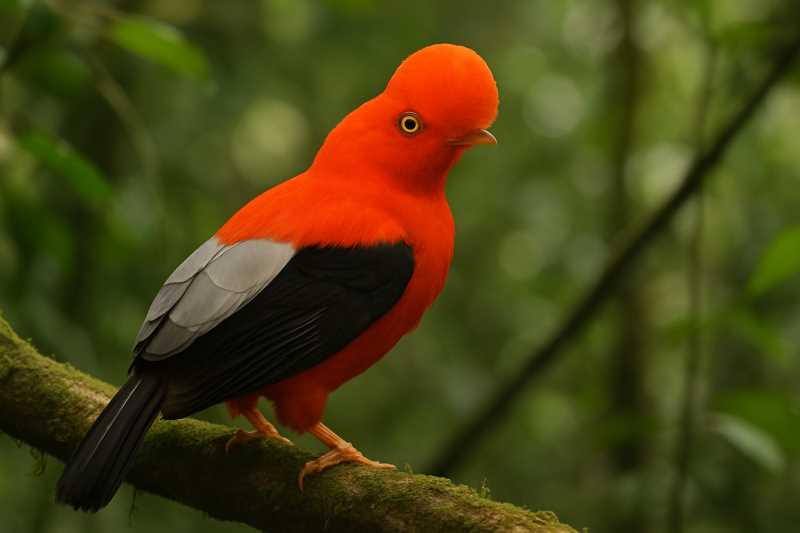
In the dense, lush cloud forests of the Andes, amid the mist and the symphony of nature, resides one of the most striking and charismatic birds in the world: the Andean Cock-of-the-rock (Rupicola peruvianus). This bird, with its flamboyant plumage and fascinating behavior, is not only a symbol of the diverse avian life of South America but also a vital component of its ecosystem.
Taxonomy and Description
The Andean Cock-of-the-rock belongs to the family Cotingidae, a group known for its vivid coloration and complex courtship displays. It was first described by the French naturalist Georges-Louis Leclerc, Comte de Buffon, in 1779, and its scientific name, Rupicola peruvianus, reflects its Peruvian roots.
Male Andean Cocks-of-the-rock are renowned for their bright orange plumage, a color that seems almost artificial against the verdant backdrop of the Andes. Their most distinctive feature is the large, fan-shaped crest that extends from their beak to the back of their head, used in courtship displays to attract females. In contrast, the females are more subdued, with brownish-grey feathers that provide camouflage in the forest.
Habitat and Range
The Andean Cock-of-the-rock is native to the cloud forests of the Andean mountain range, spanning across countries such as Venezuela, Colombia, Ecuador, Peru, and Bolivia. These birds thrive in humid, forested environments at elevations ranging from 500 to 2,400 meters.
Their preference for rugged terrain with abundant moss, orchids, and ferns creates a perfect setting for their lekking behavior—a communal display ground where males gather to compete for the attention of females. The preservation of these habitats is crucial, as deforestation poses a significant threat to their survival.
Behavior and Diet
The Andean Cock-of-the-rock is largely frugivorous, feeding primarily on a variety of fruits. This dietary preference not only sustains the bird but also plays a crucial role in seed dispersal, helping to maintain forest biodiversity. Occasionally, they may consume insects, small reptiles, and amphibians, particularly when feeding their young.
One of the most captivating aspects of the Andean Cock-of-the-rock is its lekking behavior. Males gather in designated areas, often on rocky outcrops or forest clearings, where they perform elaborate displays involving jumps, wing flaps, and vocalizations. These displays are competitive and can last for hours, with females selecting mates based on the vigor and vibrancy of the performance.
Conservation Status
Currently, the Andean Cock-of-the-rock is classified as Least Concern by the International Union for Conservation of Nature (IUCN). However, its population is declining due to habitat destruction and fragmentation. Conservation efforts are focused on preserving the cloud forest ecosystems, promoting sustainable land-use practices, and educating local communities about the importance of biodiversity.
Cultural Significance
The Andean Cock-of-the-rock holds cultural importance in the regions it inhabits. Its striking appearance has made it a symbol in local folklore and art. In Peru, it is celebrated as the national bird, representing the country’s rich natural heritage and biodiversity.
Ecotourism and Economic Impact
The allure of the Andean Cock-of-the-rock has turned it into a focal point for ecotourism. Birdwatchers and nature enthusiasts from around the world travel to the Andes to witness the vibrant displays of these birds. This influx of tourism provides economic benefits to local communities, emphasizing the need for sustainable practices that protect the habitat while supporting livelihoods.
Future Challenges and Opportunities
Despite its current status, the future of the Andean Cock-of-the-rock is not without challenges. Climate change, deforestation, and human encroachment are persistent threats that could alter its habitat. Continued research, conservation initiatives, and international cooperation are essential to ensure the survival of this iconic species.
Opportunities lie in expanding conservation areas, enhancing ecotourism infrastructure, and fostering global awareness about the importance of preserving cloud forests. By doing so, we can ensure that the Andean Cock-of-the-rock continues to grace the forests of South America for generations to come.
In conclusion, the Andean Cock-of-the-rock is more than just a bird; it is a symbol of the vibrant and fragile ecosystems of the Andes. Protecting this species means preserving the intricate web of life that it supports, ensuring the health and diversity of one of the world’s most breathtaking natural landscapes.
Related posts