The Greater Pewee: An In-Depth Look at This Elusive Bird
The natural world is brimming with fascinating creatures, each with its unique characteristics and behaviors. Among these is the Greater Pewee (Contopus pertinax), a bird that captures the interest of ornithologists and bird enthusiasts alike. Found primarily in the highlands of Mexico and the southwestern United States, the Greater Pewee is a small yet charismatic bird that plays a significant role in its ecosystem.
Taxonomy and Physical Description
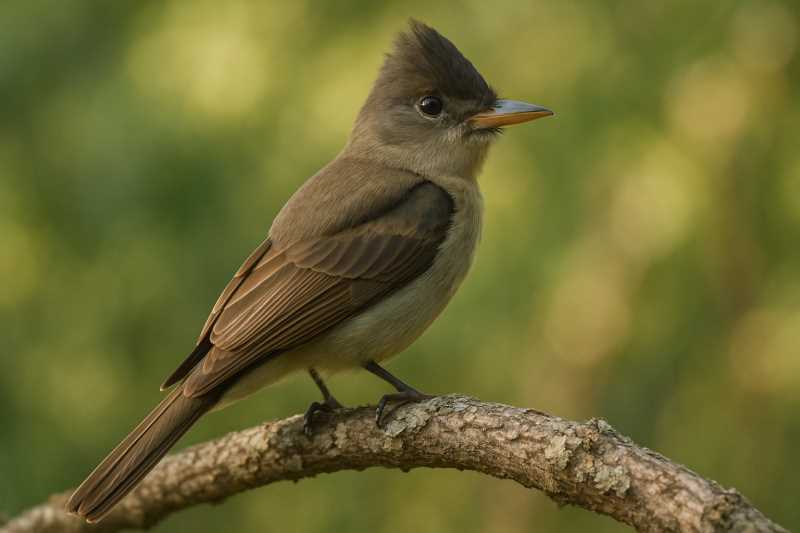
The Greater Pewee belongs to the family Tyrannidae, which consists of tyrant flycatchers. This family is known for its diverse species, all of which exhibit a propensity for catching insects mid-flight. The Greater Pewee itself is typically about 8 inches (20 cm) in length, and it weighs around 1 ounce (28 grams). Its plumage is predominantly gray with a slight olive tint, and it has a distinctive crest on its head. The bird’s wings and tail are darker, adding contrast to its overall appearance.
A key identifying feature of the Greater Pewee is its call, a distinctive, whistled “Jose Maria” that echoes through its forested habitat. This call is not only a signature sound of the species but also serves critical functions in communication and territory establishment.
Habitat and Distribution
The Greater Pewee thrives in montane forests, particularly those with abundant pine and oak trees. Its preferred habitats are typically found at elevations between 2,500 and 10,000 feet (760 to 3,050 meters). These high-altitude environments provide the bird with ample food resources, such as insects and small invertebrates, which make up the bulk of its diet.
Geographically, the Greater Pewee’s range extends from the southwestern United States, including areas of Arizona and New Mexico, down through Mexico, reaching as far south as Nicaragua. The bird is considered a partial migrant, with some populations moving to lower elevations or further south during the winter months.
Behavior and Ecology
The Greater Pewee is primarily an insectivore, catching its prey on the wing much like other flycatchers. It often perches conspicuously on high branches, scanning for passing insects. This sit-and-wait strategy is energy efficient, allowing the bird to conserve energy while remaining vigilant for food opportunities.
Breeding season for the Greater Pewee typically occurs from late April to July. The female constructs a cup-shaped nest, often placed in the fork of a tree branch, where she lays two to four eggs. Both parents participate in feeding the chicks, which fledge about two weeks after hatching.
In terms of ecological impact, the Greater Pewee plays a vital role in controlling insect populations, thereby contributing to the health of its forest habitat. Additionally, as prey for larger birds and mammals, it forms an integral part of the food web.
Conservation Status
Currently, the Greater Pewee is not listed as threatened or endangered. The species benefits from its wide range and adaptability to various montane environments. However, ongoing threats such as habitat destruction due to logging and land conversion for agriculture pose potential risks. Conservation efforts aimed at preserving forest habitats are crucial to ensuring the long-term survival of this species.
Ornithologists continue to monitor the Greater Pewee’s population dynamics and habitat conditions to better understand any emerging threats. Citizen science initiatives, such as birdwatching events and population surveys, also play a vital role in gathering data and raising awareness about this unique bird.
The Greater Pewee in Culture
The Greater Pewee, with its melodic call and striking appearance, has captured the imagination of people in the regions it inhabits. In local folklore, its call is often likened to a song, and it is sometimes associated with omens and weather predictions. Such cultural narratives highlight the bird’s significance beyond its ecological role, showcasing its impact on human communities.
In the realm of birdwatching, the Greater Pewee is a sought-after species, particularly for those interested in the unique avian life of the American Southwest and Mexican highlands. Birdwatchers and nature photographers often travel to these regions specifically to catch a glimpse of the bird and hear its characteristic call.
Conclusion
The Greater Pewee is a remarkable example of avian adaptation and resilience. Its ability to thrive in mountainous environments, combined with its distinctive behaviors and ecological roles, makes it a subject of considerable interest within the ornithological community. As we continue to study and appreciate the Greater Pewee, it serves as a reminder of the intricate connections within ecosystems and the importance of protecting the natural world.
In a rapidly changing environment, the conservation of species like the Greater Pewee is crucial. By understanding and supporting the ecosystems they inhabit, we can ensure that future generations will continue to enjoy the presence and song of this captivating bird.
Related posts