The White-tailed Sabrewing: A Jewel of the Caribbean
In the lush, verdant forests of the Caribbean islands, a dazzling spectacle of nature unfolds as the White-tailed Sabrewing (Campylopterus ensipennis) flits gracefully through the treetops. This avian marvel, with its iridescent plumage and distinctive white tail, is a testament to the beauty and diversity of hummingbirds. Revered by birdwatchers and ecologists alike, the White-tailed Sabrewing represents a unique segment of the Caribbean’s rich biodiversity.
Habitat and Distribution
The White-tailed Sabrewing is primarily found in the Lesser Antilles, with significant populations inhabiting the islands of Trinidad and Tobago. These birds thrive in tropical and subtropical forests, where they play a crucial role in the ecosystem as pollinators. The dense, humid environment of these forests provides the perfect backdrop for the Sabrewing’s vibrant displays.
Their preferred habitats include lower montane rainforests and forest edges, where flowering plants are abundant. The presence of diverse flora not only supports their dietary needs but also facilitates their critical role in the pollination of various plant species. As a result, the White-tailed Sabrewing is an essential component in maintaining the ecological balance of its habitat.
Physical Characteristics
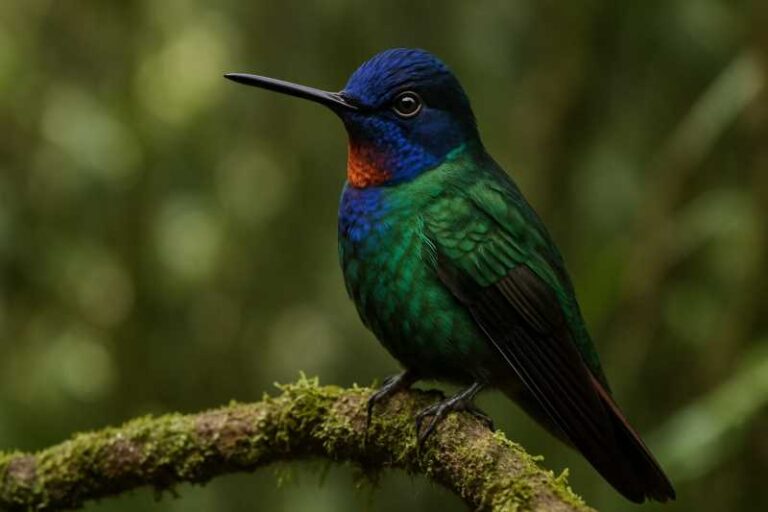
The White-tailed Sabrewing is a medium-sized hummingbird, measuring approximately 12 to 14 centimeters in length. Its most striking feature is its brilliant green plumage that shimmers with iridescence, a hallmark of many hummingbirds. The namesake white tail is a distinguishing characteristic that sets it apart from other species within the Campylopterus genus.
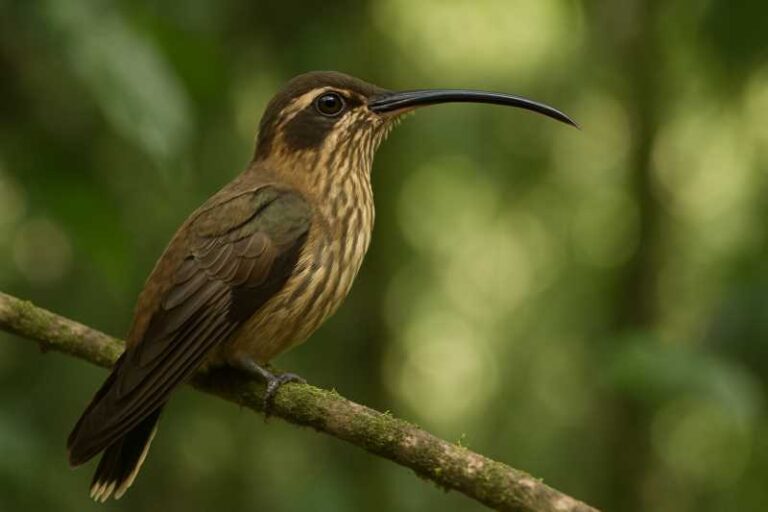
Males and females are similar in appearance, though males typically exhibit slightly more vibrant colors. The bird’s long, slightly curved bill is perfectly adapted for extracting nectar from tubular flowers, illustrating the co-evolution of hummingbirds and their preferred floral species.
Behavior and Diet
Known for their agility and speed, White-tailed Sabrewings are adept fliers. Their flight is a ballet of rapid wing beats, enabling them to hover with precision as they feed on nectar. This feeding behavior is not only fascinating to observe but also vital for the pollination of many tropical plant species.
In addition to nectar, these hummingbirds consume small insects and spiders, which provide essential proteins and nutrients. This dietary diversity helps sustain them, particularly during periods when flowering plants are less abundant.
Breeding and Lifecycle
The breeding season of the White-tailed Sabrewing is closely aligned with the flowering cycles of their habitat, ensuring ample food supply for the nurturing of young. Females are primarily responsible for nest-building and rearing the chicks. They construct small, cup-shaped nests using plant fibers and spider silk, often camouflaging them with moss and lichens.
Clutch sizes are typically two eggs, which the female incubates for about two weeks. Once hatched, the altricial chicks are fed a diet rich in regurgitated insects and nectar. Fledging occurs approximately three weeks after hatching, but the young may continue to rely on parental support for some time thereafter.
Conservation Status and Threats
The White-tailed Sabrewing is currently listed as Near Threatened by the International Union for Conservation of Nature (IUCN). This status highlights the species’ vulnerability to habitat destruction, primarily due to deforestation and land-use changes in the Caribbean. As human activities encroach on their natural habitats, the need for effective conservation strategies becomes ever more pressing.
Efforts to conserve the White-tailed Sabrewing and its habitat are crucial to preserving the ecological integrity of the regions they inhabit. Initiatives such as the establishment of protected areas, habitat restoration projects, and environmental education programs are imperative for ensuring the survival of this stunning species.
Conclusion
The White-tailed Sabrewing is more than just a visual spectacle; it is a vital component of the Caribbean’s ecological tapestry. Its role as a pollinator underscores the interconnectedness of species within an ecosystem, and its presence is indicative of a healthy, thriving environment. As we continue to face global environmental challenges, the conservation of species like the White-tailed Sabrewing serves as a poignant reminder of the delicate balance that sustains our natural world.
Preserving the habitats of these remarkable birds is not just an environmental imperative but a moral responsibility. With concerted conservation efforts and a commitment to sustainable practices, we can ensure that future generations will also marvel at the beauty of the White-tailed Sabrewing as it dances through the Caribbean skies.
Related posts