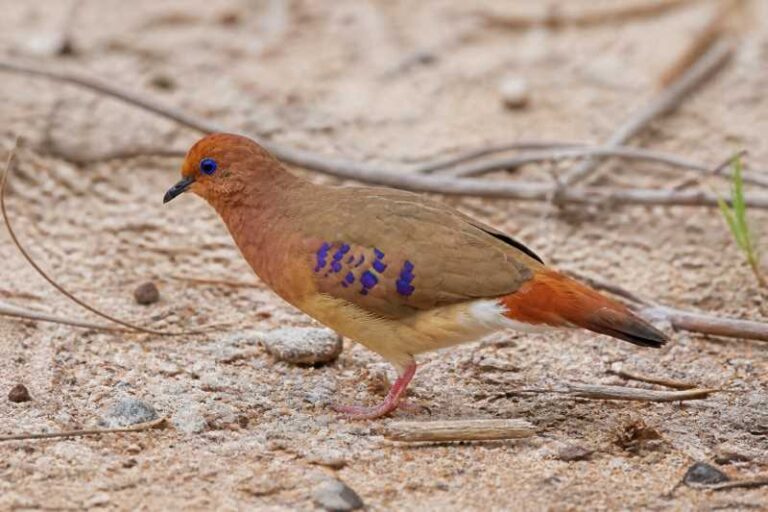
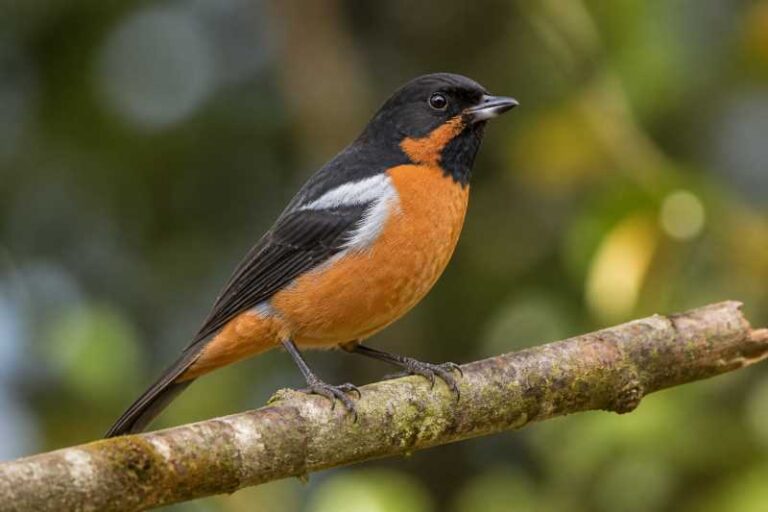
The Emperor Fairywren (Malurus cyanocephalus) is a spectacularly adorned bird native to the dense lowland forests and mangroves of New Guinea and nearby islands. Known for its striking plumage and vibrant social behavior, this species stands out among the fairywrens, a group already famous for their brilliant coloration and intricate vocalizations. Unlike most members of the Malurus genus, the Emperor Fairywren inhabits tropical environments rather than temperate woodlands, making it an intriguing subject for ornithologists and birdwatchers alike.
Physical Description
The male Emperor Fairywren is a visual marvel. Its head and upper back are adorned with an iridescent cobalt-blue crown and mantle that shimmer in the light. A bold black face mask and upper chest contrast sharply with the blue, while the rest of the underparts are a soft buff or pale orange. The wings and tail are deep black, providing a stark outline that enhances the brilliance of the bird’s blue tones.
Females are less vibrant but equally elegant. They display a more subdued brownish upper body with a bluish tail, and a pale underbelly. Their face shows a faint trace of the male’s black markings but lacks the intense coloration, reflecting the typical sexual dimorphism seen in fairywrens.
Juveniles resemble females but with duller tones and less distinct facial patterns.
Distribution and Habitat
The Emperor Fairywren is endemic to New Guinea, including both the Papua New Guinea and Indonesian regions of the island. It thrives in dense undergrowth of lowland rainforests, riverine thickets, secondary forests, and mangrove edges. It is most commonly found at elevations below 500 meters.
Its preference for lush, tangled vegetation near water sources makes it a challenging yet rewarding bird to spot. Birders visiting coastal New Guinea or the Aru Islands often seek this elusive species, listening for its high-pitched calls and searching low shrubs for flashes of cobalt and chestnut.
Behavior and Social Structure
Like other fairywrens, the Emperor Fairywren is highly social. It typically forages in small groups, which may consist of a dominant breeding pair and several helpers—often previous offspring that assist in raising new broods. These groups move actively through the understory, hopping from branch to branch and calling to maintain contact.
Emperor Fairywrens are insectivorous, gleaning spiders, beetles, and small invertebrates from foliage and bark. Their agility and teamwork allow them to cover a lot of ground efficiently, often accompanied by other small insectivores in mixed-species feeding flocks.
Their communication includes a range of whistles and high-pitched trills, used for group cohesion, mate attraction, and territory defense.
Breeding and Nesting
The breeding biology of the Emperor Fairywren is less well-documented than that of its Australian relatives, largely due to the remote and challenging terrain it inhabits. However, it is believed to share similar cooperative breeding strategies.
Nests are typically dome-shaped structures constructed low in dense vegetation using fine grasses, rootlets, and spider silk. The female likely does most of the nest-building and incubation. Once the chicks hatch, all group members help feed and protect the young, increasing survival rates in a habitat full of potential predators.
Breeding likely coincides with the wet season when insect prey is most abundant, although this may vary by region.
Conservation Status
The Emperor Fairywren is currently classified as Least Concern by the IUCN, thanks to its wide range and apparently stable population. However, ongoing deforestation in New Guinea poses a threat to its habitat. Logging, agricultural expansion, and infrastructure development could reduce available lowland forest and mangrove environments in the future.
Conservation efforts focused on preserving New Guinea’s rainforests are crucial not only for the Emperor Fairywren but for the myriad of endemic species that share its environment. Ecotourism, research initiatives, and sustainable land-use practices all play a role in ensuring this dazzling bird remains a part of the island’s rich avian heritage.
Identification Tips for Birders
- Male plumage: Look for the electric blue crown and black mask in low shrubby areas.
- Calls: Listen for soft, high-pitched trills and contact calls within mixed flocks.
- Habitat: Search in lowland forest undergrowth, mangrove edges, and riverine thickets.
- Behavior: Watch for quick, horizontal hops and tail-flicking in foraging parties.
Final Thoughts
The Emperor Fairywren is a shining example of New Guinea’s avian splendor. Its vivid coloration, fascinating social structure, and unique habitat preferences make it a top target for naturalists and birders alike. As global awareness of New Guinea’s ecological value grows, so too does the importance of conserving the delicate ecosystems that birds like the Emperor Fairywren call home.
Related posts