The Marsh Wren: A Vocal Maestro of the Wetlands
The Marsh Wren (Cistothorus palustris) is a small songbird that captivates bird enthusiasts and ornithologists alike with its intricate vocalizations and fascinating behavior. Known for its energetic song and complex nest-building habits, the Marsh Wren is a remarkable inhabitant of North America’s marshlands. This article delves into the unique characteristics, habitat, and behavior of this charismatic bird.
Physical Characteristics
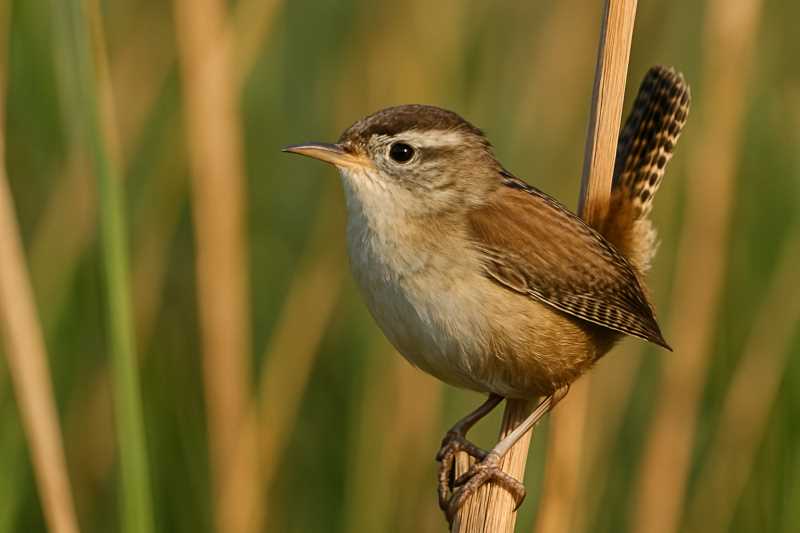
Marsh Wrens are small, stocky birds, measuring approximately 4.3 to 5.1 inches in length. They possess a distinct plumage that includes a brown back with black streaks, a lighter underbelly, and a conspicuous white eyebrow stripe that contrasts sharply with their dark crown. Their wings are short and rounded, aiding in their agility through dense reeds and marsh vegetation.
Habitat and Distribution
The Marsh Wren is predominantly found in wetlands across North America, from southern Canada through the United States to parts of Mexico. They thrive in freshwater and brackish marshes, where cattails, reeds, and bulrushes provide ideal cover and nesting sites. These habitats not only offer shelter but are also teeming with the insects and spiders that form the bulk of the Marsh Wren’s diet.
While some populations are resident year-round, others exhibit migratory behavior, with northern populations moving southwards in the winter. Their adaptability to different wetland environments highlights their resilience but also underscores the importance of wetland conservation to their survival.
Behavior and Vocalization
The Marsh Wren is renowned for its vocal prowess. Males are particularly vocal during the breeding season, showcasing an impressive repertoire of up to 200 different song variations. These complex and rapid sequences serve multiple purposes: attracting a mate, defending territory, and communicating with rivals. The songs of the Marsh Wren are characterized by a series of trills, whistles, and gurgles that resonate across the marshlands.
In addition to their vocal skills, Marsh Wrens are also known for their remarkable nest-building abilities. Males construct multiple dome-shaped nests woven from grasses and reeds, each with a side entrance. These nests are strategically placed among dense vegetation to provide protection from predators. Females then choose one of these nests to lay their eggs, typically laying 3 to 10 eggs per clutch.
Conservation Status
Currently, the Marsh Wren is listed as a species of Least Concern by the International Union for Conservation of Nature (IUCN). However, the degradation and loss of wetland habitats due to human activities such as agriculture, urbanization, and pollution pose significant threats to their populations. Conservation efforts aimed at preserving and restoring wetland ecosystems are crucial for the continued survival of this species.
Importance in Ecosystems
As insectivores, Marsh Wrens play a critical role in controlling insect populations in their habitats. Their foraging activities help maintain the ecological balance within wetland ecosystems. Moreover, their presence and abundance can serve as indicators of wetland health, providing valuable insight into the state of these vital ecosystems.
Conclusion
The Marsh Wren is a testament to the intricate beauty and complexity of wetland ecosystems. Its vibrant songs and fascinating behaviors not only enrich our natural world but also remind us of the delicate balance within these environments. Ensuring the preservation of marshlands is essential to safeguarding the future of the Marsh Wren and countless other species that call these habitats home. Through conservation efforts and increased awareness, we can help secure a future where these enchanting birds continue to thrive.
By understanding and appreciating the Marsh Wren, we gain a deeper appreciation for the ecosystems they inhabit and the vital role they play in maintaining ecological harmony.
Related posts