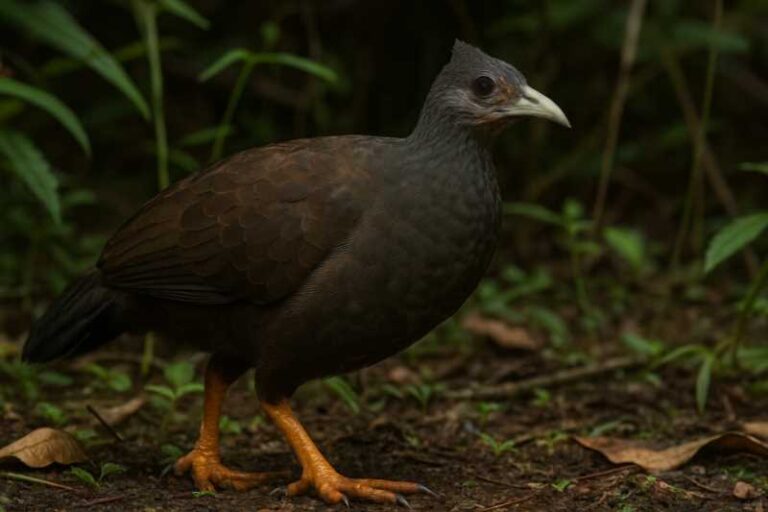
The Elusive Fearful Owl: A Glimpse into Solomon Islands’ Mysterious Avian Resident
The Solomon Islands, an archipelago renowned for its rich biodiversity and unique ecosystems, is home to a myriad of intriguing species. Among these is the elusive Fearful Owl (Asio solomonensis), a bird that has captured the fascination of ornithologists and bird enthusiasts alike. Despite its somewhat intimidating name, the Fearful Owl is an enigmatic creature whose secretive habits and dwindling numbers have raised concerns about its conservation status.
A Rare Jewel of the Solomon Islands
The Fearful Owl is endemic to the Solomon Islands, meaning it is found nowhere else on the planet. This endemic status makes it a point of interest not only for conservationists but also for the local communities who share their environment with this rare bird. The owl’s habitat is primarily in the lowland and foothill forests across the islands, where it can find ample prey and suitable nesting sites.
Characterized by its medium size, the Fearful Owl has a distinctive appearance with a length ranging from 30 to 45 centimeters. Its plumage is predominantly dark brown, providing excellent camouflage against the dense forest canopy. The striking facial disc, typical of owls, is lined with darker feathers, giving the bird its characteristic stern look. Despite its name, the Fearful Owl is not particularly timid but rather elusive, making it a challenging subject for study.
Behavior and Ecology
Little is known about the Fearful Owl’s behavior due to its secretive nature. However, like many owls, it is primarily nocturnal, hunting at night for small mammals, birds, and insects. Its call is often described as a series of deep hoots that resonate through the forest, a sound rarely heard due to the bird’s declining numbers.
The Fearful Owl is believed to be a solitary creature, especially during its hunting forays. Its keen sense of hearing and exceptional night vision make it a formidable predator in the dimly lit forest environment. However, the scarcity of direct observations means that much about its life cycle, breeding habits, and social structure remains a mystery.
Conservation Challenges
The status of the Fearful Owl is currently listed as Vulnerable by the International Union for Conservation of Nature (IUCN). Several factors contribute to this classification, chiefly habitat loss due to logging and land conversion for agriculture. The forests of the Solomon Islands are under increasing pressure from human activities, leading to fragmentation and degradation of the owl’s natural habitat.
Additionally, the introduction of invasive species has further compounded the threats faced by the Fearful Owl. Predators such as rats and cats pose significant risks, preying on eggs and young owls. These challenges underscore the urgent need for targeted conservation efforts to protect this unique species and its habitat.
Conservation Efforts and Future Outlook
Efforts to conserve the Fearful Owl are being spearheaded by various organizations, both local and international. Key strategies include habitat protection, community engagement, and scientific research aimed at understanding the owl’s ecology and developing effective conservation plans.
Community involvement is crucial, as it ensures that conservation initiatives are culturally sensitive and sustainable. By working with local populations, conservationists can foster a sense of stewardship and empower communities to participate in protecting their natural heritage.
Research is also a critical component of conservation efforts. Detailed studies on the Fearful Owl’s ecology, population dynamics, and threats are necessary to inform effective management strategies. Collaborative efforts involving government agencies, non-governmental organizations, and academic institutions are essential to gather accurate data and monitor the owl’s population trends.
Conclusion
The Fearful Owl stands as a symbol of the Solomon Islands’ rich yet fragile biodiversity. Its presence is a reminder of the intricate balance within ecosystems and the impact of human activities on wildlife. Protecting this enigmatic bird requires concerted efforts from all stakeholders, highlighting the importance of preserving natural habitats and fostering a harmonious coexistence between humans and nature.
As we continue to unravel the mysteries of the Fearful Owl, we gain not only insights into its life but also a broader understanding of the ecological dynamics that sustain our planet’s biodiversity. The conservation of the Fearful Owl is more than just a fight to save a single species; it is a testament to our commitment to preserving the natural world for future generations.
Related posts