The Tawny-browed Owl: A Symphonic Presence in the South American Forests
In the verdant expanses of South America, beneath the canopy of its rainforests and woodlands, resides a creature of exceptional beauty and mystique: the Tawny-browed Owl (Pulsatrix koeniswaldiana). Known for its distinct appearance and melodic calls, this formidable bird of prey plays a vital role in the ecosystem, serving as both a hunter and a sentinel in its lush environment.
Physical Description and Behavior
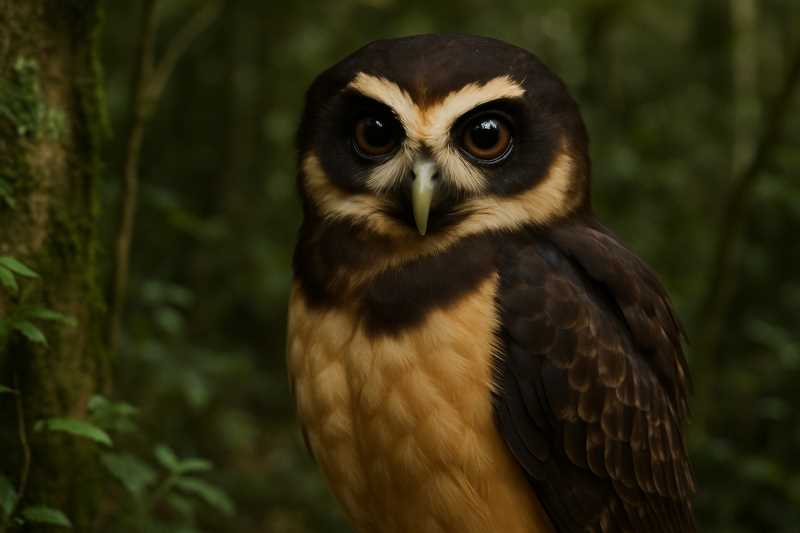
The Tawny-browed Owl is a medium-sized owl, notable for its striking appearance. It boasts a rich chocolate-brown plumage on its back and wings, contrasted by a lighter, often tawny or rufous-hued facial disc. This facial disc is accentuated by a pair of expressive, yellow eyes and distinctive white ‘eyebrows’ that lend the owl its name. These features not only contribute to its allure but also aid in its nocturnal lifestyle, allowing it to focus sound and amplify its senses in the dim light of dusk and dawn.
Behaviorally, the Tawny-browed Owl is primarily nocturnal, spending its nights hunting and its days resting in the dense foliage of the forest. Its diet is diverse, consisting mainly of small mammals, birds, and insects, which it catches with remarkable agility and precision. This adaptability in feeding habits highlights the owl’s crucial role as a predator, maintaining the ecological balance by controlling the population of its prey.
Habitat and Distribution
The habitat of the Tawny-browed Owl is predominantly in the subtropical and tropical moist lowland forests of South America. It is found across a range of countries, including Brazil, Paraguay, and Argentina. The owl’s preference for dense, humid forest environments is a testament to its adaptability and resilience, thriving in areas that are often challenging for other species.
Despite its broad range, the Tawny-browed Owl is not often seen, primarily due to its secretive nature and the inaccessibility of its preferred habitats. However, its presence can be discerned through its distinctive vocalizations, which are a series of deep, resonant hoots that echo through the forest, often heard during the twilight hours.
Conservation Status and Challenges
Currently, the Tawny-browed Owl is classified as Least Concern by the IUCN Red List. However, like many species inhabiting South America’s forests, it faces several threats. Deforestation and habitat fragmentation are the most pressing issues, as logging and agricultural expansion continue to encroach on its natural environment. These activities not only reduce the available habitat but also increase the risk of human-wildlife conflict.
Conservation efforts are crucial to ensure the survival of the Tawny-browed Owl. Protecting its habitat through sustainable forestry practices and the establishment of protected areas can mitigate the impact of human activities. Additionally, raising awareness about the owl’s ecological importance and promoting biodiversity can foster a more harmonious coexistence between humans and wildlife.
The Cultural and Ecological Significance
The Tawny-browed Owl holds significant ecological and cultural importance. Ecologically, it is a vital component of the food web, acting as both predator and prey. Its role in controlling pest populations is invaluable, providing a natural form of pest management that benefits both the forest and surrounding agricultural lands.
Culturally, owls have long been subjects of folklore and mythology, often symbolizing wisdom and mystery. The Tawny-browed Owl is no exception, its haunting calls and elusive nature contributing to the mystique that surrounds it. In many indigenous cultures, owls are considered omens or messengers, lending them a revered status.
Conclusion
The Tawny-browed Owl is a captivating emblem of the South American forests, an avian marvel that embodies the beauty and complexity of its ecosystem. Its existence underscores the importance of conservation and the need for sustainable practices that protect not only the owl but the myriad of species that share its habitat.
As stewards of the planet, it is imperative that we recognize and preserve the intricate tapestry of life that the Tawny-browed Owl is a part of. By doing so, we ensure that future generations will continue to enjoy the symphony of the forests, with the Tawny-browed Owl’s hoots resonating as a reminder of our natural heritage.
Related posts