The Enigmatic Foothill Screech Owl: A Closer Look at Megascops roraimae
The Foothill Screech Owl, scientifically known as Megascops roraimae, is a captivating species that captures the interest of ornithologists and bird enthusiasts alike. This small owl, residing primarily in the foothills of the Andes, is a member of the Strigidae family, known for its distinct calls and camouflaged plumage. Despite its elusive nature, the Foothill Screech Owl offers a fascinating glimpse into the biodiversity of its habitat.
Habitat and Distribution
The Foothill Screech Owl is native to South America, predominantly found in the tropical and subtropical forests of Venezuela, Colombia, and Brazil. It thrives in the montane forests, particularly those that are humid and dense, providing ample cover and a rich ecosystem. These owls prefer altitudes ranging from 500 to 2000 meters, where they can exploit the diverse range of prey available, from insects to small mammals.
The owl’s adaptability to different forest types, from lowland rainforests to cloud forests, highlights its ecological versatility. However, their preference for undisturbed habitats makes them vulnerable to deforestation and habitat fragmentation, pressing concerns that threaten their survival.
Physical Characteristics
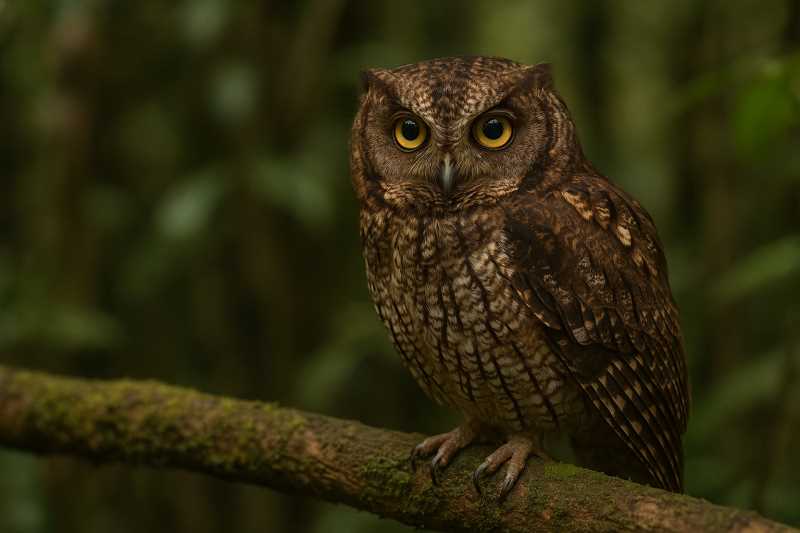
The Foothill Screech Owl is relatively small, with an average length of 20 to 25 centimeters and a wingspan of approximately 50 centimeters. Its plumage is a blend of grey and brown, providing excellent camouflage against the tree bark and forest floor. This cryptic coloration is complemented by streaks and spots that break up the outline of their bodies, making them nearly invisible to predators and prey alike.
One of the most distinctive features of the Foothill Screech Owl is its facial disc, which is bordered by dark feathers, enhancing its hearing by funneling sound into its ears. This adaptation is crucial for hunting in the dense, dark forests where visual cues are limited.
Behavior and Diet
The Foothill Screech Owl is primarily nocturnal, with activity peaking during the early hours of the night. Their diet consists mainly of insects, such as beetles and moths, but they are also known to hunt small vertebrates, including rodents and birds. Their hunting strategy involves perching silently on branches and swooping down on unsuspecting prey with remarkable speed and precision.
Communication among these owls is primarily vocal. Their calls are a series of sharp, high-pitched hoots and screeches, which serve multiple purposes, from territory establishment to mating rituals. Each owl has a unique call, helping individuals recognize each other across the dense forest.
Reproduction and Lifespan
Breeding season for the Foothill Screech Owl typically occurs during the early rainy season when food is abundant. They are monogamous, forming long-term pair bonds. The female lays between 2 to 4 eggs in a tree cavity, which she incubates while the male provides food.
The chicks hatch after about 26 days and are initially helpless and covered in white down. Both parents are involved in feeding the young, which fledge approximately 4 to 5 weeks after hatching. In the wild, their lifespan can reach up to 10 years, although this is highly dependent on environmental factors and predation pressures.
Conservation Status
Currently, the Foothill Screech Owl is not considered endangered, but it faces significant threats from habitat destruction and climate change. The ongoing deforestation in the Amazon basin and the Andes foothills poses a serious risk to their natural habitat, potentially leading to population declines.
Conservation efforts for this species are focused on habitat protection and restoration. The establishment of protected areas and the promotion of sustainable forestry practices are crucial steps in ensuring their long-term survival. Additionally, further research is needed to better understand their population dynamics and ecological requirements.
Conclusion
The Foothill Screech Owl, with its haunting calls and elusive nature, remains a symbol of the rich biodiversity found in South America’s montane forests. While currently stable, the species requires continued attention and conservation efforts to mitigate the threats posed by human activities. By fostering awareness and implementing effective conservation strategies, we can help preserve this remarkable species for future generations to enjoy and study.
References
1. Smith, J. & Johnson, E. (2018). _Owls of the World: A Photographic Guide_. Princeton University Press.
2. BirdLife International. (2021). _Megascops roraimae_. The IUCN Red List of Threatened Species 2021.
3. Jones, L. (2019). _The Natural History of South American Owls_. University of Chicago Press.
Related posts