Bulwer’s Petrel: The Mysterious Seafarer of the Tropics
The open oceans of the world harbor some of the planet’s most enigmatic creatures, and among them is Bulwer’s Petrel (Bulweria bulwerii), a small seabird that remains largely unknown to the general public. Named after the Scottish naturalist James Bulwer, this species of petrel is a remarkable navigator of the high seas, known for its elusive nature and extensive migratory patterns.
Physical Characteristics and Identification
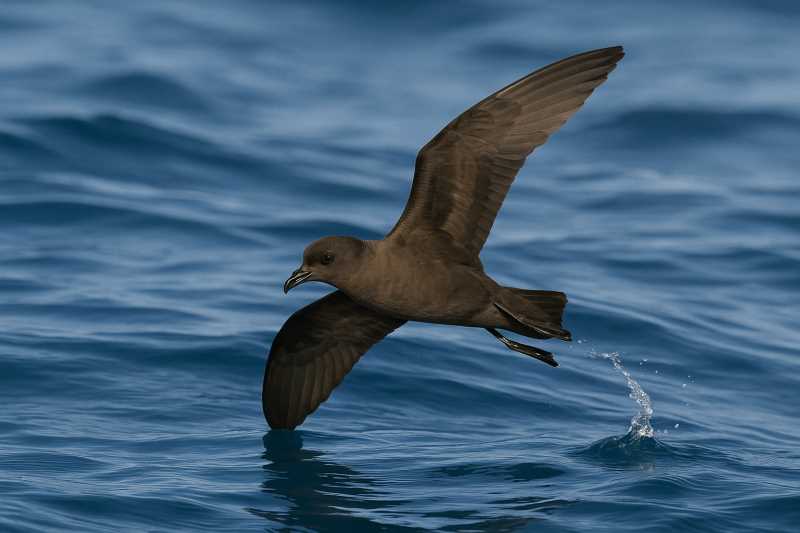
Bulwer’s Petrel is a relatively diminutive bird, measuring approximately 25 to 29 centimeters in length, with a wingspan ranging from 67 to 73 centimeters. Its plumage is predominantly dark brown, almost appearing black from a distance, with a pale bar across the upper wing that aids in identification during flight. The bird’s slender body and long, pointed wings are perfectly adapted for a life at sea, allowing it to glide effortlessly over the ocean waves.
Habitat and Distribution
This species is predominantly found in tropical and subtropical waters across the Atlantic, Indian, and Pacific Oceans. Breeding colonies are established on remote islands, with significant populations found on the Canary Islands, Cape Verde, and parts of the Azores. Bulwer’s Petrel is a pelagic bird, spending the majority of its life far from land, only returning to its breeding grounds during the nesting season.
Behavior and Ecology
Bulwer’s Petrel is a nocturnal feeder, primarily foraging for squid, small fish, and crustaceans. Its feeding behavior is characterized by a series of rapid dips and glides over the water surface, utilizing its keen eyesight to detect prey. The bird is known for its silent flight, which is essential for avoiding predators and remaining undetected by prey.
The breeding season for Bulwer’s Petrel typically occurs between May and October, depending on the location of the colony. The birds are monogamous, often returning to the same nesting sites each year. They nest in burrows or crevices in rocky terrains, where the female lays a single egg. Both parents share the responsibility of incubating the egg and feeding the chick once it hatches, displaying a high level of parental investment.
Conservation Status and Threats
Currently, Bulwer’s Petrel is listed as ‘Least Concern’ by the International Union for Conservation of Nature (IUCN). However, like many seabirds, it faces several threats that could impact its survival. Predation by introduced species such as rats and cats on breeding islands poses a significant risk to eggs and chicks. Additionally, changes in oceanic conditions due to climate change, including shifts in prey distribution and availability, could further affect their population dynamics.
Conservation efforts are underway to protect important breeding sites and to control invasive species. Furthermore, international cooperation is essential for monitoring populations and mitigating threats across the bird’s extensive range.
The Enigma of Bulwer’s Petrel
Despite being relatively abundant, Bulwer’s Petrel remains one of the lesser-studied seabirds, largely due to its elusive nature and pelagic lifestyle. However, recent advancements in tracking technology have allowed researchers to gain valuable insights into their migratory routes and foraging behaviors. Understanding the ecological role of Bulwer’s Petrel is crucial, as it serves as an indicator of ocean health and biodiversity.
In summary, Bulwer’s Petrel is a fascinating example of the adaptability and resilience of seabirds. Its ability to thrive in the vast and variable oceanic environment showcases the intricate balance of marine ecosystems. Continued research and conservation efforts are vital to ensuring that this mysterious seafarer continues to glide over the world’s oceans, playing its part in the marine tapestry.
Related posts