Jouanin’s Petrel: A Rare Seabird of the Arabian Sea
Jouanin’s Petrel (Bulweria fallax) is a fascinating yet elusive seabird that has intrigued ornithologists and birdwatchers alike. First described in 1955 by French ornithologist Christian Jouanin, this bird is part of the Procellariidae family, which includes other petrels and shearwaters. Known for its mysterious habits and limited range, Jouanin’s Petrel is a subject of ongoing research and conservation efforts.
Physical Characteristics
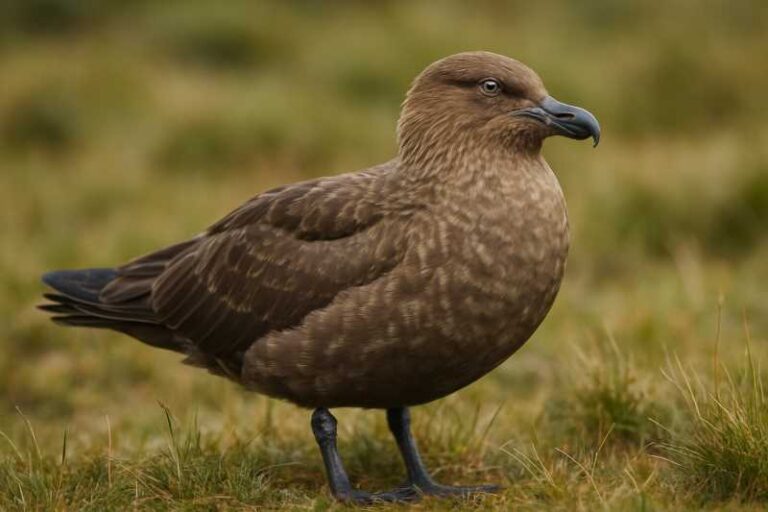
Jouanin’s Petrel is a medium-sized bird, measuring approximately 30 to 34 centimeters in length, with a wingspan of around 78 to 86 centimeters. The bird’s plumage is predominantly dark brown, with a slightly lighter underbelly. Its distinct silhouette, characterized by long wings and a forked tail, enables it to glide effortlessly over the ocean. The bird’s dark coloring provides effective camouflage against the backdrop of the sea, protecting it from predators.
Habitat and Distribution
The distribution of Jouanin’s Petrel is primarily concentrated in the northwestern Indian Ocean, including the Arabian Sea and adjacent waters. Its range extends from the eastern coast of Africa to the Arabian Peninsula and as far east as the western coast of India. The species is pelagic, spending most of its life in the open ocean, coming to land only to breed.
Breeding colonies have been identified on remote islands, including Socotra, an archipelago off the coast of Yemen. The isolation and inaccessibility of these breeding sites make them difficult to study, contributing to the bird’s enigmatic status. Jouanin’s Petrel nests in burrows or crevices on rocky cliffs, where it lays a single egg per breeding season.
Behavior and Diet
Jouanin’s Petrel is predominantly nocturnal, particularly during the breeding season, which helps it avoid predation. Its diet consists mainly of squid, small fish, and crustaceans, which it captures by skimming the ocean surface or diving. The petrel’s keen sense of smell aids in locating prey over vast stretches of ocean.
The bird’s flight is characterized by graceful, gliding movements, interspersed with rapid wingbeats. This efficient flying style allows Jouanin’s Petrel to cover large distances in search of food, often traveling hundreds of kilometers in a single day.
Conservation Status
The International Union for Conservation of Nature (IUCN) currently lists Jouanin’s Petrel as Near Threatened. The primary threat to the species is habitat disturbance, particularly at its breeding sites. Human activities such as development, pollution, and introduced predators, like rats and cats, pose significant risks. Climate change also presents a looming threat, as rising sea levels and changing oceanic conditions may impact food availability and breeding habitats.
Conservation efforts are underway to protect this rare seabird. Initiatives include monitoring known breeding sites, controlling invasive species, and conducting further research to better understand the species’ ecology and behavior. International cooperation is crucial, as the bird’s range spans multiple countries and jurisdictions.
The Importance of Jouanin’s Petrel in Ecosystems
Jouanin’s Petrel plays a vital role in the marine ecosystem as both a predator and prey. Its feeding habits help regulate populations of small fish and squid, contributing to the ocean’s food web balance. Furthermore, the bird’s guano provides essential nutrients that enrich island ecosystems, supporting plant growth and other wildlife.
The presence of Jouanin’s Petrel also serves as an indicator of ocean health. Changes in its population size or distribution can signal shifts in marine environments, prompting further investigation into potential underlying causes.
In conclusion, Jouanin’s Petrel is a remarkable seabird whose secretive nature and limited distribution make it a subject of both intrigue and concern. Continued research and conservation efforts are essential to ensure its survival, contributing to the broader goal of preserving biodiversity in the world’s oceans.
For bird enthusiasts and conservationists alike, Jouanin’s Petrel represents a symbol of the mysteries yet to be uncovered in our planet’s marine wilderness.
Related posts