Introduction
Grant’s Gazelle (Nanger granti) is a distinguished species of gazelle found in the eastern regions of Africa. Known for its elegant stature and impressive horns, this animal thrives in some of the most challenging environments on the continent. As a member of the Bovidae family, it shares characteristics with other grazing mammals, yet it stands out for its adaptability and resilience. This article delves into the various aspects of Grant’s Gazelle, including its physical description, habitat, behavior, and conservation status.
Physical Description
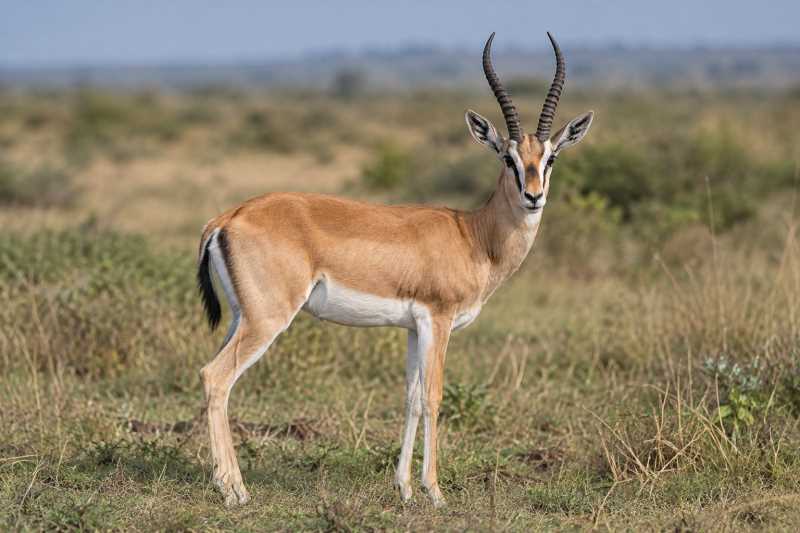
Grant’s Gazelle is renowned for its striking appearance. Adults typically stand between 75 to 95 cm at the shoulder and weigh between 35 to 80 kg. Their coats are a pale fawn color with distinctive white rumps and underbellies, accentuated by a horizontal black stripe running along their sides. The males are larger than the females and possess long, lyre-shaped horns that can grow up to 80 cm, while the females have shorter, thinner horns.
The gazelle’s coat is short and smooth, providing an efficient means of regulating body temperature in the hot climates they inhabit. Their long legs and compact bodies are perfectly adapted for speed, allowing them to evade predators with ease. Their large, dark eyes and keen sense of hearing further enhance their survival instincts.
Range and Habitat
Grant’s Gazelle occupies a broad range across East Africa, primarily in countries such as Kenya, Tanzania, South Sudan, and Ethiopia. They are highly adaptable and can be found in a variety of habitats, from open plains and savannas to semi-arid regions and grasslands.
These gazelles are particularly well-suited to areas with sparse vegetation, where they can graze and browse without much competition from other herbivores. Their ability to survive in arid environments is due in part to their efficient water management; they can extract moisture from the plants they consume, reducing their dependence on direct water sources.
Behavior and Diet
Grant’s Gazelle is both a grazer and a browser, feeding on grasses, leaves, and shoots. This dietary flexibility is crucial for surviving in the diverse habitats they occupy. They are known to form mixed-species herds with other ungulates, which can number in the hundreds, providing protection from predators such as lions, cheetahs, and hyenas.
These gazelles are diurnal, most active during the early morning and late afternoon. During the hottest part of the day, they seek shade to rest and conserve energy. Their social structure is typically composed of small family groups, bachelor groups, and territorial males. The males establish and defend territories that can attract females, especially during the breeding season.
Identification Tips (Field Recognition Cues)
When observing Grant’s Gazelle in the wild, several key features can aid in identification:
- Body Coloration: Look for the pale fawn body with a stark white rump and underbelly.
- Horns: Males have prominent, lyre-shaped horns that are long and ringed, while females have smaller, more slender horns.
- Black Stripe: A distinctive black stripe along the side separates the fawn upper body from the white underbelly.
- Behavior: They often form mixed-species herds and can be seen grazing during cooler parts of the day.
Conservation Status (With Threats and Protections)
Currently, Grant’s Gazelle is classified as a species of Least Concern by the IUCN Red List. However, they face several threats that could impact their populations in the future. Habitat loss due to agricultural expansion, human settlement, and infrastructure development poses a significant risk. Additionally, illegal hunting for meat and horns also contributes to their decline in some areas.
Conservation efforts are in place to mitigate these threats, including habitat protection and anti-poaching measures. Many of the regions where Grant’s Gazelle is found are designated as national parks or reserves, providing a safe haven from human encroachment. Continued monitoring and enforcement of wildlife protection laws are essential to ensure the species’ long-term survival.
Frequently Asked Questions
How does Grant’s Gazelle adapt to arid environments?
Grant’s Gazelle has evolved to thrive in arid regions by extracting moisture from the vegetation it consumes, reducing its need for direct water sources. This adaptation allows them to survive in environments where water is scarce.
Why is this species unique?
Grant’s Gazelle is unique due to its ability to adapt to a wide range of habitats, from savannas to semi-arid regions. Its striking appearance, with long horns and a distinctive coloration pattern, also sets it apart from other gazelle species.
What is the social structure of Grant’s Gazelle?
These gazelles typically form small family groups, bachelor herds, and territorial male groups. During the breeding season, males establish territories to attract females, often leading to complex social interactions.
What are the main threats to Grant’s Gazelle?
The primary threats to Grant’s Gazelle include habitat loss due to agriculture and urban development, as well as illegal hunting. Conservation efforts focus on habitat preservation and anti-poaching initiatives.
Related posts