Discovering the Visayan Babbler: A Jewel of Philippine Avifauna
The rich tapestry of the Philippines’ natural heritage is embroidered with a diverse array of avian species, each contributing uniquely to the ecological dynamics of the archipelago. Among these fascinating creatures is the Visayan Babbler (Sterrhoptilus nigrocapitatus), a species that captivates ornithologists and birding enthusiasts alike with its distinctive characteristics and intriguing behaviors.
Taxonomy and Classification
The Visayan Babbler belongs to the family Zosteropidae, commonly known as white-eyes. This family is renowned for its small, often vibrant birds that are predominantly found in tropical and subtropical regions. Sterrhoptilus nigrocapitatus is one of several species within the genus Sterrhoptilus, all of which are endemic to the Philippines. This endemism underscores the unique evolutionary pathways that the archipelago fosters, resulting in species that are adapted to specific ecological niches.
Physical Description
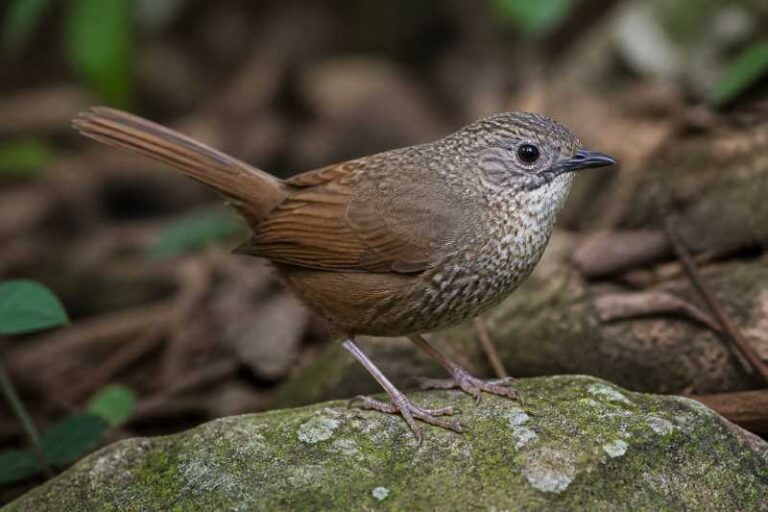
The Visayan Babbler is a small bird, typically measuring around 12 to 14 centimeters in length. It is easily recognizable by its striking plumage. The bird exhibits a predominantly olive-green body, with a contrasting black cap that gives the species its Latin name ‘nigrocapitatus,’ meaning black-headed. Its underparts are paler, often tinged with a warm buff hue. The eyes are encircled by a distinct, narrow ring of white feathers, which is a characteristic feature of the Zosteropidae family.
Habitat and Distribution
This species is endemic to the central islands of the Visayas in the Philippines. It is predominantly found in lowland and mid-montane forests, thriving in both primary and secondary growth forests. The Visayan Babbler’s preference for densely forested areas makes it an indicator species for the health of these ecosystems. However, its reliance on such habitats also renders it vulnerable to deforestation and habitat degradation, which are prevalent threats in the region.
Behavior and Ecology
The Visayan Babbler is known for its social nature, often seen foraging in small, active flocks. These flocks can sometimes include other bird species, creating mixed-species feeding groups. This behavior is believed to enhance foraging efficiency and provide protection against predators.
Their diet primarily consists of insects and small invertebrates, which they adeptly glean from foliage and branches. The Visayan Babbler’s foraging strategy involves a combination of acrobatic movements and keen eyesight, enabling it to capture prey in the dense undergrowth.
Breeding and Reproduction
The breeding season of the Visayan Babbler corresponds with the rainy season, which typically occurs from May to October. During this period, the abundance of food resources supports the increased energetic demands of raising young. The species is monogamous, with pairs often seen engaging in cooperative nesting behaviors.
Nests are typically constructed in dense foliage, providing camouflage and protection from predators. The structure is a delicate cup made from twigs, grass, and other plant materials. Clutch size usually consists of two to three eggs, which are incubated by both parents.
Conservation Status
The International Union for Conservation of Nature (IUCN) currently classifies the Visayan Babbler as Least Concern. However, this status does not imply that the species is free from threats. Habitat destruction due to logging, agricultural expansion, and urban development poses significant challenges to its survival.
Conservation efforts are crucial to safeguard the habitats of the Visayan Babbler. Initiatives such as the establishment of protected areas, sustainable forestry practices, and community education programs are vital to ensure the long-term preservation of this species and its ecosystem.
Conclusion
The Visayan Babbler is a testament to the Philippines’ extraordinary biodiversity. Its presence enriches the forests of the Visayas, making it a symbol of the region’s natural wealth. Conservationists and bird enthusiasts must continue to advocate for the protection of its habitats, ensuring that future generations can also experience the beauty and ecological significance of this remarkable bird.
Through ongoing research and conservation action, the Visayan Babbler can continue to thrive in its natural habitat, contributing to the intricate ecological web of the Philippine archipelago.
The Visayan Babbler is not just another bird; it is a vibrant thread in the fabric of life that defines the Philippines’ natural identity, reminding us of the delicate balance we must maintain to preserve the planet’s biodiversity.
Related posts