Introduction
The Southern Bottlenose Whale, scientifically known as Hyperoodon planifrons, is a captivating and relatively elusive member of the beaked whale family. Despite the challenges in studying these deep-diving cetaceans, they have garnered attention for their unique adaptations and behaviors. This article delves into the fascinating world of the Southern Bottlenose Whale, exploring its physical characteristics, habitat, behavior, conservation status, and more.
Physical Description
Southern Bottlenose Whales are robust, medium-sized cetaceans with distinctive features that make them stand out among marine mammals. Adult males typically measure between 7.5 to 8 meters in length, while females are slightly smaller, averaging 6.5 to 7 meters. Their weight ranges from 5,800 to 7,500 kilograms.
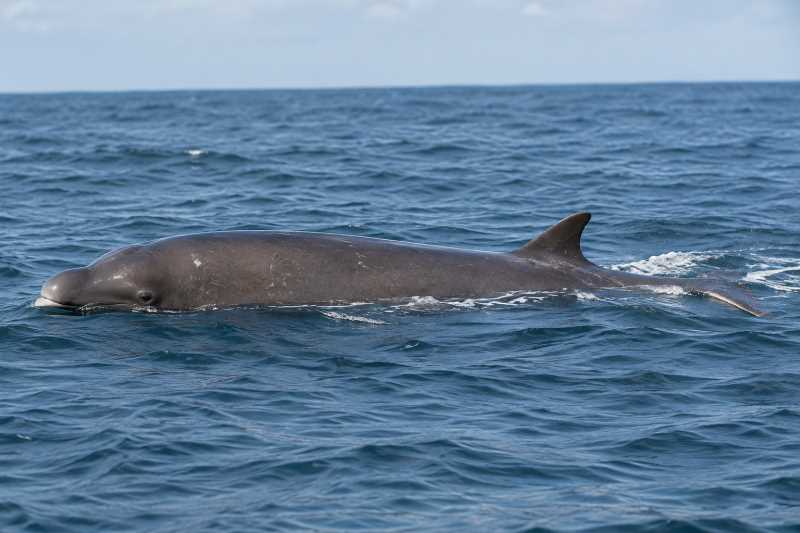
One of the most striking characteristics of the Southern Bottlenose Whale is its bulbous forehead, often referred to as a "melon." This organ is more pronounced in males and plays a crucial role in echolocation, a vital sensory mechanism for navigating and hunting in deep waters.
The species exhibits a predominantly slate gray to brownish body, with lighter undersides and occasional white markings on the face and around the beak. The dorsal fin, located about two-thirds down the back, is relatively small and falcate.
Range and Habitat
Southern Bottlenose Whales are predominantly found in the Southern Hemisphere, particularly in the cold and temperate waters of the Southern Ocean. Their range extends from the Antarctic ice edges to the sub-Antarctic regions, including the waters of New Zealand, South Africa, and South America.
These whales are typically associated with deep offshore waters, often beyond the continental shelf. They are known to inhabit areas with depths exceeding 1,000 meters, where they dive to great depths in search of prey.
Behavior and Diet
Southern Bottlenose Whales are deep divers, capable of reaching depths of over 1,450 meters and holding their breath for up to an hour. Such diving prowess is essential for accessing their primary food source: squid. They are also known to consume various fish species and crustaceans, although cephalopods remain their preferred diet.
Socially, these whales are usually observed in small groups, typically comprising 1 to 12 individuals. They exhibit intricate vocalizations and echolocation clicks for communication and navigation. While not as acrobatic as some other cetaceans, they may occasionally breach or display other surface behaviors.
Identification Tips
Identifying the Southern Bottlenose Whale in the field can be challenging due to its preference for deep waters and its similarity to other beaked whales. However, there are several cues to aid in recognition:
- Bulbous Melon: Look for the distinctive bulbous forehead, particularly pronounced in males.
- Body Coloration: Note the slate gray to brownish body with lighter undersides.
- Dorsal Fin: The small, falcate dorsal fin is located two-thirds down the back.
- Surfacing Behavior: They typically surface slowly and do not display long blow patterns.
Conservation Status
As of the latest assessment by the International Union for Conservation of Nature (IUCN), the Southern Bottlenose Whale is listed as Least Concern. However, this status does not imply an absence of threats.
Threats
- Climate Change: Alterations in sea temperature and ice cover may impact their habitat and prey availability.
- Bycatch: Although not a primary threat, incidental capture in fishing gear can occur.
- Noise Pollution: Increased marine traffic and industrial activities contribute to noise pollution, which can disrupt communication and navigation.
Protections
Southern Bottlenose Whales benefit from international protections under agreements like the Convention on the Conservation of Migratory Species of Wild Animals (CMS) and regional conservation efforts aimed at preserving marine biodiversity.
Frequently Asked Questions
What is the primary diet of Southern Bottlenose Whales?
Southern Bottlenose Whales primarily feed on squid, although they may also consume fish and crustaceans.
How can you identify a Southern Bottlenose Whale?
Identification is aided by their bulbous melon, slate gray to brownish body, small falcate dorsal fin, and surfacing behaviors.
Where do Southern Bottlenose Whales live?
They inhabit deep waters in the Southern Hemisphere, particularly in the Southern Ocean and sub-Antarctic regions.
Are Southern Bottlenose Whales endangered?
Currently, they are listed as Least Concern by the IUCN, but they face threats from climate change and noise pollution.
How do Southern Bottlenose Whales communicate?
They use complex vocalizations and echolocation clicks for communication and navigation in deep waters.
Related posts