Introduction
The Lined Pocket Mouse, scientifically known as Chaetodipus lineatus, is a small rodent species that belongs to the family Heteromyidae. This intriguing mammal is native to North America and is particularly noted for its distinctive lined fur pattern. Despite its diminutive size, the Lined Pocket Mouse plays a significant ecological role due to its seed dispersal habits and its niche in the food web. This article provides a comprehensive look at the Lined Pocket Mouse, detailing its physical attributes, habitat preferences, behavioral characteristics, and current conservation status.
Physical Description
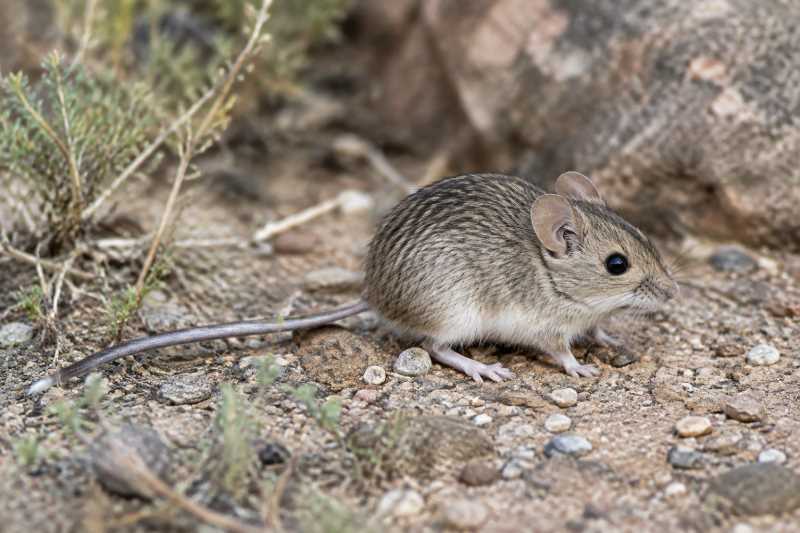
The Lined Pocket Mouse is a small rodent, typically measuring between 150 and 170 mm in total length, including the tail, which itself is about 80 to 100 mm long. The mouse weighs approximately 20 to 25 grams, making it a lightweight inhabitant of its environment. Its fur is predominantly a sandy brown color, interspersed with darker lines running longitudinally along its back, hence the moniker "lined." These lines help in camouflaging the mouse against the arid, rocky terrains it frequents.
One of the distinctive features of the Lined Pocket Mouse is its fur-lined cheek pouches, which are used to carry food back to its burrow. The tail is relatively long and tufted, aiding in balance and agility as the mouse navigates its habitat. Its hind legs are notably longer than the front, an adaptation that facilitates quick, bounding movements which are critical for escaping predators.
Range and Habitat
The Lined Pocket Mouse is predominantly found in the southwestern United States, including parts of Texas, New Mexico, and Arizona, and extends into northern Mexico. It favors arid and semi-arid environments, often occupying deserts, scrublands, and grasslands. These regions provide the open, sandy, and rocky terrains that are ideal for the mouse’s burrowing lifestyle.
The species is adept at creating extensive burrow systems which provide shelter from extreme temperatures and predators. These burrows are usually constructed in loose, sandy soil and feature multiple entrances to allow for quick escape routes. The mouse’s habitat preferences are closely tied to the availability of seeds and vegetation, which constitute the bulk of its diet.
Behavior and Diet
Lined Pocket Mice are primarily nocturnal and spend the majority of their active time foraging for food. Their diet mainly consists of seeds, grains, and occasionally, green vegetation and insects. They are known to cache food in their burrows, a behavior that helps them survive in environments where food availability can be unpredictable.
Socially, the Lined Pocket Mouse is mostly solitary, coming together only during the breeding season. Communication between individuals is minimal, primarily consisting of scent marking and occasional vocalizations. Their breeding season typically occurs in the warmer months, with females producing one to two litters per year, each containing two to six young.
Identification Tips (Field Recognition Cues)
Identifying a Lined Pocket Mouse in the field can be challenging due to its nocturnal and elusive nature. However, there are several key features to look for:
- Size and Shape: Small size with a relatively long, tufted tail.
- Coloration: Sandy brown fur with distinct darker lines running along the back.
- Cheek Pouches: Presence of fur-lined pouches used for storing food.
- Behavior: Quick, bounding movements and nocturnal activity patterns.
- Habitat: Preference for arid and semi-arid environments with sandy or rocky soil.
Conservation Status (With Threats and Protections)
The Lined Pocket Mouse is currently classified as Least Concern by the International Union for Conservation of Nature (IUCN). This status reflects its relatively stable population numbers and wide distribution range. However, like many species, the Lined Pocket Mouse faces threats from habitat destruction and climate change, which could alter its natural habitats significantly.
Urban development and agricultural expansion pose risks by fragmenting habitats and reducing the availability of critical resources. Conservation efforts are focused on habitat preservation and restoration to ensure that these mice continue to thrive in their natural environments. Protecting desert ecosystems and mitigating the impacts of climate change are also vital for the long-term survival of this species.
Frequently Asked Questions
Why is this species unique?
The Lined Pocket Mouse is unique due to its specialized adaptations for living in arid environments, such as its ability to conserve water and its nocturnal foraging habits. The fur-lined cheek pouches are a distinctive feature not found in many other rodents, allowing it to efficiently transport and store seeds.
How does the Lined Pocket Mouse contribute to its ecosystem?
As a seed disperser, the Lined Pocket Mouse plays a crucial role in its ecosystem by aiding in plant reproduction. Its foraging habits help in spreading seeds across its habitat, promoting plant diversity and contributing to the health of its ecosystem.
What are the main threats to the Lined Pocket Mouse?
The primary threats include habitat destruction from urbanization and agriculture, as well as climate change which alters the availability of resources. Conservation efforts focus on protecting natural habitats and minimizing human-induced environmental changes.
What adaptations help the Lined Pocket Mouse survive in arid environments?
The Lined Pocket Mouse has several adaptations for survival in harsh climates, including efficient water conservation, nocturnal activity to avoid daytime heat, and its burrowing lifestyle, which offers protection from predators and extreme temperatures.
Are there any conservation programs for this species?
While there are no species-specific conservation programs currently, broader initiatives aimed at desert habitat preservation indirectly benefit the Lined Pocket Mouse. Efforts to combat climate change and protect natural ecosystems are crucial for its continued survival.
Related posts