Introduction
The Particolored Flying Squirrel, scientifically known as Hylopetes alboniger, is a fascinating mammal belonging to the family Sciuridae. This small but captivating creature is renowned for its gliding abilities, which allow it to move seamlessly between trees. Native to parts of Asia, the Particolored Flying Squirrel is a subject of interest for researchers and wildlife enthusiasts alike, owing to its distinctive characteristics and ecological significance. This article delves into the various aspects of the Particolored Flying Squirrel, providing an in-depth look at its physical traits, habitat, behavior, and conservation status.
Physical Description
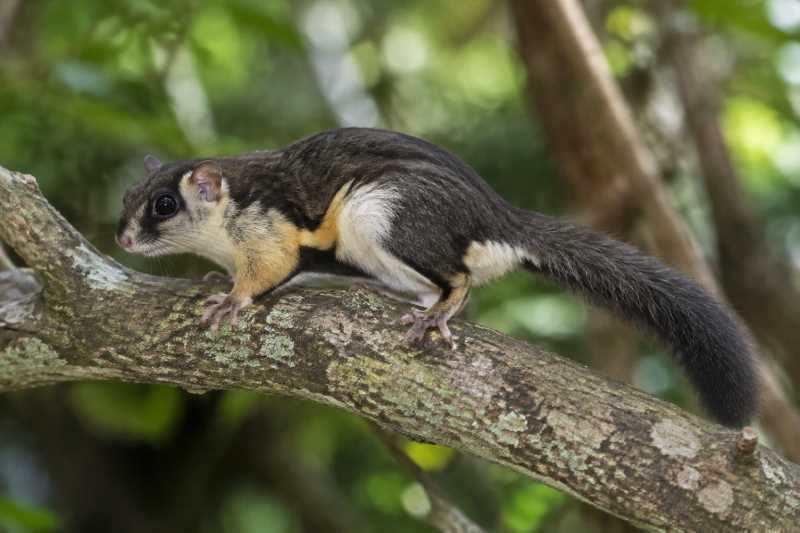
The Particolored Flying Squirrel is a medium-sized squirrel characterized by its striking coloration and unique physical adaptations for gliding. Adult individuals typically measure around 30 cm in body length, with a tail length of approximately 25 cm, making the tail almost as long as the body itself. The species exhibits a distinctive coloration pattern, with a combination of gray, brown, and white patches that provide camouflage in its arboreal surroundings.
One of the most remarkable features of the Particolored Flying Squirrel is its patagium—a membrane of skin that extends from the wrists to the ankles. This adaptation enables the squirrel to glide between trees, covering distances of up to 100 meters in a single leap. The patagium is supported by elongated limb bones, allowing for the expansion and contraction needed for controlled gliding.
The squirrel’s fur is dense and soft, providing insulation against the cool temperatures of its high-altitude habitats. The eyes are large and well-adapted for nocturnal vision, reflecting the squirrel’s predominantly nighttime activity. Its sharp claws are perfectly adapted for climbing and gripping onto tree bark, facilitating both its arboreal lifestyle and its gliding prowess.
Range and Habitat
The Particolored Flying Squirrel is primarily found in the forested regions of South and Southeast Asia. Its range extends across the Himalayan foothills, through parts of India, Nepal, Bhutan, and into regions of Myanmar and southern China. The species prefers temperate and subtropical forests, often inhabiting areas with dense tree cover and abundant canopy layers.
These squirrels thrive in habitats ranging from lowland forests to montane regions, typically at elevations between 1,000 and 3,500 meters. They are particularly associated with oak, pine, and mixed deciduous-coniferous forests, where they can find ample food resources and suitable roosting sites.
Deforestation and habitat fragmentation pose significant threats to the Particolored Flying Squirrel’s habitat, as these activities reduce the availability of suitable living spaces and increase the risk of population isolation.
Behavior and Diet
Particolored Flying Squirrels are primarily nocturnal and arboreal, spending most of their lives in the tree canopy. Their nocturnal habits are facilitated by their excellent night vision, which allows them to navigate and forage in the dark. During the day, they rest in tree hollows or nests constructed from leaves and twigs.
These squirrels are solitary or live in small family groups, with each individual or group occupying a defined territory. They communicate through a variety of vocalizations and scent markings, which help establish their presence and deter intruders.
The diet of the Particolored Flying Squirrel is predominantly herbivorous, consisting of fruits, nuts, leaves, and bark. They are known to forage over large areas to find food, utilizing their gliding ability to access trees that are otherwise isolated. Occasionally, they may also consume insects and other small invertebrates, supplementing their diet with additional protein sources.
Identification Tips
Identifying the Particolored Flying Squirrel in the field requires attention to several key features:
- Coloration: Look for the distinctive gray, brown, and white patches that help camouflage the squirrel against the bark and leaves.
- Size: Note the medium body size, with a tail almost equal in length to the body.
- Patagium: Observe the gliding membrane, which is visible when the squirrel is in motion.
- Behavior: Spot them during dusk or nighttime, as they are primarily active after sunset.
- Vocalizations: Listen for their calls, which can vary from high-pitched squeaks to chattering sounds.
Conservation Status
The IUCN Red List currently classifies the Particolored Flying Squirrel as a species of Least Concern. However, it is essential to note that the species faces several threats that could impact its populations in the future.
Threats
- Habitat Loss: Deforestation for agriculture, logging, and urban expansion reduces the availability of suitable habitats.
- Fragmentation: Habitat fragmentation leads to isolated populations, which can result in decreased genetic diversity and increased vulnerability.
- Hunting: In some regions, the squirrels are hunted for their fur and as a food source.
Protections
Conservation efforts for the Particolored Flying Squirrel focus on habitat preservation and restoration. Establishing protected areas and national parks helps safeguard critical habitats and provides corridors for movement. Environmental education and awareness programs aim to reduce hunting pressures and promote coexistence with local communities.
Frequently Asked Questions
What is the primary habitat of the Particolored Flying Squirrel?
The Particolored Flying Squirrel primarily inhabits temperate and subtropical forests in the Himalayan foothills and Southeast Asia, thriving in areas with dense tree cover.
How does the Particolored Flying Squirrel glide?
The squirrel glides using a patagium, a membrane of skin stretching from its wrists to ankles, allowing it to cover large distances between trees.
Are Particolored Flying Squirrels endangered?
Currently, the Particolored Flying Squirrel is listed as Least Concern by the IUCN, but it faces threats such as habitat loss and fragmentation.
What do Particolored Flying Squirrels eat?
Their diet mainly consists of fruits, nuts, leaves, and bark, supplemented occasionally by insects and small invertebrates.
How can I identify a Particolored Flying Squirrel in the wild?
Look for their distinct coloration, medium size, and gliding membrane, and observe their nocturnal activity and vocalizations.
Related posts