The Yellow-breasted Boatbill: A Jewel of the Rainforest
The Yellow-breasted Boatbill (Machaerirhynchus flaviventer) is a small, vibrant bird that serves as a brilliant testament to the diversity and splendor of the Australasian rainforests. With its striking plumage and unique ecological role, this bird is an intriguing subject for ornithologists and bird enthusiasts alike.
Taxonomy and Distribution
The Yellow-breasted Boatbill belongs to the family Machaerirhynchidae, which is composed of only two species, the other being the Black-and-yellow Broadbill (Eurylaimus ochromalus). The boatbill is native to northern Australia and New Guinea, where it inhabits lowland and montane rainforests. Its range extends from the Cape York Peninsula in Australia to the rainforests of New Guinea, showcasing its adaptability to diverse forest environments.
Physical Description
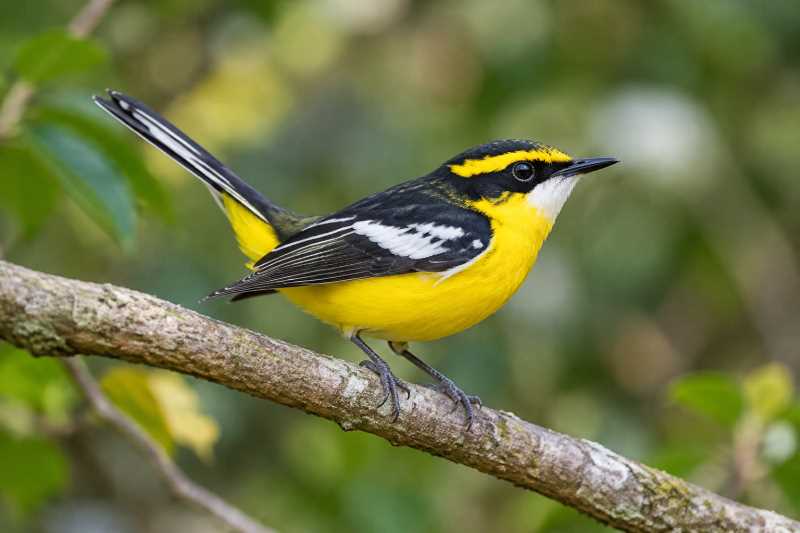
One of the most distinctive features of the Yellow-breasted Boatbill is its striking coloration. The bird exhibits a bright yellow underbelly contrasted with a darker black-and-white patterned head and back. Its eponymous bill is broad and flat, resembling a boat, which is an adaptation for its insectivorous diet. Measuring around 13 to 15 centimeters in length, it is a small but visually captivating bird.
Behavior and Ecology
The Yellow-breasted Boatbill is primarily insectivorous, feeding on a variety of insects and arthropods. It employs a unique foraging technique known as "sallying," where it catches insects mid-flight, displaying remarkable agility and precision. This technique is facilitated by its broad bill, which allows it to snatch prey efficiently.
These birds are typically found in the mid to upper strata of the rainforest canopy, where they can be seen flitting between branches in search of food. Their flight is characterized by a rapid and direct pattern, often punctuated by short bursts of wing beats.
Breeding and Reproduction
The breeding season of the Yellow-breasted Boatbill varies geographically, but in northern Australia, it typically occurs between August and January. The species is known for its monogamous pair bonds, with both parents participating in the raising of young. The nest, a small cup-shaped structure, is often built high in the forest canopy and is constructed from twigs, leaves, and spider webs.
Clutch sizes generally consist of two to three eggs, which are incubated for approximately two weeks. The chicks are altricial, requiring significant parental care post-hatching. Both parents are actively involved in feeding and protecting the young until they are ready to fledge.
Conservation Status
Currently, the Yellow-breasted Boatbill is classified as Least Concern by the International Union for Conservation of Nature (IUCN). Despite this, the species faces potential threats from habitat destruction due to logging and agricultural expansion, particularly in New Guinea. The preservation of rainforest habitats is crucial for maintaining healthy populations of this and many other rainforest-dependent species.
Importance in Ecosystem
The Yellow-breasted Boatbill plays a vital role in its ecosystem as a predator of insects, helping to control insect populations and maintain ecological balance. Additionally, as a prey species for larger birds and mammals, it contributes to the complex food web of the rainforest.
Conclusion
The Yellow-breasted Boatbill is more than just a visually striking bird; it is an integral component of the rainforest ecosystem. Its presence across diverse rainforest regions highlights the importance of conservation efforts aimed at preserving these critical habitats. As we continue to explore and study the intricate lives of rainforest species, the Yellow-breasted Boatbill remains a symbol of the beauty and biodiversity found within these lush landscapes.
Whether you are an avid birdwatcher or a casual observer, the sight of a Yellow-breasted Boatbill darting through the canopy is a reminder of nature’s splendor and the ongoing need to protect it for future generations.
Related posts